
Canon nFD 28mm f/2.8 Optical Review - Sharpness, Rendering & Image Quality

Canon NFD 28mm f2.8
When it comes to vintage lenses, optical performance is where things get interesting. Some lenses are all character and flaws, while others strike a more balanced approach between vintage rendering and modern usability.
The Canon nFD 28mm f2.8 definitely falls into that second category.
After spending a lot of time shooting with the Canon nFD 28mm f2.8, I’ve come to appreciate just how well-rounded its optical performance really is. It doesn’t scream “vintage” in the way some lenses do, but that’s actually part of its appeal. It delivers clean, reliable image quality with just a subtle hint of classic rendering. This post is going to focus on optical performance but if you are looking for a review that focuses on the physical attributes of this lens read this post next.
Optical Design Overview
The lens features a 7 elements in 7 groups optical design, which is relatively simple compared to modern lenses, but incredibly effective. This type of design keeps the lens:
Compact
Lightweight
Optically consistent
What’s interesting here is how Canon balanced performance with size. This isn’t an overly complex optical formula, but it delivers strong results across a wide range of shooting scenarios. Combined with Canon’s Super Spectra Coating, the optical design is optimized to reduce flare and maintain contrast, two things that really matter when adapting vintage lenses to modern digital sensors.
Sharpness & Detail Rendering
Image shot with the Canon nFD 28mm f/2.8 showing the detail it can capture.
Sharpness is one of the strongest aspects of this lens. Wide open at f2.8, the center sharpness is already quite good for a lens created in 1979, with decent detail rendering. However, you’ll notice some softness toward the edges and corners. This is pretty typical for vintage wide-angle lenses, especially from this era. Once you stop down to f4, things improve noticeably. The image tightens up, contrast increases, and edge sharpness becomes much more usable.
By the time you hit f/5.6 to f/8, the lens really hits its stride. At these apertures, you get:
Excellent center sharpness
Strong edge-to-edge consistency
Crisp detail across the frame
For landscapes or street photography, this is where the lens really shines.
Color, Contrast & Rendering Style
One of the things I really like about this lens is its color rendering. The colors feel natural and balanced, not overly saturated, but not flat either. There’s a subtle vibrancy that gives images a nice “pop” without looking digital or over-processed. The one thing to remember is these lenses were designed to work with film and I find right out of camera shadowed areas can sometimes look overly blue toned. That can easily be fixed in post or with a Tiffen Enhancing filter. You can read more about that filter here.
Contrast is also well controlled. Even in challenging lighting conditions, the lens holds onto detail nicely.
If I had to describe the rendering style, I’d say it leans more toward a clean, classic film look rather than a heavy vintage aesthetic. It’s not going to give you swirly bokeh or dramatic imperfections, but it will give you images that feel nostalgic to the 1990s.
Sample Images
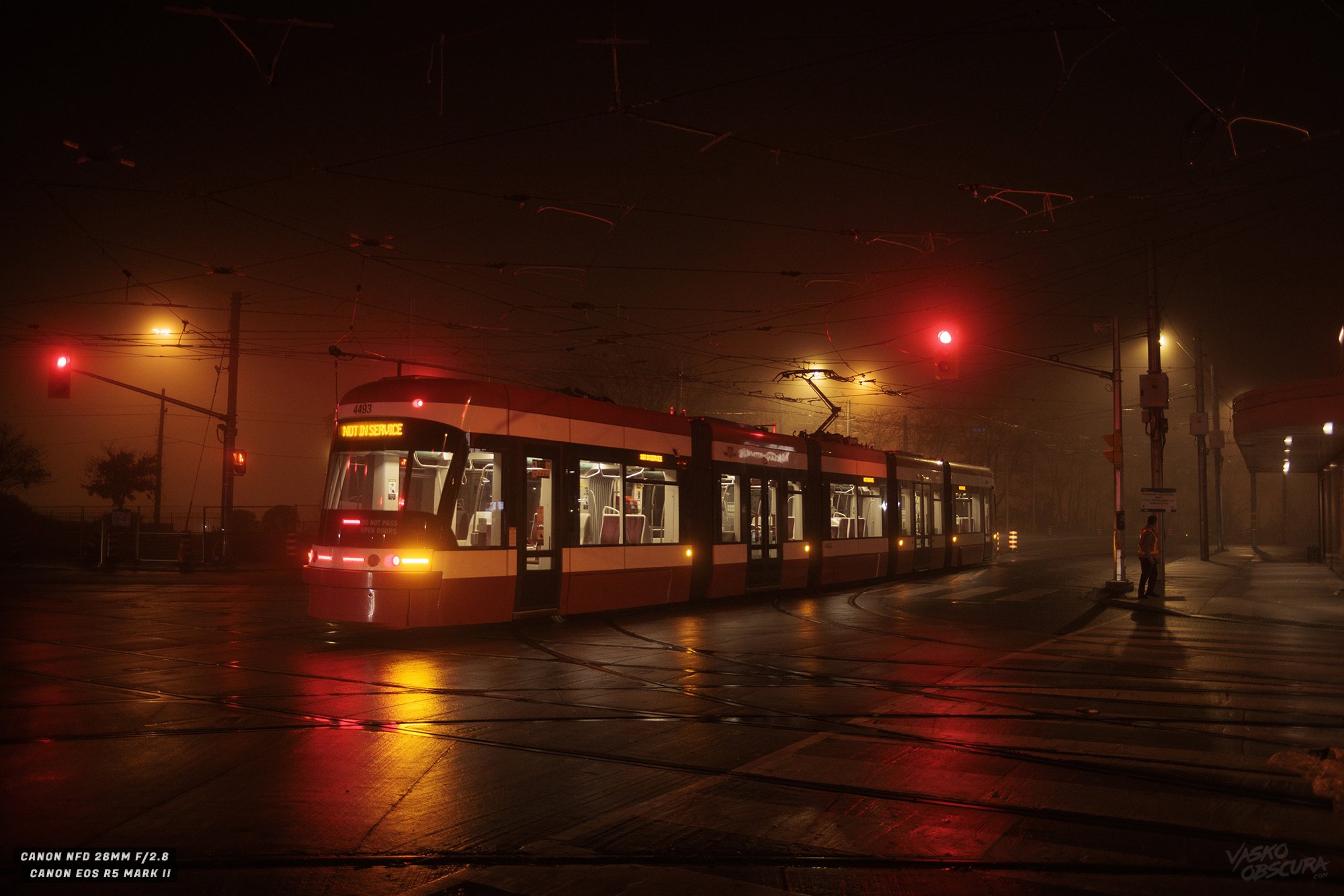
Here are some sample photos shot with the Canon New FD (nFD) 28mm f/2.8. The image quality is impressive for a vintage lens. Its sharpness stands out, capturing fine details with clarity, though stopping down to f4 or f5.6 really brings the edges into focus. The colors have a natural vibrancy, with good contrast that gives the images a pleasing pop without feeling overly processed. I’ve found that it handles flare decently in backlit scenes, though a little ghosting can creep in. I wouldn’t quantify this lens as having a ton of vintage charm. So if you’re looking for a lens with a heavy vintage look, this one might not be for you. Overall, this lens delivers a classic, film-era rendering that feels authentic and timeless, making it a joy to shoot with.


Flare, Ghosting & Coatings
The Canon nFD 28mm f/2.8 uses Canon’s Super Spectra Coating (S.S.C.), and it actually makes a noticeable difference. When shooting into backlight, the lens handles flare reasonably well for its age. You can still get some ghosting, especially if the light source is strong and directly in frame, but it’s not overwhelming.
What I’ve found is:
Contrast holds up fairly well
Flare is present but controlled
Ghosting appears in certain angles but can be used creatively
This gives the lens a bit of character without becoming frustrating to use like the good old Helios-40.
Distortion & Aberrations
For a 28mm lens, distortion is surprisingly well controlled. You’ll see a bit of barrel distortion if you’re shooting architecture or straight lines, but it’s not extreme and can be easily corrected in post if needed.
Chromatic aberration is present in high-contrast areas, especially wide open, but again, it’s fairly minimal compared to many vintage lenses and in my opinion adds to the nostalgia factor of this lens.
Overall, this lens behaves very predictably, which makes it easy to work with.
Bokeh & Depth of Field Character
At f2.8 and 28mm, you’re not going to get extremely shallow depth of field, but you can still achieve some subject separation when shooting close. I would not recommend this lens if bokeh is your game. The bokeh itself is fairly neutral. With 5 aperture blades, highlights can take on a slightly geometric shape when stopped down.
This isn’t a “bokeh monster” lens, but that’s not really its purpose. It’s more about context, environment, and storytelling rather than extreme background blur.
Who This Lens Is For (Optically)
From an optical standpoint, this lens is ideal for:
Photographers who want clean vintage rendering
Shooters who prioritize sharpness and usability over heavy character
Landscape and street photographers
Videographers looking for a natural, cinematic field of view
If you’re chasing wild vintage imperfections, this might not be your lens. But if you want something balanced and reliable, it’s an excellent choice.
Final Thoughts
The Canon nFD 28mm f/2.8 delivers a surprisingly refined optical performance for a lens of its size and age. It’s sharp where it needs to be, produces natural colors, and maintains a clean, timeless rendering that works beautifully in both photography and video.
What really stands out to me is how usable it is. This isn’t a lens you have to fight, it just works. And that’s a big reason why it continues to be so popular among vintage lens shooters today.
If you’re enjoying content like this and want to see real-world tests, sample footage, and hands-on reviews, make sure to check out my YouTube channel where I talk shop and review gear.
FAQ
Is the Canon nFD 28mm f/2.8 sharp?
Yes, it’s quite sharp for a vintage lens, especially from f/4 to f/8 where it delivers excellent edge-to-edge clarity.
What is the best aperture for the Canon nFD 28mm f/2.8?
The sweet spot is between f/5.6 and f/8, where sharpness, contrast, and overall image quality peak.
Does the Canon nFD 28mm f/2.8 have good image quality?
Yes, it offers strong image quality with natural colors, solid contrast, and good sharpness for a vintage lens.
How does it handle flare?
Thanks to Super Spectra Coating, flare is reasonably controlled, though some ghosting can appear in strong backlight.
Is this lens good for video?
Absolutely. Its smooth focus ring, natural rendering, and balanced contrast make it a great option for video work.
Does it have a strong vintage look?
Not really. It has a subtle, classic rendering rather than a heavy or stylized vintage aesthetic. I always tell people it produces image that remind me of the 1990s.
✅ Read Next:
Canon nFD 28mm f2.8 Mini Review - Compact Vintage Lens Worth Buying?
Fotodiox Pro FD to EOS R Adapter (For FL FD and nFD Lenses)