

Osawa MC 28mm f/2.8
When I first picked up the Osawa MC 28mm f/2.8, I was immediately struck by its compact size and solid build. Despite being a third-party lens from the film photography era, it has nice design and construction that makes it feel durable and well-engineered. The focus ring is smooth, the design is simple, and everything about it feels purposeful and no-nonsense. I actually bought this lens on a whim because I had never even heard of Osawa before but I’m really glad I did. It’s easily become one of my top 10 favorite vintage lenses. There’s something about this lens that just works. This post will focus on the physical attributes of this lens. If you’re looking for a review of the optical performance check out this post next.
LENS SPECS
Released Date: Early 1970’s
Format: 35mm Full Frame
Mount: M42 (Various Mounts)
Filter: 52mm
Aperture Blades: 6
Aperture Range: f/2.8 - f/22
Min Focus Distance: 0.30m
Weight 245g
Optical Design: 7 elements in 6 groups
APS-C Conversion: Aprox. 45mm
A Brief History of the Osawa MC 28mm f/2.8
The Osawa MC 28mm f/2.8 comes from an era when Japanese third-party manufacturers were producing affordable alternatives to major brands like Canon and Pentax. Osawa isn’t a household name today, but lenses like this were often manufactured by well-known OEM producers in Japan and rebranded for different distributors. During the 1970s and 1980s, this was extremely common, and it allowed photographers to access quality optics at a fraction of the price of first-party glass. This lens really embodies that philosophy practical, well-built, and designed to deliver reliable results without the premium branding.
What Osawa Actually Was
I’ve never heard of Osawa so I did some digging on the Internet and this is what I was able to find. Osawa wasn’t just a random lens brand it was part of a much larger Japanese trading and distribution company: J. Osawa & Co., Ltd. They started in the late 1800s and grew into a massive importer/distributor dealing in everything from watches to cameras. By the mid-20th century, they were deeply involved in the photography industry, acting as a distributor for camera brands (including Mamiya), a marketing/export company for Japanese optics and a brand label for lenses often made by third-party manufacturers. They weren’t always the actual manufacturer—like many vintage brands, they often rebadged lenses made by OEM factories in Japan.
Their Role in the Camera Industry
In the 1960s to 1980s, Osawa became heavily tied to Mamiya, especially in the 35mm SLR space. Osawa distributed Mamiya products globally, they supported Mamiya’s lens ecosystem and they even had connections to optical manufacturers like Tomioka through corporate ties. At one point, Osawa was a serious player behind the scenes, not just a small third-party brand.
What Happened to Osawa?
Osawa ultimately became a casualty of the autofocus revolution that reshaped the camera industry in the early to mid 1980s. As photography rapidly shifted toward electronically driven systems, companies that couldn’t adapt were quickly left behind. From what I’ve been able to piece together, Osawa had expanded aggressively as a large trading company, with business interests spanning multiple industries beyond photography. That kind of rapid growth may have looked strong on the surface, but it also introduced financial instability, especially when parts of the business began to struggle. In many ways, that aggressive expansion became their undoing.
By the mid 1980s, Osawa declared bankruptcy, and the ripple effects were significant. Their collapse didn’t just impact their own branded lenses, it also affected key partnerships, including their involvement with Mamiya’s 35mm system. Almost overnight, the Osawa name disappeared from the camera world. Unlike companies such as Canon or Nikon, Osawa simply wasn’t positioned to survive the transition into the autofocus era. As consumers began demanding autofocus lenses and more advanced electronic integration, Osawa and its partners weren’t equipped to keep up. Sales declined, momentum stalled, and the business ultimately collapsed. It’s a story that feels very similar to companies like Blockbuster, a once relevant player that failed to adapt to a massive shift in the market and was left behind because of it.
Why That Makes This Lens Even More Interesting
Honestly, this is a big part of what makes the Osawa MC 28mm f/2.8 so interesting to me. When I’m shooting with this lens, it doesn’t just feel like I’m using another piece of vintage glass, it feels like I’m holding onto a small piece of a lost chapter in photography history. This lens comes from an entire ecosystem of Japanese optics that no longer really exists in the same way today, tied to one of the most dynamic and transitional periods in camera manufacturing.
What makes it even more compelling is how under-the-radar it is. Most people have never even heard of Osawa, including myself, and that adds to the appeal. It feels like discovering something overlooked, something that slipped through the cracks but still has real value. If anybody knows more about the Osawa brand let me know in the comments below.
Design & Build Quality
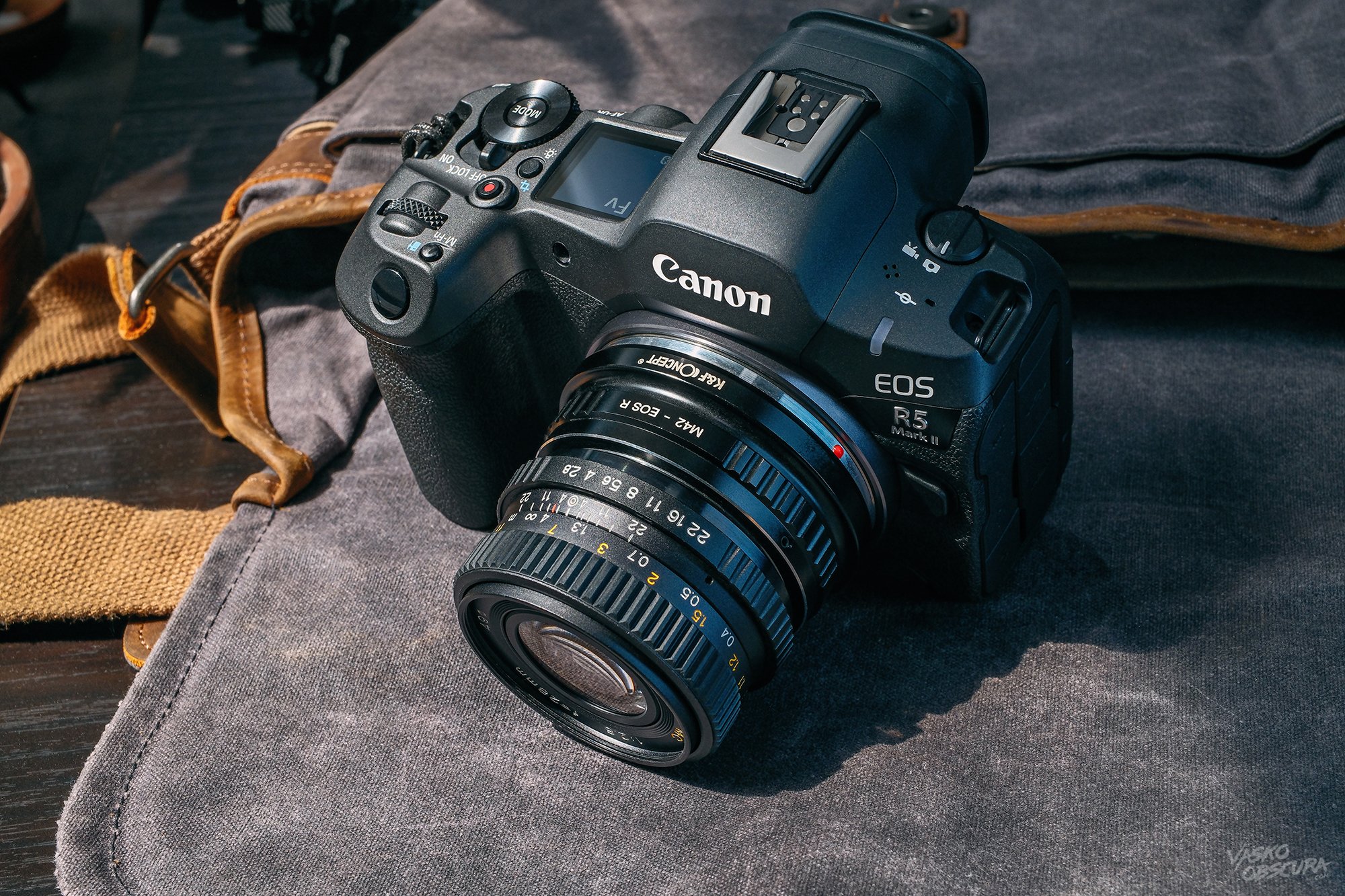
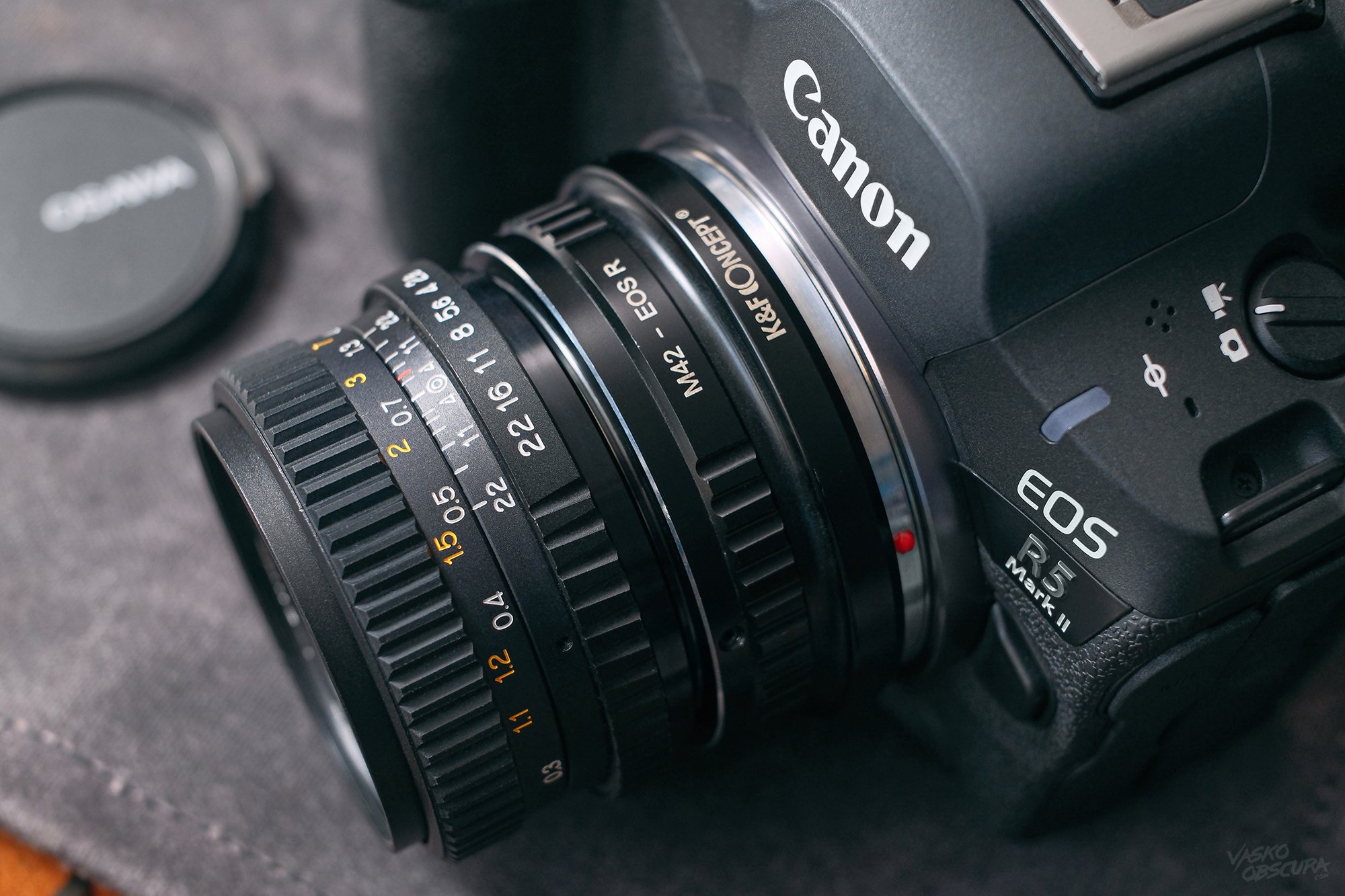
Osawa MC 28mm f/2.8 mounted on the Canon EOS R5 Mark II
The build quality of the Osawa MC 28mm f/2.8 is one of its standout features. The metal on this lens has a graphite grey appearance. I thought it was plastic at first. But unlike later plastic-heavy designs, this lens is predominantly metal, and you can feel that immediately. It has a reassuring weight without being overly heavy, and everything feels tight and well-assembled. It’s the kind of lens that feels like it was built to last and honestly, the fact that so many of these are still in great condition today proves that.
Mount & Adaptability
One of the great things about the Osawa MC 28mm f/2.8 is how adaptable it is. Since it was produced in multiple mounts, especially M42 and Pentax K, it can easily be adapted to modern mirrorless systems like: Canon RF, Sony E, Nikon Z and Fujifilm X. All you need is the right adapter. If you’re shooting mirrorless, adapting this lens is incredibly straightforward. Just like most vintage glass, you’ll need to enable “shoot without lens” in your camera settings. Once that’s done, you’re good to go.
Optical Design & Coatings
The Multi-coating on the Osawa MC 28mm f/2.8 are very good.
The Osawa MC 28mm f/2.8 features a relatively simple optical design typical of wide-angle lenses from its era. While exact element/group configurations can vary depending on the version, the formula is designed to balance:
Sharpness
Size
Cost efficiency
The “MC” designation stands for multi-coating, which was a big deal at the time. This coating helps:
Reduce flare
Improve contrast
Enhance color transmission
It’s not as advanced as modern coatings, but it definitely contributes to the lens’s clean and usable rendering.
Controls: Focus Ring & Aperture Ring
The tactile experience of this lens is excellent. The focus ring is smooth and well-dampened, with just enough resistance to make precise adjustments easy. It has a fairly long focus throw, which is great for both photography and video work. The aperture ring clicks nicely into place and feels very mechanical, in the best way possible. There’s no play or looseness, just solid, confident feedback. This is one of those lenses that reminds you why manual lenses are so enjoyable to use.
Gear Shots






Handling & User Experience
In real-world use, this lens is just fun to use and inspires confidence. I really enjoy using this lens. It’s compact enough to throw on your camera and forget about, but it still feels substantial enough to inspire confidence. I’ve found it especially enjoyable for street photography because it’s low-profile and doesn’t attract much attention. Everything about using this lens feels intuitive and dare I say premium for a budget lens. There’s no learning curve, it just works.
Special Characteristics (3D Pop & Rendering)
One thing I’ve grown to really appreciate about this lens is its subtle “3D pop.” Even in flatter lighting conditions, subjects seem to separate slightly from the background in a way that gives images a bit more depth and realism. It’s not dramatic or exaggerated but it’s definitely there.
Here is an example photo of some rocks on a beach. Nothing special but there something to be something organic and life-like about it. That 3D pop adds a little something extra to even mundane images.
What’s interesting is that this lens doesn’t rely on heavy vintage quirks to stand out. It’s not overly soft, it doesn’t have wild distortion, and it doesn’t scream for attention.
Who This Lens Is For
This lens is perfect for:
Photographers looking for a budget-friendly vintage 28mm lens that performs better than you’d expect.
Shooters who want solid build quality and reliability
Anyone curious about lesser-known vintage brands
Street and travel photographers
If you’re someone who enjoys discovering underrated gear, this lens is absolutely worth checking out.
Final Thoughts
The Osawa MC 28mm f/2.8 is a great example of how good third-party lenses from the film era can be. It may not have the brand recognition of bigger names, but it absolutely holds its own where it matters. It’s compact, well-built, easy to use, and delivers a clean, dependable image. Add in its affordability and adaptability, and you’ve got a lens that’s hard not to recommend. At the time of writing this post I found Osawa 28mm f/2.8 lenses ranging on eBay from $20 to $50 USD. At that price this lens becomes a great starter lens for anybody looking to get into vintage lens photography or videography.
FAQ (SEO Optimized)
Is the Osawa MC 28mm f/2.8 a good lens?
Yes, it’s a well built and capable vintage lens that offers solid image quality and great value for the price.
What mount is the Osawa 28mm f/2.8?
It was produced in multiple mounts, including M42, Pentax K, and sometimes Canon FD.
Is the Osawa MC 28mm f/2.8 sharp?
Yes, it delivers good sharpness, especially when stopped down, making it suitable for everyday photography.
What does “MC” mean on Osawa lenses?
“MC” stands for multi-coating, which helps reduce flare and improve contrast and color.
Can you use the Osawa 28mm f/2.8 on modern cameras?
Yes, with the appropriate adapter, it works well on modern mirrorless cameras.
Is this lens worth buying today?
If you’re looking for an affordable, well-built vintage wide-angle lens with character, it’s definitely worth considering.
🤓 Read Next:
Osawa MC 28mm f/2.8: Sample Images & Optical Performance
How to Set Up Your Camera to Shoot With Vintage + Manual Lenses