
Fujifilm X100VI Mini Review: Optical Performance, Image Quality, and Real-World Results

Fujifilm X100VI - Are the Images Any GOod?
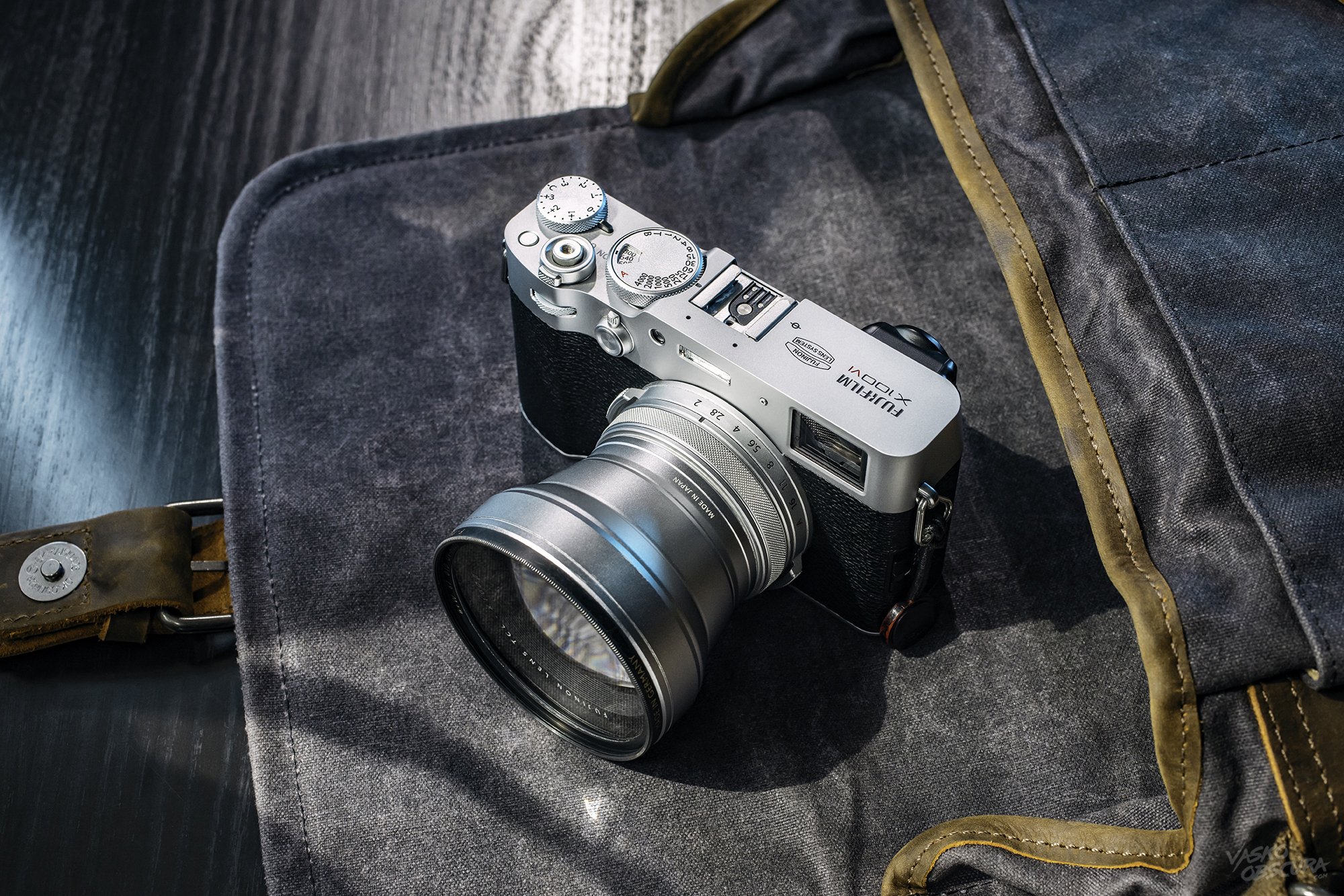
Image of the Fujifilm X100VI
The Fujifilm X100VI is one of the most anticipated compact cameras in recent years, and for good reason. It combines a newly developed 40MP APS-C sensor (made by Sony) with Fuji’s iconic fixed 23mm f/2 lens, a pairing that on paper promises a noticeable leap in image quality over its predecessor the X100V.
As someone who has spent a long time shooting with the X100V, I was especially curious to see if this new version would finally deliver the optical performance I always felt was just slightly out of reach. After spending time shooting with it, I can confidently say: this camera is all about refinement, and the image quality is where that refinement really shows. Once you shrink images down for Instagram, Facebook or web, timpically 2 megapixels, the images really sharpen up.
My First Impressions Coming from the X100V
Here are some sample photos shot with the X100VI. As a long-time X100V user, this new model feels incredibly familiar. The shooting experience is almost identical, which is honestly a good thing and I do appreciate that. There are a few new menu options and, of course, the addition of IBIS, but overall the camera handles and responds just like the X100V. One thing you’ll notice immediately, though, is file size. The jump from 26MP to 40MP is significant. These files are noticeably larger, and if you’re using a slower SD card, you will feel it when the buffer fills up. When it comes to image quality, though, the difference is undeniable. Images coming out of the X100VI are crisper, cleaner, and packed with more detail. But just to temper expectations don’t expect the same level of detail you’d get from a full-frame sensor. To be completely honest, this is the best APS-C sensor I’ve personally used. The X100V always left me wanting just a bit more, and the X100VI finally delivers.
Sample Photos













The Optical Design of the X100VI Lens
At the heart of the X100VI is the same 23mm f/2 fixed lens design introduced with the X100V: a 6-element, 4-group optical construction that includes two aspherical elements. This design was already a big step forward compared to older X100 models, particularly in how it improved edge sharpness and close-focus performance. What’s interesting with the X100VI is that Fujifilm didn’t change the lens, but they did dramatically increase the sensor resolution behind it. That decision says a lot. It means Fuji believes this lens is capable of resolving 40MP worth of detail, and in real-world use, it actually holds up surprisingly well.
Sharpness, Resolution, and the 40MP Sensor
This is where the X100VI really separates itself. The new 40MP X-Trans CMOS 5 HR sensor extracts significantly more detail from the lens than the previous 26MP sensor ever could. Center sharpness is excellent, tack sharp even wide open at f/2. But more importantly, edge and corner sharpness have improved in perceived detail thanks to the higher resolution.
There’s still a slight softness in the extreme corners at f/2, especially at close distances, but stopping down to f/4 - f/5.6 cleans things up nicely. For a compact fixed-lens camera, the resolving power here is seriously impressive. If you’re someone who likes to crop, this sensor gives you a lot more flexibility without sacrificing image quality, a huge advantage for street and travel photography.
Rendering: Color, Contrast, and Micro-Detail
Fujifilm has always been known for its color science, and the X100VI continues that tradition beautifully. Images have a natural, slightly punchy contrast with excellent tonal separation. What stands out most to me, though, is the micro-contrast, the subtle separation of fine details that gives images a sense of depth and realism. Skin tones look fantastic, textures pop without looking over-processed, and highlights roll off in a very pleasing way. Combined with Fuji’s film simulations, the rendering out of this camera often feels “finished” straight out of camera. The other really nice thing about the X100VI is how much control you have over your images in camera with film simulations and a whole bevy of in camera image processing options you can really fine tune your images in camera without ever having to edit them in post. Don’t tell anybody because I feel guilty for saying this as a pro photographer but I shoot the X100VI in jpeg mode most of the time. The images right out of camera are fantastic.
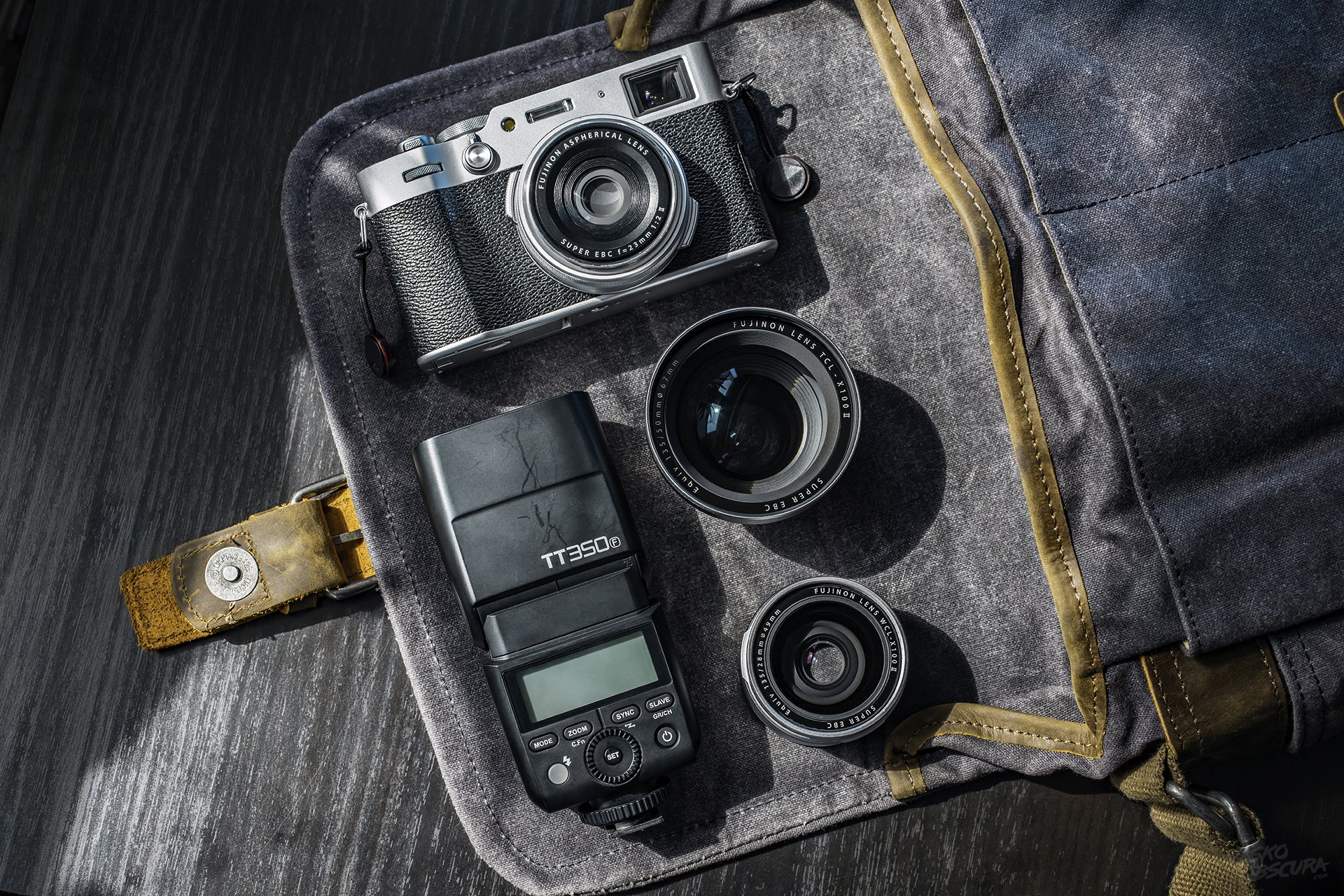
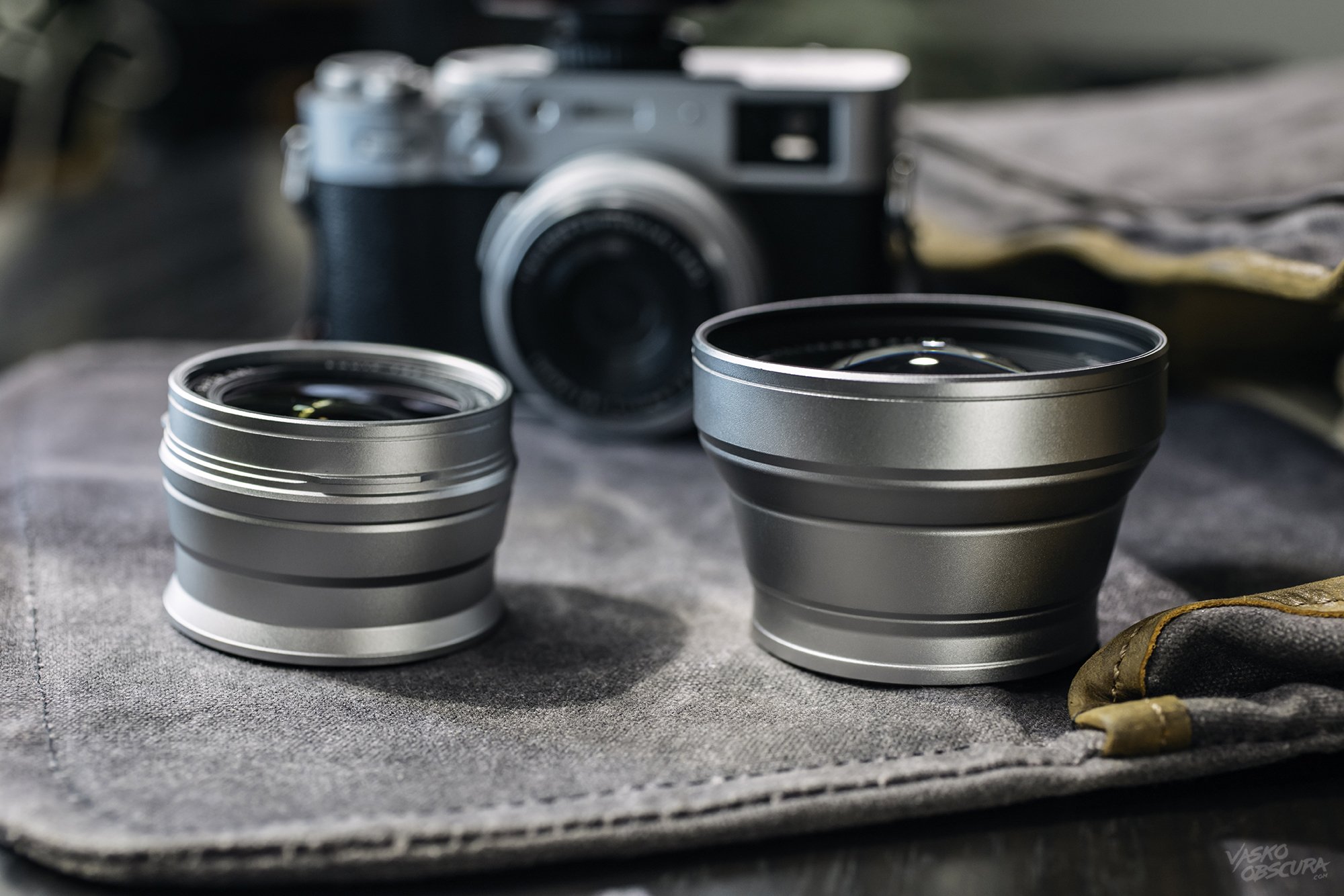
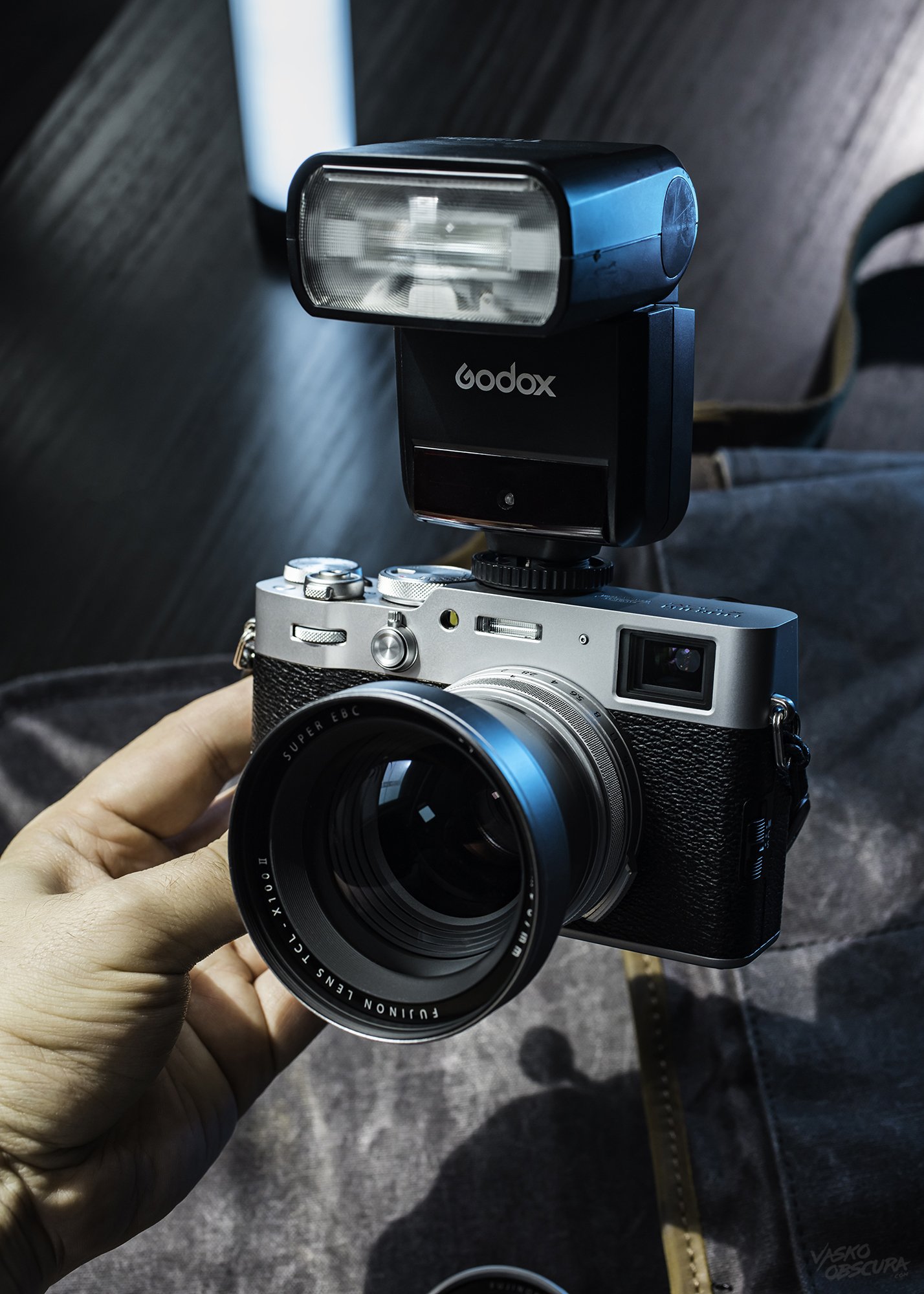
📸 As a working professional time is money. The less time I spend on editing the faster I can move on to the next project. I’m always super excited when I take on a gig that can be shot with the X100VI. Not only is this camera fun to use but it saves so much time. I combine it with the WCL-X100 II and TCL-X100 II lenses to get a little more variety in theshots. I use the in camera film simulations to process the images, and if I don’t have any skin retouching to do I simply pull the jpgs out of the camera and send them to the client. It’s as simple as that. I have reviews of both the WCL and TCL conversion lenses on the blog check them out after this post.
Distortion, Chromatic Aberration, and Flare Control
Optically, the 23mm f/2 lens (35mm full-frame equivalent) is well-corrected, but like most compact lenses, it does rely on some in-camera corrections. Distortion is minimal in real-world use, especially with corrections applied. Chromatic aberration is well controlled, though you may occasionally see slight fringing in high-contrast edges when shooting wide open. Flare resistance is decent, but not perfect. Shooting directly into strong light sources can introduce some ghosting and a slight loss of contrast but it’s generally well-managed and even aesthetically pleasing at times.
The Impact of IBIS on Image Quality
One of the biggest upgrades in the X100VI is the addition of in-body image stabilization (IBIS), rated up to 6 stops. While IBIS doesn’t directly change optical quality, it has a huge impact on real-world image sharpness. You can now shoot at slower shutter speeds without introducing motion blur, which effectively increases your keeper rate, especially in low light. This also allows you to shoot at lower ISOs more often, preserving dynamic range and reducing noise. In practice, IBIS makes the X100VI feel far more capable as an everyday, all-lighting-conditions camera.
🎯 Pro Tip: IBIS only stabilizes the sensor not your subject. In order for your images to be sharp both your camera and your subject have to be still. If your subject is moving you can still get blurry images.
Real-World Shooting Experience
In day-to-day use, the X100VI feels like a fun precision tool. The combination of tactile buttons and dials, a sharp fixed lens, high-resolution sensor, and IBIS creates a shooting experience that’s both reliable and creatively freeing. Whether I’m shooting street, portraits, or landscapes, I feel like I can trust the camera to deliver. The fixed focal length encourages intentional composition, while the image quality gives me the flexibility to refine that composition later if needed. This may not be the best camera I have ever used, it doesn’t produce the highest resolution images and the battery life leaves you wanting more but with all that said, this is by far the most fun camera I have ever used. It’s simply a joy to pick up this camera and go shoot something. I often shoot with my pro gear for work and when I’m done shooting clients I pick up the X100VI and go for a walk shooting whatever I want. It’s a relaxing fun way to unwind for me.
Is the X100VI Worth It for Image Quality?
If your primary focus is image quality, then there are two ways to look at this question. If image quality is your thing I would suggest a full-frame camera or even the Fujifilm GFX system. However with that said, if you love Fujifilm and and APS-C this is the best APS-C sensor Fuji has ever put in any of their cameras so technically this is the best image quality you can get out of a Fuji that is not GFX.
One thing you have to consider is image usage. Most people who buy this camera are posting images on their blogs, social media or emailing them to friends. When you take a 40mp image and shrink it down to 2000px on the long end it becomes about a 2mp image. When you shrink images they clean up a lot and become sharper. Even the monitor you view images on can make a difference. If you’re viewing images from the X100VI on a 16” laptop screen they look sharp and clean when you look at them on a 32” monitor you’ll notice they aren’t as chrisp. So size definitely has an impact on perceived image quality.
The X100VI takes everything that worked with the X100V and pushes it further. The lens holds up to the increased resolution, the sensor delivers exceptional detail, and IBIS enhances real-world sharpness in a meaningful way.
For buyers considering this camera, the biggest selling point is consistency. You’re getting reliable, high-quality results in a compact, beautifully designed package.
FAQ: Fujifilm X100VI Image Quality & Buying Guide
Is the Fujifilm X100VI sharper than the X100V?
Yes. The lens is the same, but the 40MP sensor resolves more detail, resulting in noticeably sharper images.
Does the lens resolve 40MP properly?
Surprisingly, yes. While it’s not perfect at f/2 in the corners, stopping down improves performance significantly, and overall sharpness is excellent.
Is IBIS worth it on the X100VI?
It really depends on what you shoot and how you shoot. Having IBIS in camera certainly opens up a few creative doors that you otherwise would not have and if you don’t want it you can always turn it off.
Is the X100VI good for professional work?
Yes, especially for street, travel, and environmental portrait photography. The image quality is more than capable of professional use if the deliverables are for web and social use. I think you can use the X100VI for everything but high resolution product photography.
Should I upgrade from the X100V?
If you care about resolution, cropping flexibility, and low-light performance, the upgrade is worth it. If you’re happy with 26MP, the difference may feel incremental. I’d wait for the X100VII to come out and spend my money there.
Is the X100VI good for beginners?
YES! And honestly I get a lot of flack for this answer but yes I do think it’s good for beginners. The fact that you have your exposure triangle settings on the outside of the camera allows you to see and feel the process of changing your exposure settings. I personally think it’s a great learning tool.