AI Copyright Law in 2026: What Content Creators Need to Know Before Using AI
Artificial intelligence has quickly become one of the most powerful tools available to content creators. From writing scripts and generating images to editing videos and transcribing meetings, AI can dramatically speed up workflows and help creators scale their businesses. But there’s a side of the AI revolution that many creators aren’t paying enough attention to, the legal landscape and more specifically AI copyright law.
As AI tools become more powerful and more widely used, questions around copyright, ownership, privacy, and business liability are becoming increasingly important. If you’re using AI in your content creation process, it’s critical to understand how the law currently treats AI-generated work, and where things may be headed in the near future.
Recently, a fascinating video from Think Media (linked above) featured a conversation with a lawyer discussing AI copyright law and the legal implications of using AI in your business. The discussion highlighted several issues that every creator should understand as we move deeper into the AI era. Think Media creates amazing videos discussing the issues sounding YouTube and I highly recommend subscribing the the channel. I’ve been a subscriber for years and have really enjoyed the content. Let’s break down some of the most important takeaways.
Disclaimer:
I am not affiliated with Think Media and was not involved in the production of this video. It is shared here for informational and educational purposes as part of a broader discussion about AI, copyright law, and content creation. Furthermore, I am not a copyright lawyer, and nothing in this article should be considered legal advice. The information shared here is based on publicly available sources combined with my 20+ years of experience as a photographer navigating copyright issues in the creative industry. Laws and regulations may vary depending on your country or jurisdiction, and because AI technology is evolving so quickly, many of the laws surrounding AI copyright are still being developed. As a result, some of this information presented may change as new regulations and legal precedents emerge.
About the Author
This article was written by Vasko Obscura, a photographer, videographer, and content creator with over 20 years of experience working in the creative industry. Throughout his career, Vasko has navigated copyright issues related to photography, digital publishing, and commercial content creation. As artificial intelligence becomes increasingly integrated into creative workflows, he shares insights and research to help fellow photographers, filmmakers, YouTubers, and creators better understand the evolving relationship between AI technology, copyright law, and content ownership.
Table of Contents:
AI Content and Copyright law: Who Actually Owns It?
One of the most surprising realities for creators is this, In many cases, AI generated content cannot be copyrighted. Current copyright law in many jurisdictions, including the United States, generally requires human authorship for a work to qualify for copyright protection. If something is created entirely by an AI system, the law may consider that content uncopyrightable. This means that if you generate something purely with AI, such as:
AI-generated artwork
AI-written blog posts
AI-generated music
AI-created videos or voiceovers
Your business may not legally own exclusive rights to that content. Even if you wrote the prompt that generated the output, the legal argument is that the AI created the work, not you. For creators building brands, courses, or digital products, this could create serious issues if the content is widely copied or reused by others.
The “Training Data” Grey Area
Another major concern revolves around how AI models are trained. Most generative AI systems are trained on enormous datasets gathered from the internet including:
Images
Videos
Articles
Music
Code
Social media posts
Because of this, some critics argue that AI outputs may be derivative of existing copyrighted works. In simple terms, the AI may be recombining pieces of what it learned from millions of human creators. This has sparked multiple lawsuits across the tech and creative industries and remains a massive legal grey area that lawmakers and courts are still working through. As these lawsuits are finalized new benchmarks regarding copyright regulation will be set. So for now you can assume things are still up in the air for the most part.
Does Anybody Own It?
(This is purely conjecture and not legal advice) Thinking about it from a logical perspective, if tech companies scrape the internet for data, or to more accurately say it: If tech companies take whatever they can find off the internet, including copyrighted data to train their AI models than technically tech companies could NEVER grant users copyright of the content they create using AI because the tech companies themselves don’t have the ownership of the data to grant you copyright. Do you see how it’s a huge grey area.
And this is where it gets really scary, if you generate content via AI that is a derivative of something that is copyrighted you could potentially open yourself up to legal action from the original copyright holder. For example you create an image and AI makes it in the style of a famous artist from New York named XYZ. Now you don’t follow trending artists from New York and you have no clue who XYZ is. You just have a cool looking image and you post it online. Next thing you know you get a letter from XYZ’s lawyer claiming copyright infringement and damages. Oops. Who’s to blame for that? It doesn’t even have to be an image you could write a blog post and AI plagiarizes ideas from another author and boom you get a letter in the mail from someone’s lawyer.
What about putting a human touch on it?
🧠 Thought: Not that I would ever create AI images and pass them off as my own creations but recently I experimented with ChatGPT and created a series of images where I mimicked a GUESS editorial fashion shoot from the 90’s. I used propments to create a unique model, style her clothes, craft the lighting and moods of the shots. I can’t claim copyright of the images because AI generated them, however, I loaded those images up in photoshop and cleaned up the skin, adjusted the lighting and color tones and made those images my own. By using my expertise to edit the AI generated content do I have some copyright ownership of the images? Below is an example of an edited image. On the left is the image right out of ChatGPT with no editing and on the right is the image I edited using my experience. You can see the full image set in this blog post.
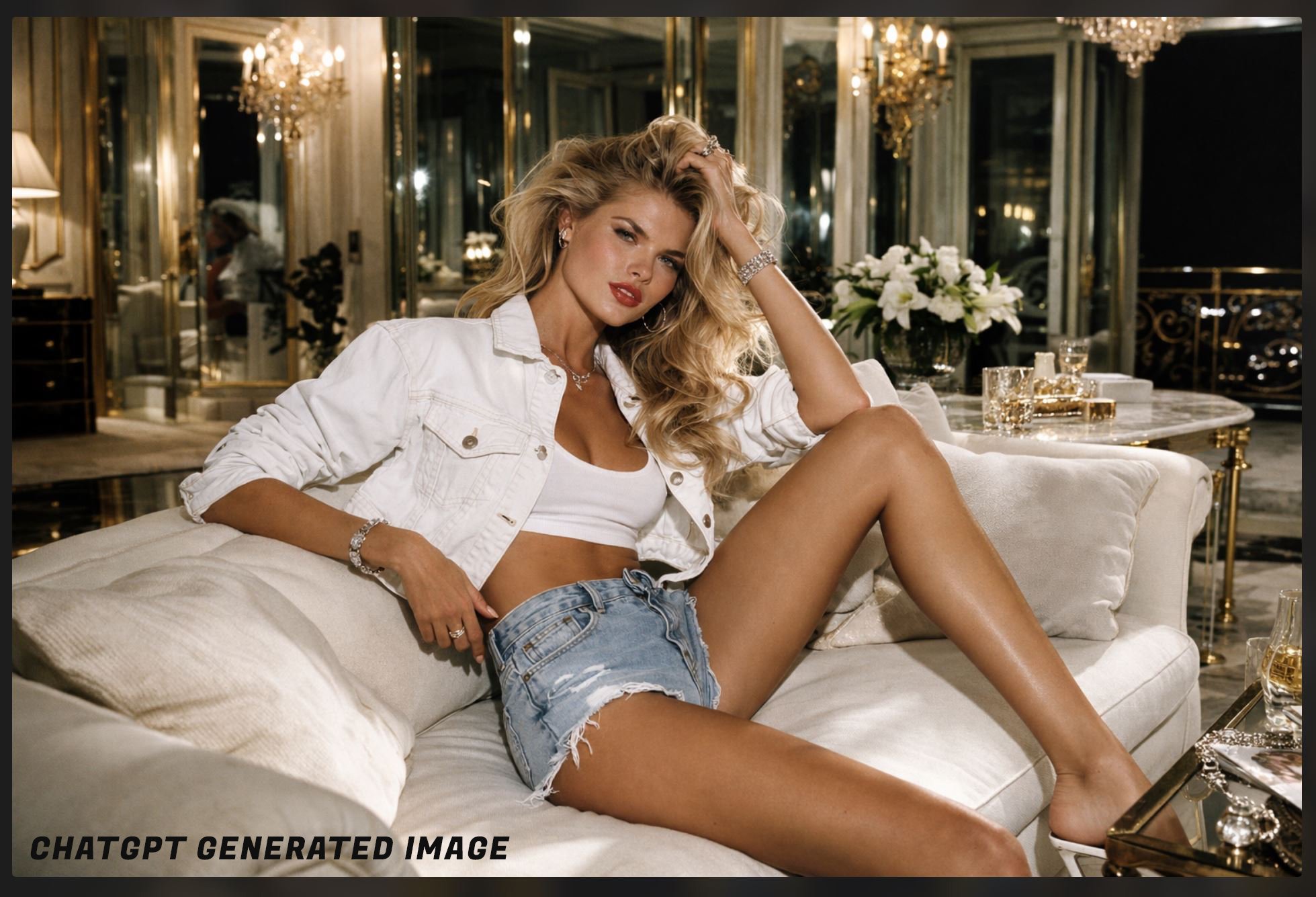
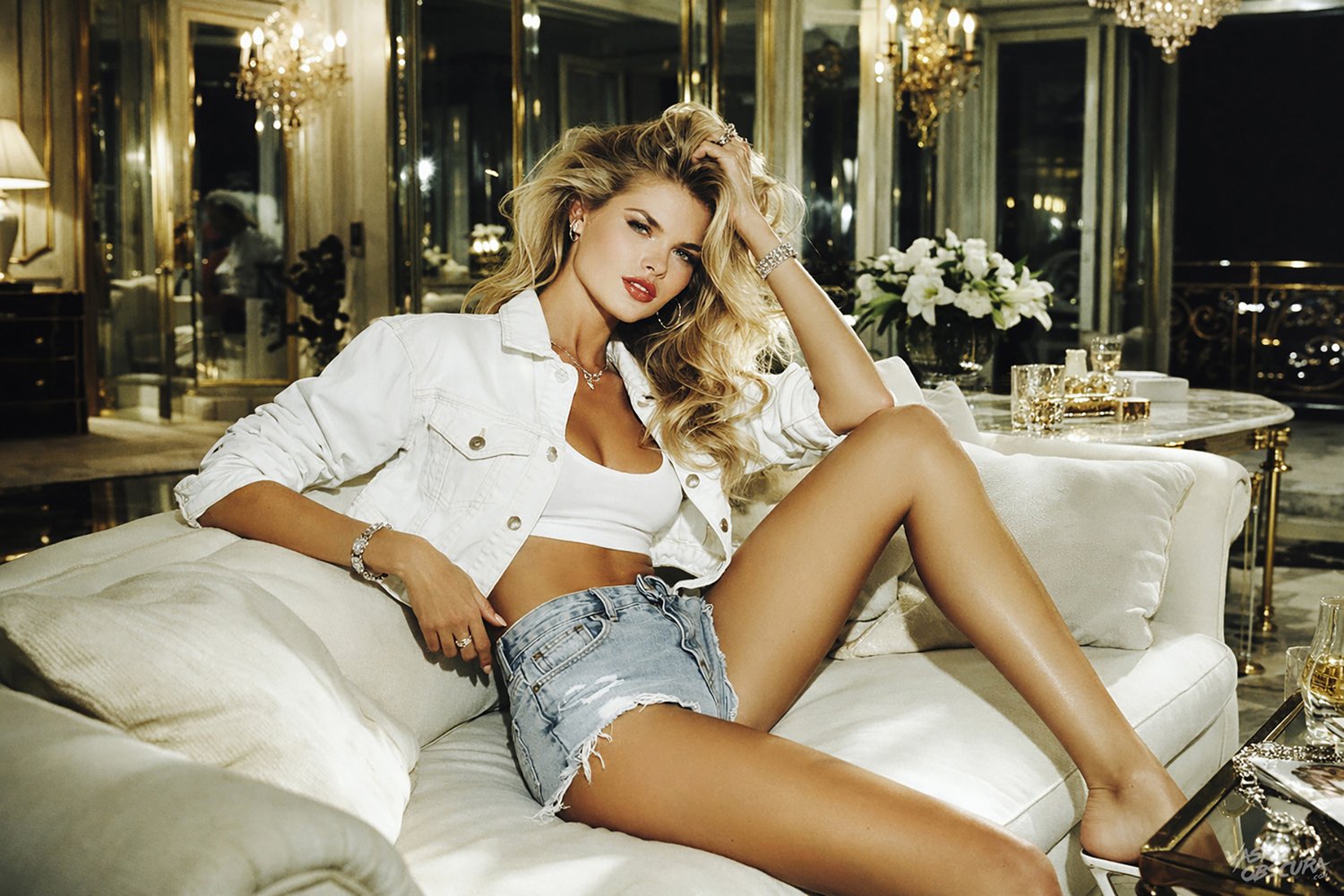
I’m not a lawyer so I asked ChatGPT to answer my question here is what it said: (This is not legal advice. Take the answer with a grain of salt because I don’t know where the info was sourced from)
“In general, images generated entirely by AI cannot be copyrighted because copyright law typically requires human authorship. Even if you wrote detailed prompts to create the image, the AI system is considered the entity that produced the work. However, when you take an AI-generated image into a program like Photoshop and apply meaningful creative edits—such as retouching skin, adjusting lighting, color grading, compositing, or reshaping the overall mood—you may be introducing enough human creativity to claim copyright over your contributions. In that case, the raw AI image itself may not be protected, but the creative edits you added could be.
The key factor is whether your edits involve substantial creative decisions rather than simple technical corrections. Minor tweaks like small exposure or color adjustments may not qualify, but more involved artistic work—like professional retouching and stylistic grading—can create a new layer of authorship. In practice, this means the final edited image could contain two layers: an AI-generated base that likely has no copyright protection and your human-created modifications that may be copyrightable. Because AI law is still evolving and varies by country, creators planning to use AI-assisted images commercially should keep an eye on changing regulations and consider legal advice if the work becomes part of their business.”
AI Can Be Wrong: The Problem With “Imagined” Content
Another key thing creators need to remember is that generative AI doesn’t actually “know” things. AI systems generate responses by predicting patterns in data. This means they can produce content that sounds accurate but may not be factually correct. For creators publishing educational content, news, or tutorials, relying too heavily on AI without verification can lead to, incorrect information, outdated facts, misleading content.
A picture of what aperture blades look like on the Helios-40 lens
⚠️For example: do a Google search for images of a camera shutter graphic and you’ll see tons of images of aperture blades. Somewhere someone mistakenly named aperture blades “camera shutter” and now there are a ton of, most likely AI generated, graphics made by people who are clueless about cameras, on the internet. In fact there are soooooo many miss-labeled images of “camera shutters” that if you ask ChatGPT to generate an image of a camera shutter it will draw you a picture of aperture blades.
⛔ This incident isn’t so bad but if you think about it, it’s pretty scary. Imagine if there were tones of propaganda articles or false science facts on the internet and ChatGPT scraped them for knowledge. The whole system could easily be corrupted by ingesting false information. Who is governing what AI reads and where that information is coming from? That’s a topic beyond this blog post but just something to think about.
In short, AI is an incredibly powerful assistant, It has the memory of the whole internet but has the intelligence of a child. It should never replace human judgment. I use it to help me write blog posts and clean up my flow and brainstorm ideas but I always fact-check anything important before publishing. AI makes a lot of mistakes and if you’re not an expert on the topic you’ll probably miss those mistakes.
Privacy Risks: What Happens to the Data You Feed AI?
Another area that doesn’t get enough attention is data privacy. Pretty much all AI tools operate by sending your data to external servers where the AI processes the request. Depending on the platform’s terms of service, that data may be stored and used to further train the AI model. This can create risks if you’re using AI for things like:
Transcribing business meetings
Recording brainstorming sessions
Analyzing internal company documents
Processing customer conversations
In some cases, the terms of service may allow the AI provider to retain and use that information to improve their models. That means sensitive information, ideas, strategies, or conversations, could potentially become part of a training dataset and could be regurgitated to other users who prompt the right questions.
Personal Information and Privacy Laws
⛔ Creators also need to be mindful of privacy regulations when using AI tools to record other humans. If you enter or record through speech personal information such as:
Phone numbers
Email addresses
Home addresses
Private client information
You may be exposing that data to third-party servers. Depending on where you operate, this could potentially conflict with privacy laws such as:
GDPR in Europe
PIPEDA in Canada
CCPA in California
For businesses that handle client information, this is something that needs serious consideration or you could be exposing your business to legal action.
❌ Why Platforms Like YouTube Are Cracking Down on AI Content
There is lots of chatter on the Internet about platforms like YouTube cracking down on certain forms of AI-generated content. Some channels that rely heavily on automated AI videos have been, demonetized, de-ranked by algorithms or removed from monetization programs.
Nobody but YouTube knows exactly why this is happening but there are a few possible reasons for this. First, platforms want to prevent their ecosystems from being flooded with low-quality automated content. I believe platforms are actively trying to preserve authentic creator-driven content, which is ultimately what audiences value most. Second, and I do believe this has some weight to it, large tech companies may be trying to limit legal liability related to AI-generated media ahead of upcoming legal regulations. But as I said who knows, these are only speculations.
🗺️ The AI Landscape in 2026: The Wild West of Technology
Right now, AI feels a lot like the early days of the internet. Innovation is happening extremely fast, and companies are racing to release new tools and capabilities. But laws and regulations are still struggling to keep up. In many ways, the AI ecosystem today resembles the wild west. Creators are experimenting with new workflows, automations, and content generation techniques, often with blinded ambition or clear legal guidance. But history tells us that this won’t last forever. As AI becomes more deeply embedded into society and business, governments will inevitably introduce, copyright regulations, data protection laws, AI transparency rules and platform/end user accountability policies. The legal framework around AI will almost certainly become much stricter in the coming years.
How Creators Can Use AI Responsibly
The good news is that AI can still be an incredibly valuable tool when used responsibly. Here are a few best practices for creators navigating the AI era:
1. Use AI as an Assistant, Not a Replacement
AI works best when it supports human creativity rather than replacing it. Use it to brainstorm ideas, draft outlines, or speed up editing, but keep your personal voice in the final product.
2. Fact Check Everything
Never publish AI generated information without verifying it, especially if your content is educational or informational.
3. Avoid Uploading Sensitive Information
Do not feed confidential business data, client details, or personal information into AI tools unless you fully understand the platform’s privacy policies.
4. Add Human Creativity
If you are a creator the more human creativity and originality you add to AI assisted work, the stronger your potential copyright claims may become. (depending on how AI copyright law forms over the next few years)
5. Try being really specific
When generating an image or text try to be specific with your prompts to create something unique rather than being generic and letting AI do all the creative work.
6. Stay Informed
AI law is evolving rapidly. Creators who stay informed about new regulations will be in a much better position than those who ignore the legal side of the technology.
Final Thoughts: Position Yourself Smartly for the Future 👍
AI is not going away. In fact, it’s only going to become more powerful and more integrated into creative industries as time goes on. But right now, we’re in a transitional moment where the technology is advancing faster than the laws that govern it are still not in place. For creators and entrepreneurs, this means one thing: Be smart about how you use AI today so you don’t run into problems tomorrow. The creators who treat AI as a tool, rather than a shortcut, will be the ones who build sustainable businesses in the long run. The AI era is exciting, but it’s also evolving quickly. And as the legal landscape catches up, those who positioned themselves wisely will be glad they did.
Frequently Asked Questions About AI Copyright Law and Content Creation
Disclaimer: Again I am not a copyright lawyer, and nothing in this article should be considered legal advice.
Can AI generated images be copyrighted?
In most cases, images created entirely by artificial intelligence cannot be copyrighted because copyright law generally requires human authorship. If an AI system generates an image without meaningful human creative input, the work may not qualify for copyright protection. However, if a creator significantly edits or transforms an AI-generated image, such as through detailed retouching, compositing, or artistic manipulation, those human contributions may qualify for copyright protection.
Do content creators own AI generated content?
Generally, creators do not automatically own copyright to content generated entirely by AI. While you may have written the prompts that produced the image, video, or text, current copyright frameworks often consider AI outputs to lack human authorship. However, creators may have ownership over their original contributions, such as edits, storytelling, creative direction, or additional humann created elements added to the final work.
Is it legal to use AI generated content in a business?
Yes, AI generated content can often be used commercially, but there are important considerations. Different AI platforms have different terms of service regarding ownership and usage rights. In addition, because AI systems are trained on large datasets from the internet, questions about derivative works and copyright infringement are still being debated in courts and legislatures. Creators should review platform policies and stay informed about evolving AI copyright laws.
Are there privacy risks when using AI tools?
Yes, privacy can be a concern when using AI tools. Many AI systems process requests on external servers, which means information you enter, such as conversations, meeting transcripts, or business ideas, may be stored or used to improve the AI model. Creators should avoid uploading sensitive business information, client data, or personal details unless they fully understand how the platform handles and stores that data as well as understand local privacy laws.
Why are some platforms limiting AI generated content?
In my opinion some online platforms, including video and social media platforms, are beginning to limit certain types of AI generated content. This is partly to prevent large amounts of automated or low quality content from flooding their platforms, and partly to reduce potential legal risks related to copyright, misinformation, and intellectual property disputes. Platforms are also trying to preserve authentic creator-driven content that audiences value.
Will AI copyright laws change in the future?
Yes, it is very likely. AI technology is evolving much faster than the laws that govern it. Governments around the world are currently studying how to regulate artificial intelligence, including issues related to copyright, intellectual property, and data privacy. Over the next several years, creators can expect clearer rules about how AI generated content can be used, owned, and monetized.
Thanks for reading. I hope you got just as much out of this article as I did researching it. I usually stick to content about photography and videography but seeing as AI is becoming such a big part of the content creator landscape I figured I would touch on it because it might me valuable to those of you who follow me. And speaking of content creators check out Think Media TV for some great videos about creating on YouTube.
🤓 Read Next:
For more business related topics for creators check out this link.