
Carl Zeiss Jena 20mm f/2.8 Flektogon MC Image Quality Review

Carl Zeiss Jena 20mm f/2.8 Flektogon MC
Here are some sample photos shot with the Carl Zeiss Jena 20mm f/2.8 Flektogon MC, one of the most iconic vintage ultra-wide lenses ever produced. If you’re thinking of buying this lens for your collection hopefully this post can answer some questions for you. Originally developed in East Germany during the Cold War era, this lens was part of Carl Zeiss Jena’s effort to push optical design forward within the constraints of the time, and it quickly earned a reputation for both innovation and character. What immediately stands out with the Flektogon is its distinct rendering, something that separates it from modern ultra-wide lenses that often prioritize technical perfection over feel. The images feel organic, slightly imperfect, and full of character, with a natural depth and tonal richness that’s hard to replicate. There’s a subtle softness, a unique way it handles highlights, and an overall rendering that gives images a timeless, cinematic quality, exactly what draws me to vintage glass in the first place. If you want a more technical review of this lens check out this post next.
Overall Optical Performance
The Carl Zeiss Jena 20mm f/2.8 Flektogon MC delivers strong optical performance for its era, with a rendering style that prioritizes character over clinical perfection. What stands out most is the balance between sharpness, contrast, and tonal rendering. It doesn’t try to be overly sharp or sterile, instead, it produces images that feel natural and cohesive. In real-world use, the lens performs consistently well, especially when you understand its strengths and where it shines best. It’s not a technical benchmark lens, but it delivers results that are far more interesting than many modern alternatives.
Close Focusing Capability (Unique Creative Advantage)
One of the most interesting characteristics of this lens is its extremely close minimum focusing distance of just 0.19m (7.4 Inches). For a 20mm lens, this is incredibly impressive and opens up a completely different way of shooting.
Being able to get this close allows for dramatic foreground emphasis, exaggerated perspective, and creative, almost macro-like compositions. From a usability standpoint, this makes the lens feel far more versatile than a typical ultra-wide. It’s not just for sweeping landscapes it encourages experimentation and lets you create images that feel immersive and dynamic.
Sharpness (Center vs Edges)
At f/2.8, the center sharpness is already quite good, with enough detail for most photography and video applications. However, like many vintage ultra-wide lenses, the edges and corners are softer, with some visible falloff in detail and clarity. Stopping down to f/4 and f/5.6 improves overall sharpness noticeably, and by f/8 the lens reaches its optimal performance. At these apertures, the frame becomes much more balanced, making it a strong choice for landscapes and architectural work. Even at its sharpest, the corners never fully match the center. Personally, I don’t see this as a drawback, it contributes to the overall rendering and gives images a more natural, less digital feel.
Sample Images


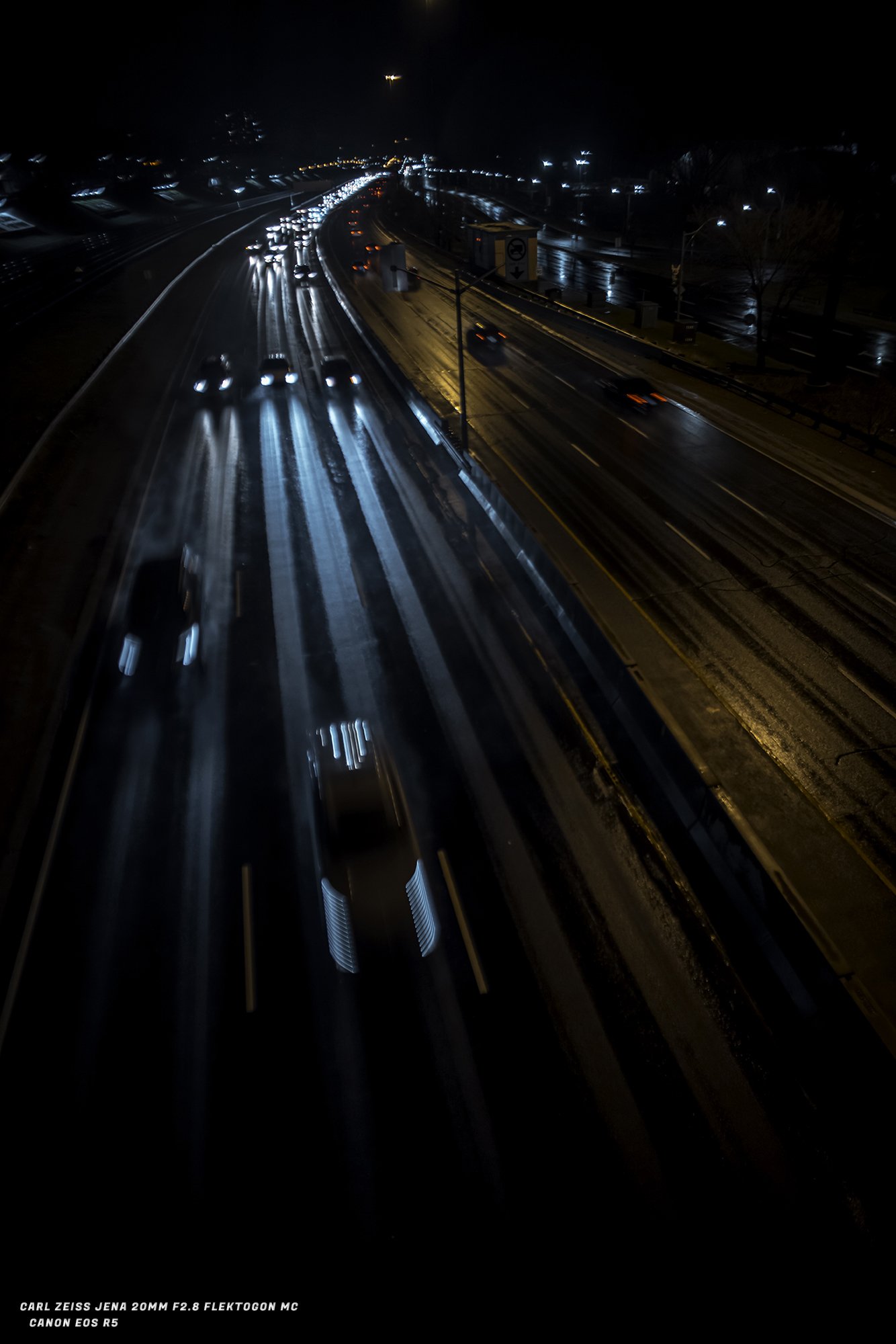


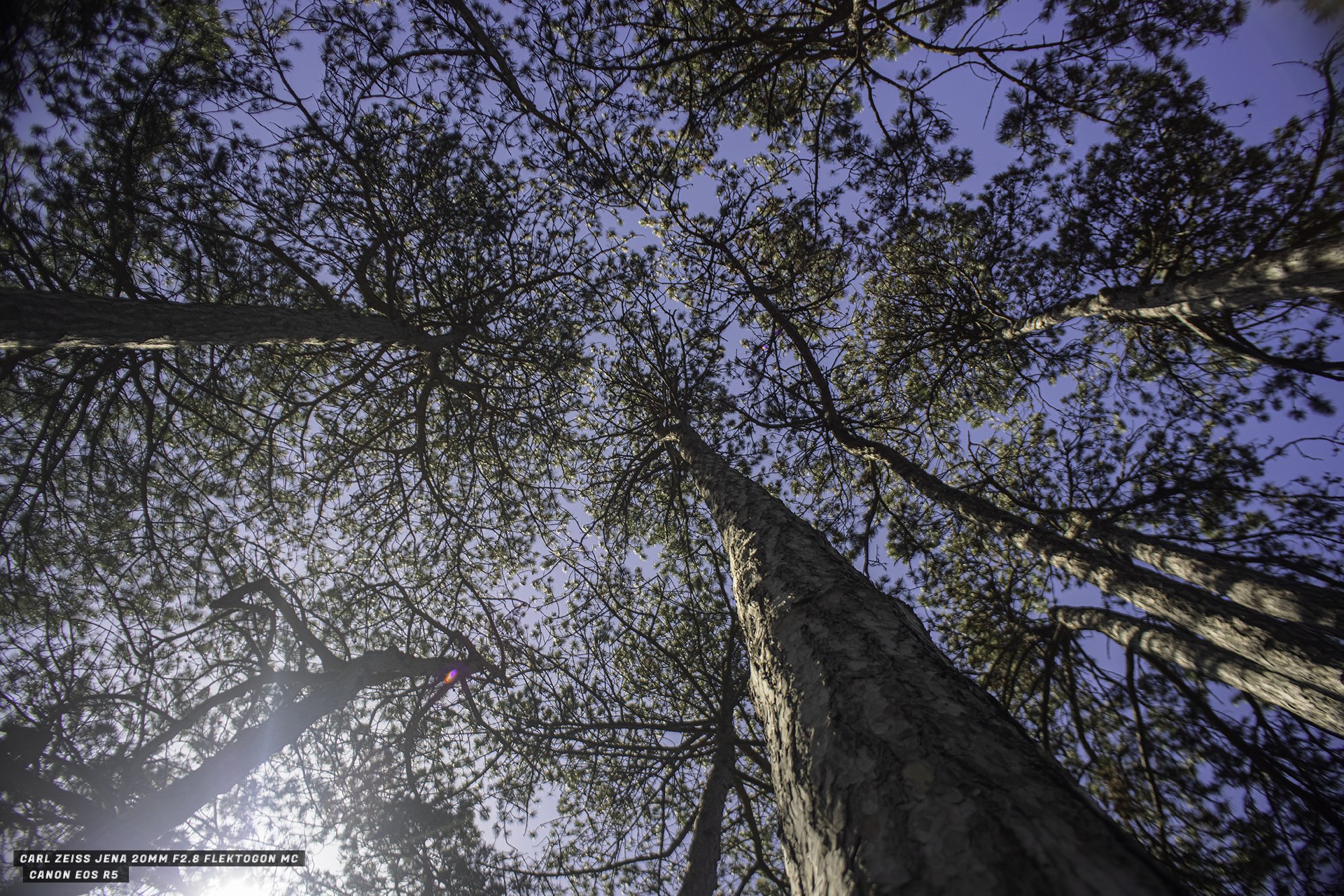


Color Rendering & Zeiss Look
This is where the Flektogon really stands out. Due to the coatings used the color rendering has that classic Zeiss signature, rich, slightly warm tones with excellent contrast and depth. Colors feel natural but still have a subtle pop that adds life to the image. There’s also a smooth tonal transition between highlights and shadows, which gives images a more cinematic and organic look. It’s the kind of rendering that feels complete straight out of camera, without needing heavy grading or correction. For me personally I prefer the color rendering of Canon’s New FD lenses. I find the Zeiss look to be a little too bright. What are your thoughts. Let me know in the comments.
Contrast & Microcontrast
One of the defining characteristics of this lens is its microcontrast. Fine details have a subtle separation that gives images a sense of depth and dimensionality. This is something Zeiss lenses are known for, and the Flektogon is no exception. Even in flatter lighting conditions, images maintain a sense of structure and presence. This makes the lens particularly effective for environmental shots, where depth and layering are important.
Flare & Highlight Rendering
Thanks to the multi-coating (MC), flare is reasonably well controlled for a lens of this age. However, it doesn’t eliminate flare entirely, and that’s actually part of the appeal. One interesting thing worth noting about the Flare you get with this lens is that it’s all white. Most lenses produce different colors of flare which can be distracting. It’s actually pretty cool to see an all white flare.
When shooting into light, the lens produces:
A soft glow around highlights
Gentle contrast reduction
Occasional artistic flare artifacts
Instead of looking harsh or distracting, these characteristics add a cinematic quality to the image. It’s a look that feels intentional and expressive rather than flawed.
Distortion & Perspective
For a 20mm lens, distortion is relatively well managed. There is some barrel distortion present, especially when shooting close to subjects, but it’s not overly aggressive. In most real-world scenarios, particularly landscapes and environmental compositions, distortion isn’t a major issue. With careful framing or minor corrections in post, it’s easy to work around. What you gain in return is a strong sense of perspective and depth that makes images feel immersive.
Vignetting
Vignetting is visible at f/2.8, with noticeable darkening in the corners. Personally given the reputation of this lens I was surprised that the Canon nFD 17mm f/4 performed better in the vignette department.
As you stop down, the vignetting reduces significantly. By f/5.6 it’s much less pronounced, and by f/8 it’s largely gone. This gives you flexibility depending on whether you want a more vintage look or a cleaner, more neutral image.
🎯 Pro Tip: If you plan in using filters with this lens I would suggest getting a step up ring so you can use 83mm filters with this lens. By using larger filters you can avoid creating vignette with filter rings.
Real-World Image Quality
In real-world use, this lens consistently delivers images that feel unique and engaging. It’s not about achieving perfect sharpness, it’s about creating images with mood, depth, and personality. The combination of ultra-wide perspective, close focusing ability, and Zeiss rendering makes this lens incredibly versatile. It works beautifully for landscapes, cityscapes, environmental portraits, and cinematic video work. What I appreciate most is that the images don’t feel generic. There’s always something about them that stands out.
Is It Still Relevant in the Mirrorless Era?
Absolutely. While modern lenses outperform it in terms of technical sharpness and correction, they often lack the character that makes the Flektogon so appealing. If you’re looking for:
A unique rendering style
Strong color and contrast
Creative flexibility with close focusing
Then the Carl Zeiss Jena 20mm f/2.8 Flektogon MC still holds up extremely well today.
Final Thoughts on Image Quality
The Carl Zeiss Jena 20mm f/2.8 Flektogon MC delivers a beautiful balance of sharpness, contrast, and character. It’s a lens that rewards creative shooting and offers a look that’s difficult to replicate with modern optics. It’s not perfect, and that’s exactly why it’s so good. If you’re drawn to vintage lenses for their rendering and feel, this is one of the best ultra-wide options you can add to your kit.
🤓 Read Next:
Carl Zeiss Jena 20mm f/2.8 Flektogon MC Mini Review - Build, Design & Handling
Read more vintage lens reviews