
Carl Zeiss Jena Pancolar 50mm f/1.8 (6-Blade) - Optical Performance and Sample Photos
Carl Zeiss Jena Pancolar 50mm f1.8 (6 blade version)
There’s a moment when you review a vintage lens and expect charm but not precision. Then you mount the Carl Zeiss Jena Pancolar 50mm f/1.8 Zebra, take a few frames, and realize this lens quietly blurs the line between “character glass” and serious optical performance. What surprised me most wasn’t just the look, it was how controlled, consistent, and usable the rendering is across a wide range of conditions. If you’re considering buying this lens, this deep dive into its optical performance will help you decide if it deserves a spot in your kit. If you want a more technical look at this lens than check out this post next: Carl Zeiss Jena Pancolar 50mm f/1.8 Zebra (6-Blade Version) - Mini Review
Optical Design & Engineering
At the core of the Pancolar’s performance is its 6-element, 4-group optical design, which is rooted in a refined double Gauss formula, one of the most proven designs for 50mm lenses. This design is known for:
Balanced sharpness across the frame
Natural rendering and minimal distortion
Smooth falloff from focus to out-of-focus areas
What makes this later 6-blade version particularly appealing is the improved multi-coating, which enhances contrast and reduces flare compared to earlier single-coated versions. While it doesn’t completely eliminate vintage artifacts, it gives the lens a more modern usability without stripping away its character.
Sharpness & Resolution
From my experience, the Pancolar delivers usable sharpness wide open at f/1.8, especially in the center of the frame. There’s a slight softness, but it feels acceptable for a lens of this era, almost like a built-in diffusion filter that works beautifully for portraits.
As soon as you stop down:
f/2.8 – f/4: Noticeable jump in contrast and clarity
f/5.6: Excellent sharpness across most of the frame
f/8: Peak performance with strong edge-to-edge detail
This is where the lens really surprised me. At f/5.6 and beyond, it can genuinely compete with modern lenses in terms of resolution, while still retaining its unique rendering.
Color Rendering & Contrast
One of the standout traits of the Pancolar is its color science. Images tend to lean slightly warm, with rich midtones and a subtle cinematic quality. If you’re familiar with vintage lenses you’ll notice that Zeiss lenses have a “zeiss look”. I assume the coating on the lens have a play on how the lens renders color and that creates the look.
Compared to modern lenses:
Contrast is slightly softer wide open
Colors feel more organic and less clinical
Highlights roll off more gently
Because my version does not use thorium glass, I don’t get the heavy yellow cast seen in earlier versions. Instead, the improved coatings help maintain more neutral color while still preserving that classic Zeiss warmth.
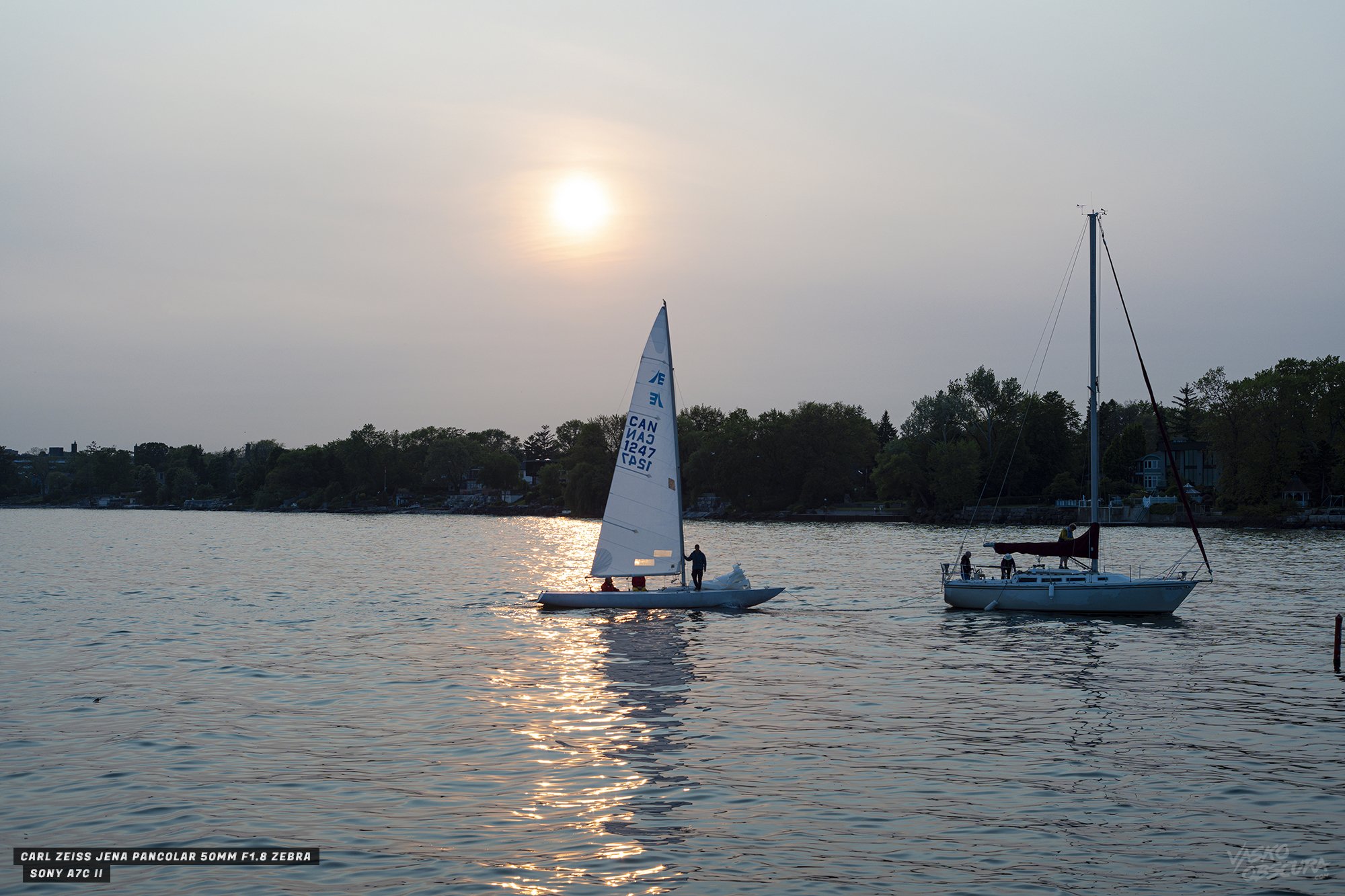
Sample Photos


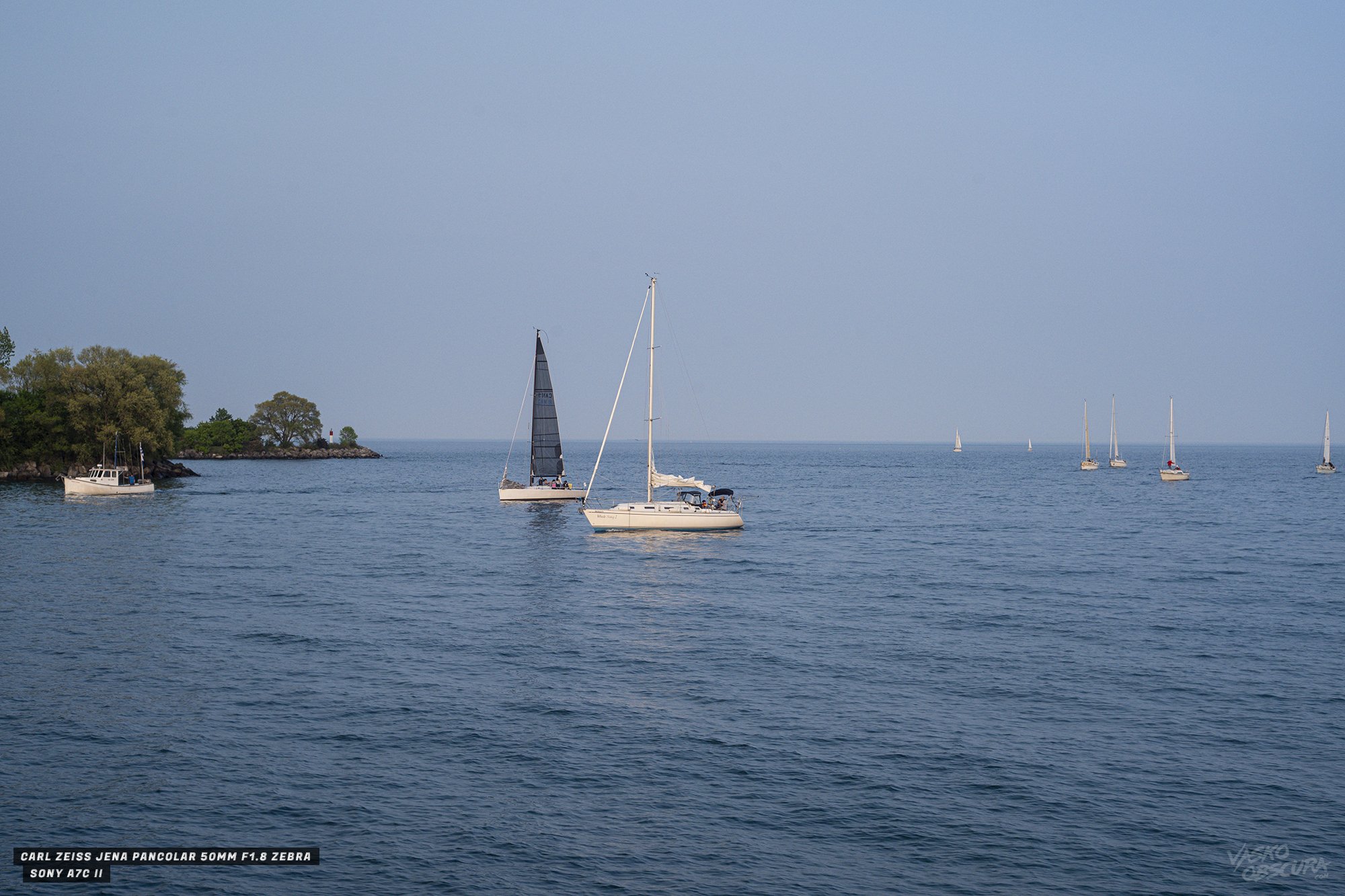
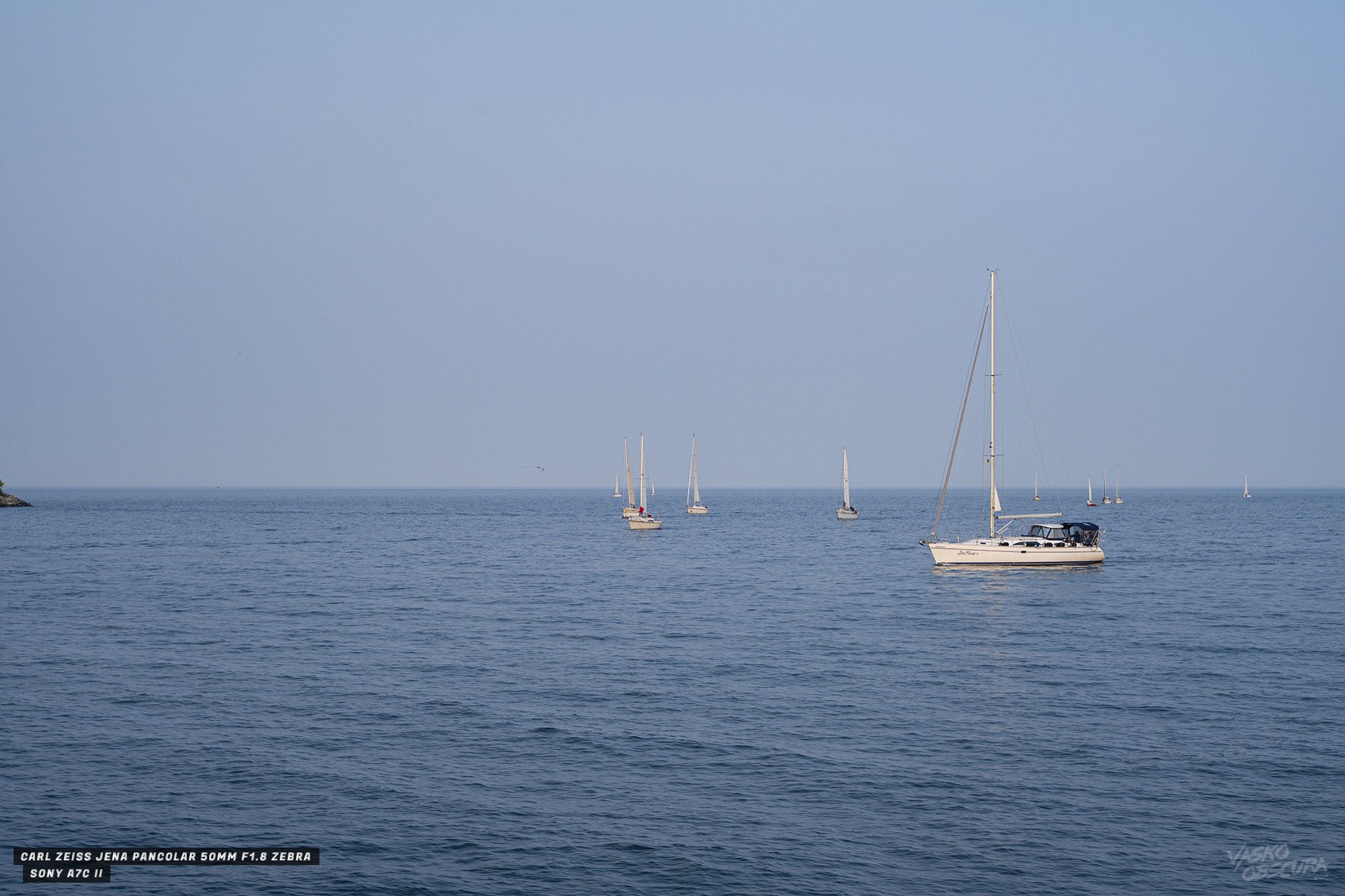


Bokeh & Depth Rendering
The Pancolar’s rendering is where things start to feel special. Wide open at f/1.8, the lens produces:
Smooth, pleasing background separation
Soft transitions between in-focus and out-of-focus areas
A slightly “painterly” look
The 6-blade aperture does introduce more geometric bokeh shapes when stopped down, resulting in hexagonal highlights. Personally, I notice this more in specular highlights than in general background blur.
Compared to the 8-blade version:
Bokeh is less rounded
Highlights are more defined
The overall look is slightly more structured
That said, for portraits and subject isolation, it still delivers a very attractive result.
Flare, Ghosting & Coatings
This is where vintage character really comes into play. Thanks to improved coatings, flare is more controlled than older Pancolars, but it’s still very much present when shooting into strong light.
What I’ve noticed:
Subtle veiling flare that lowers contrast
Occasional ghosting artifacts
Creative flare patterns when backlit
This isn’t a flaw in my opinion it’s a vintage lens feature. If you like using light creatively, this lens gives you tools that modern lenses often suppress.
Chromatic Aberration & Optical Imperfections
Like most vintage lenses, the Pancolar isn’t perfect—but its flaws are relatively well controlled.
You may encounter:
Longitudinal chromatic aberration (color fringing in front/behind focus) at f/1.8
Minor purple/green fringing in high-contrast areas
Slight softness toward the edges wide open
Stopping down significantly reduces these issues.
In practical terms, I found these imperfections easy to work around—and sometimes they even contribute to the lens’s overall look.
Real-World Rendering & Use Cases
In real shooting scenarios, this lens consistently delivers images that feel intentional and expressive.
Where it shines most:
Portraits with soft, flattering rendering
Street photography with natural contrast
Environmental shots with subtle depth separation
Backlit scenes where flare adds mood
This is not a “perfect” lens—and that’s exactly why it works so well creatively.
Who This Lens Is For (Buyer Insight)
If you’re searching for a vintage 50mm lens to buy, the Pancolar sits in a really interesting position.
It’s ideal for:
Photographers who want character without sacrificing usability
Creators shooting on mirrorless systems with M42 adapters
Portrait shooters looking for a softer wide-open look
Anyone building a vintage lens collection
It may not be for:
Pixel-peepers chasing clinical perfection
Shooters who rely heavily on autofocus or electronic integration
From a value perspective, it often comes in at a very reasonable price compared to modern primes, making it a strong option for budget-conscious buyers.
Final Thoughts
The Carl Zeiss Jena Pancolar 50mm f/1.8 Zebra is one of those rare vintage lenses that manages to balance optical performance and character without leaning too far in either direction.
It’s sharp when you need it to be, expressive when you want it to be, and always engaging to shoot with.
If you’re considering buying this lens, it’s not just a collectible—it’s a genuinely capable tool that still holds up today.
And if you want to see how this lens performs in real-world shooting, definitely check out my YouTube channel for sample footage, comparisons, and hands-on reviews of vintage glass like this.
FAQ (SEO Optimized)
Is the Pancolar 50mm f/1.8 sharp enough for modern cameras?
Yes. While slightly soft wide open, it becomes very sharp by f/5.6 and performs well even on high-resolution sensors.
Does the Pancolar 50mm f/1.8 have good bokeh?
Yes. It produces smooth bokeh at f/1.8, though the 6-blade aperture creates more geometric shapes when stopped down.
Is this lens good for portraits?
Absolutely. The slight softness at f/1.8 combined with smooth rendering makes it excellent for flattering portraits.
How does it handle flare?
It has controlled but noticeable flare. This can be used creatively for cinematic or artistic effects.
Can I use this lens on mirrorless cameras?
Yes. It uses an M42 mount, which can be easily adapted to Sony, Canon RF, Nikon Z, and Fujifilm systems.
Is the Pancolar 50mm f/1.8 worth buying?
If you’re looking for a vintage lens with strong optical performance and character, it’s definitely worth considering—especially at its typical price point.
Image Quality & Rendering
Sharpness
The Pancolar is known for solid center sharpness, even wide open at f/1.8. Stopping down to around f/2.8–f/4 significantly improves contrast and clarity, with very good sharpness throughout the frame by f/5.6. Many photographers find that wide open sharpness has a slight softness that isn’t a flaw but part of its classic character, especially flattering for portraits and artistic photography.
Color & Contrast
The Pancolar’s rendering tends toward warm, rich tones with pleasing contrast that many describe as “cinematic” or “characterful,” especially on film or with minimal color correction. Earlier Zebra versions with yellowing glass from thorium content can add a subtle amber cast, which some photographers embrace while others correct in post. (My version of the lens does not have thorium) Multi-coated versions offer more accurate colors and improved flare resistance compared to single-coated lenses.
Bokeh and Background Blur
The lens produces smooth, rounded bokeh wide open. Its 6 blade diaphragm contributes to attractive out-of-focus rendering, making this a great choice for portraits and creative shallow-depth shooting. There is an older version of this lens with 8 blades which would produces rounder bokeh balls.
Character & Flare
Part of the Pancolar’s charm is how it interacts with light, subtle veiling flare and unique highlights can lend a distinctive mood to backlit scenes. Some shooters love this “personality,” while others may find it unpredictable in harsh lighting.
Why Photographers Love This Lens
Vintage optical character: Warm tonality and unique rendering.
Adaptability: m42 mounts work on most mirrorless cameras with simple adapters.
Manual focus experience: Smooth, precise focus feel.
Affordable vintage option: Often cheaper than modern premium primes.
While not the most technically perfect lens by modern standards, the Pancolar’s personality, build quality, and classic “vintage look” make it a beloved choice for creative photographers and videographers alike.
Real-World Use Cases
This lens really shines for:
Portraits with creamy bokeh
Environmental and street photography
Warm, nostalgic landscapes
Artistic shooting where character beats clinical sharpness
It’s also ideal for creators who want to experiment with vintage glass on full-frame and APS-C mirrorless bodies.
More Vintage Lens Content
For more sample photos, reviews, and vintage lens tests, check out other posts on the blog and on my YouTube channel a great resource if you’re researching vintage lenses for modern photography.