
Carl Zeiss Jena Pancolar 50mm f1.8 (6 blade version)
There’s a certain moment when you mount a vintage lens and immediately feel like you’ve stepped into a different era of photography and the Carl Zeiss Jena Pancolar 50mm f/1.8 Zebra delivers exactly that. The weight, the resistance of the focus ring, the subtle click of the aperture all of it feels classic vintage. But what really surprised me wasn’t just the nostalgia, it was how refined and technically capable this lens still is decades later. If you’re considering adding this lens to your kit, especially as a buyer, this review will break down everything you need to know from a physical and technical standpoint. If you want a review of the optical performance of this lens with sample images check out this post after. For all my vintage lens reviews and sample photos click here.

LENS SPECS
Release Date: 1975
Format: 35mm
Mount: M42
Filter: 49mm
Aperture Blades: 6
Aperture Range: f/1.8 - f/22
Min Focus Distance: 0.35m
Weight 225g
Optical Design: 6 elements in 4 groups
APS-C Conversion Approx.: 80mm
A Brief History of the Pancolar 50mm f/1.8
The Pancolar line was developed by Carl Zeiss Jena in East Germany during the Cold War, a time when engineering excellence had to thrive despite limited access to Western manufacturing advancements. This lens became one of their flagship standard primes, designed for Praktica cameras using the M42 mount. There are two primary versions of the Pancolar 50mm f/1.8:
The earlier 8-blade version with thorium glass
The later 6-blade version (this one), which removed thorium and improved coatings
My copy, based on the serial number, was manufactured around 1989 toward the end of East German production. It represents a mature version of the design, refined and optimized over years of iteration. Understanding where this lens came from and what it meant, holding it in my hands feels like i’m holding a relic of the Cold War era.
Build Quality & Physical Design
One of the first things that stood out to me is just how solid this lens feels. The entire construction is metal and glass no plastic anywhere. Compared to modern lenses, especially budget options, this feels like a completely different class of object. The iconic “zebra” design, alternating black and silver stripes, isn’t just aesthetic, it also provides excellent grip. The machining is precise, and even after decades, my copy still feels tight and well put together. There’s a density to the lens that immediately signals durability and quality. It’s not overly heavy, but it has enough weight to feel balanced on most mirrorless bodies.
Focus Ring & Handling Experience
Manual focusing on this lens is one of its biggest strengths. The focus ring is incredibly smooth, with a long throw that allows for very precise adjustments. In use, I found it encourages a slower, more deliberate shooting style. You’re not snapping quick autofocus shots, you’re composing, adjusting, and really engaging with your subject.
On modern mirrorless cameras with focus peaking and magnification, this becomes even more enjoyable. The tactile feedback combined with modern assist tools creates a really satisfying hybrid experience. It’s really been a lot of fun to shoot with this lens and create images with that classic Carl Zeiss look.
Aperture Design & Characteristics
The version I’m using features a 6-blade aperture, which has a noticeable impact on rendering. At wider apertures, the bokeh is fairly smooth, but as you stop down, you start to see more defined hexagonal highlights. This can be either a creative advantage or a limitation depending on your style.
Personally, I tend to prefer rounder bokeh, which is why the 8-blade version still interests me. That said, the 6-blade design gives images a distinct geometric character that can actually enhance certain compositions. The aperture ring itself has firm, satisfying clicks and is easy to adjust without taking your eye off the scene.
Gear Shots
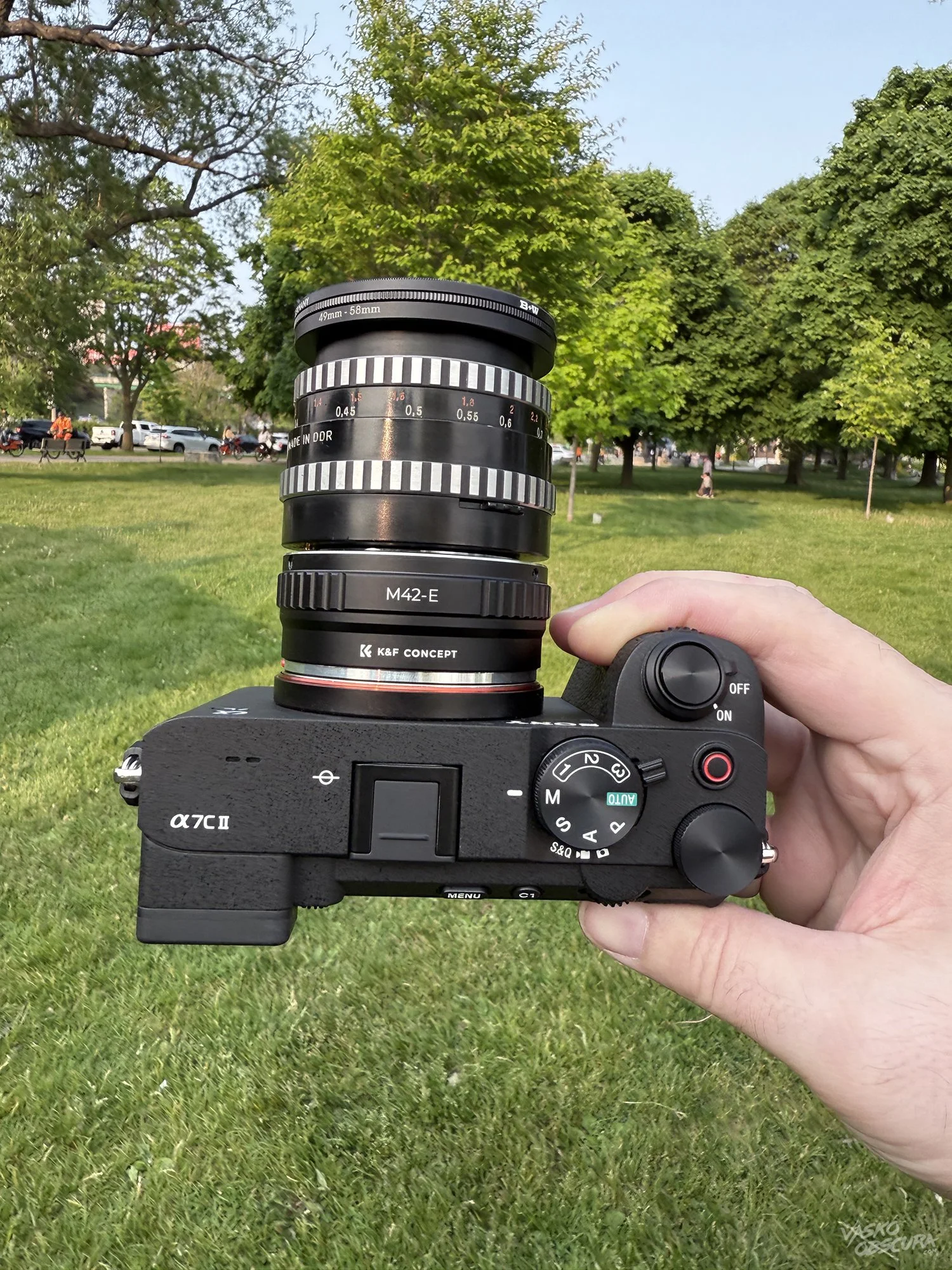
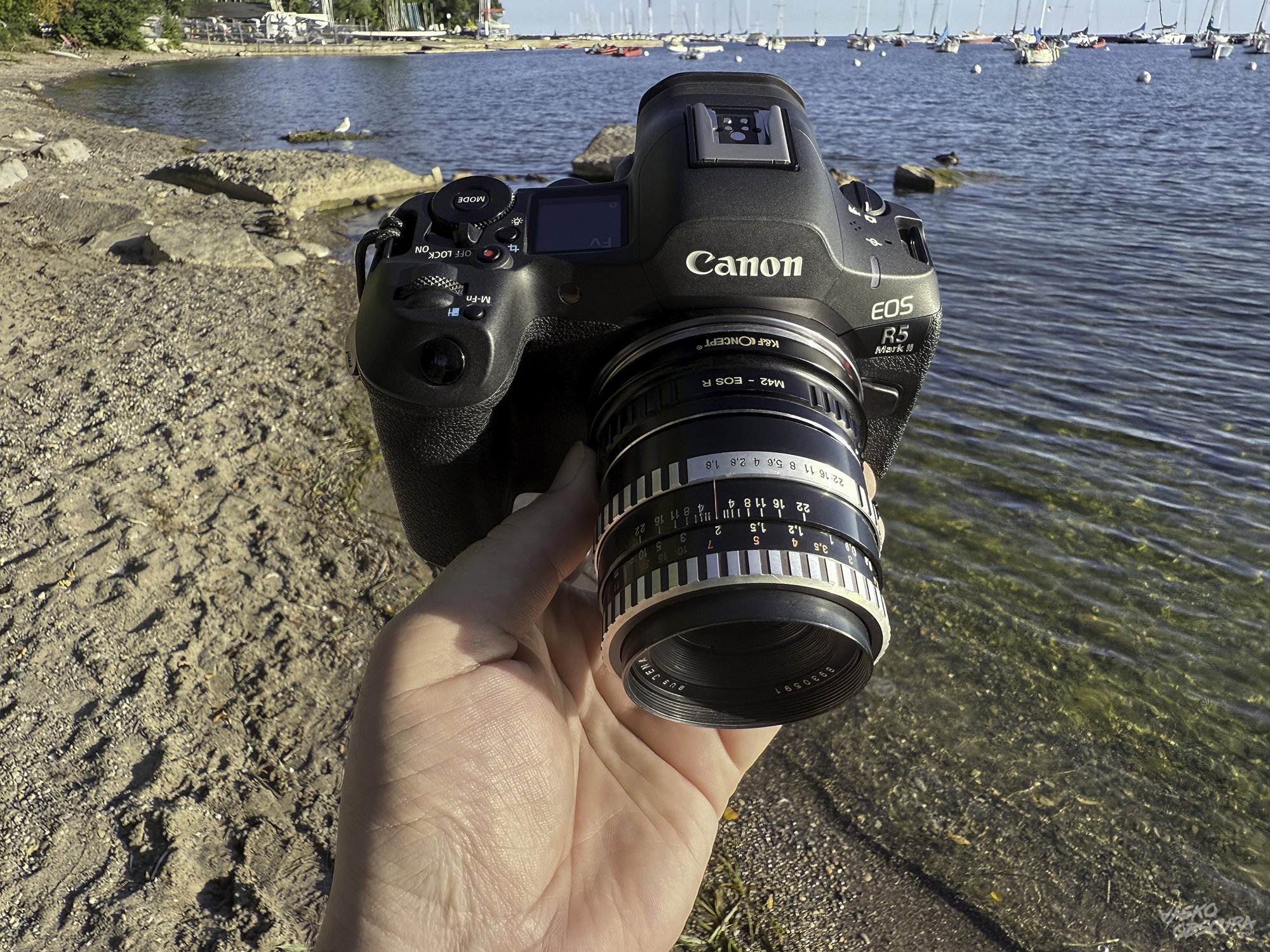
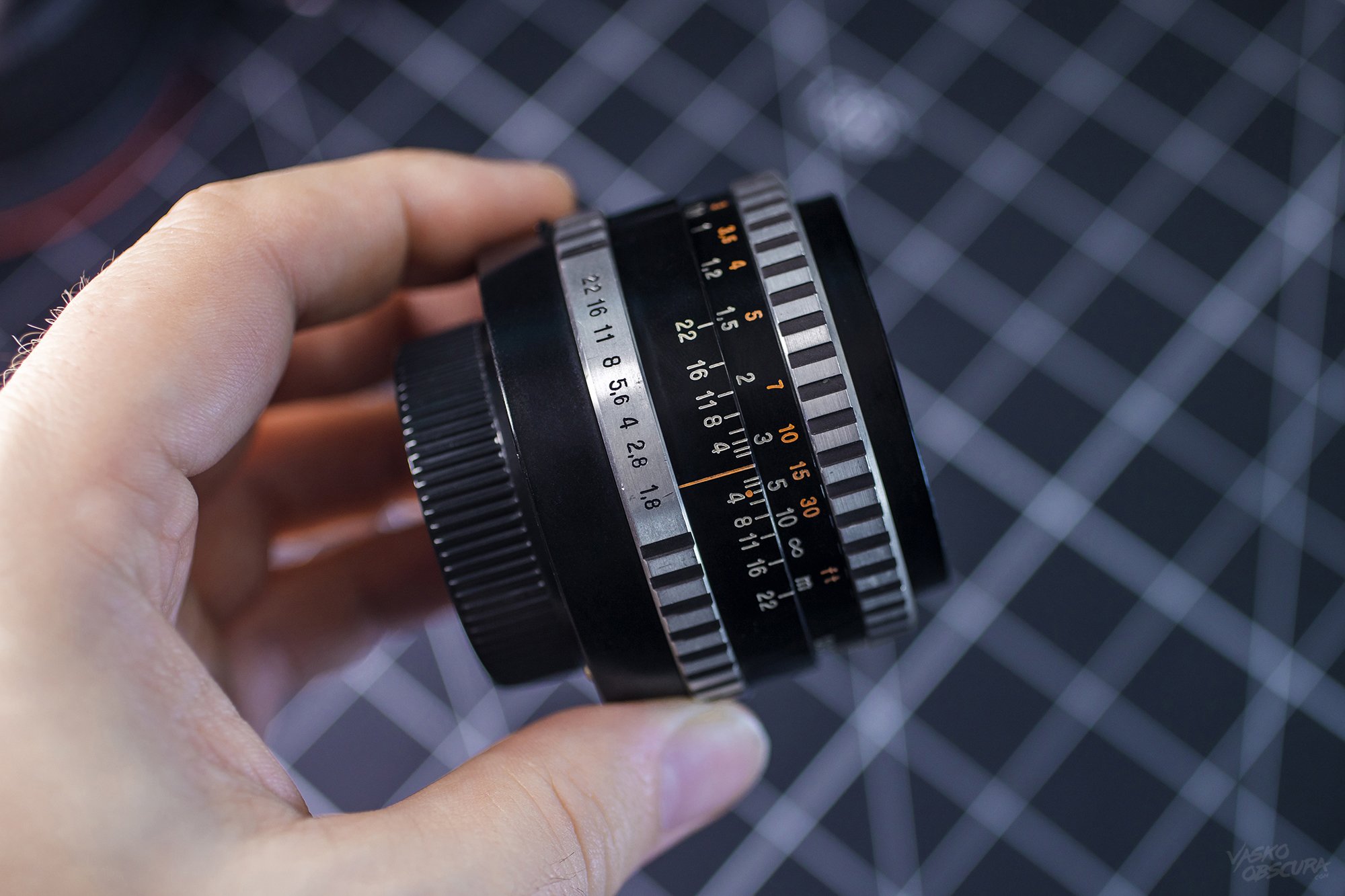
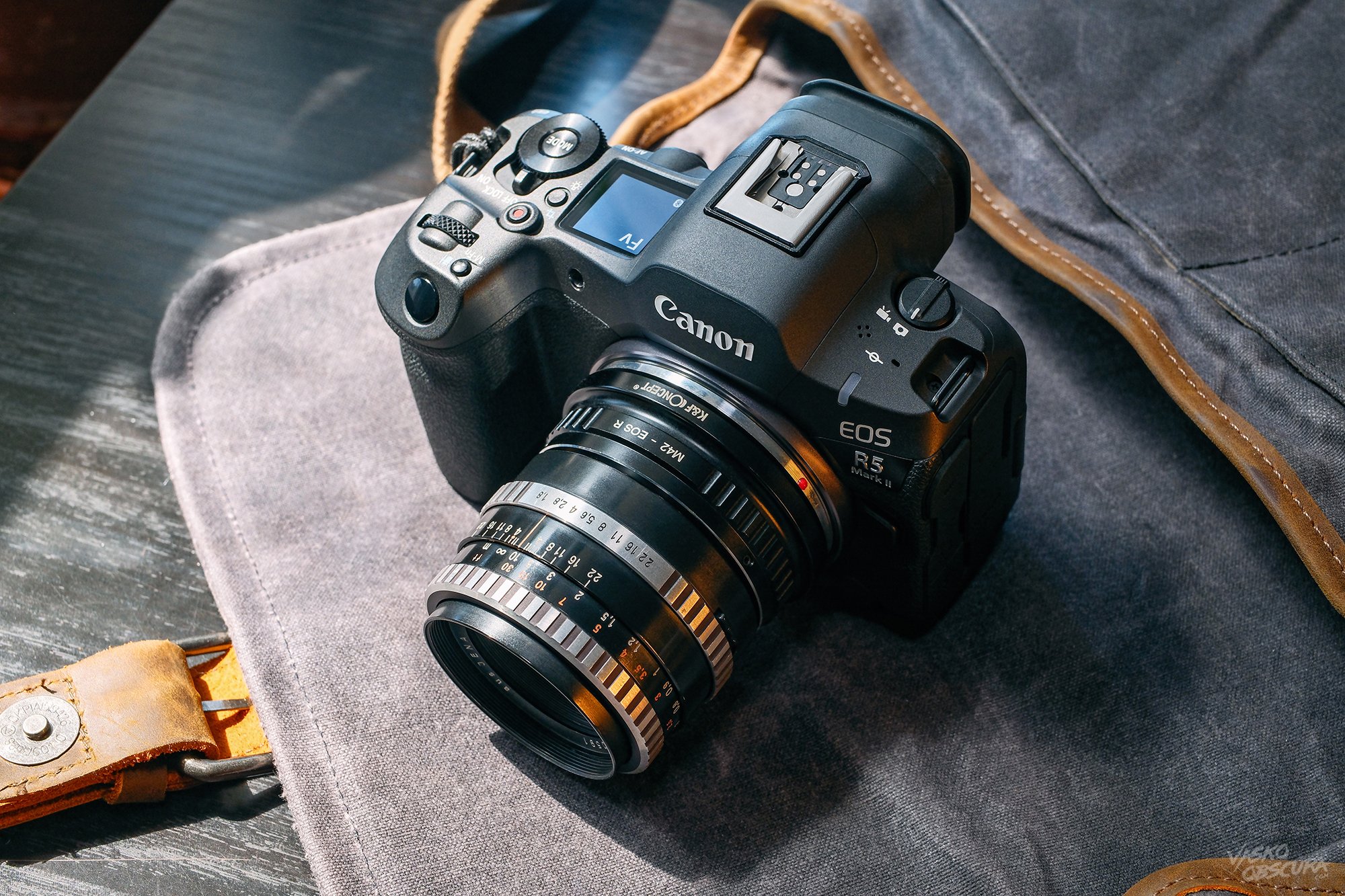


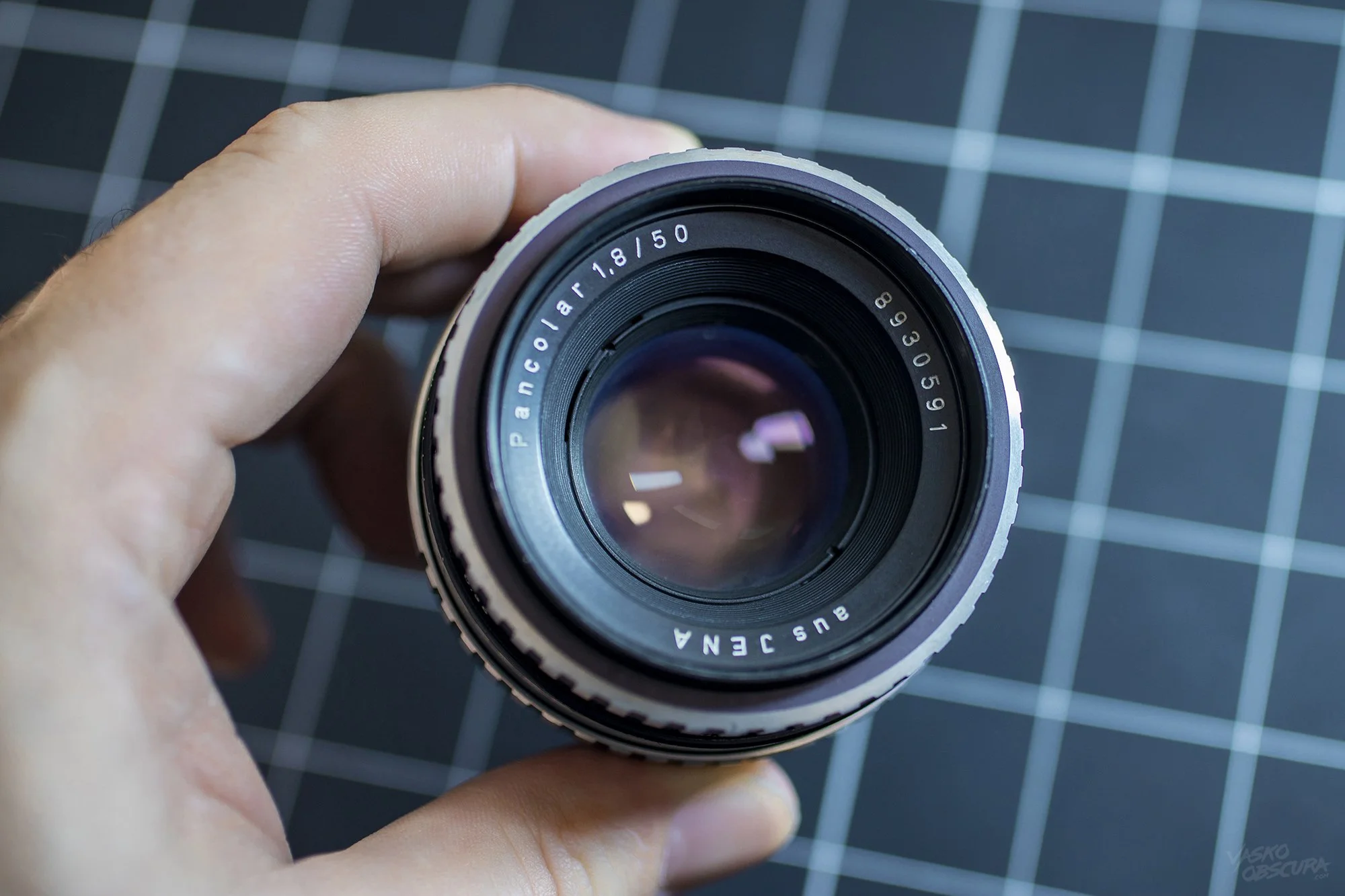
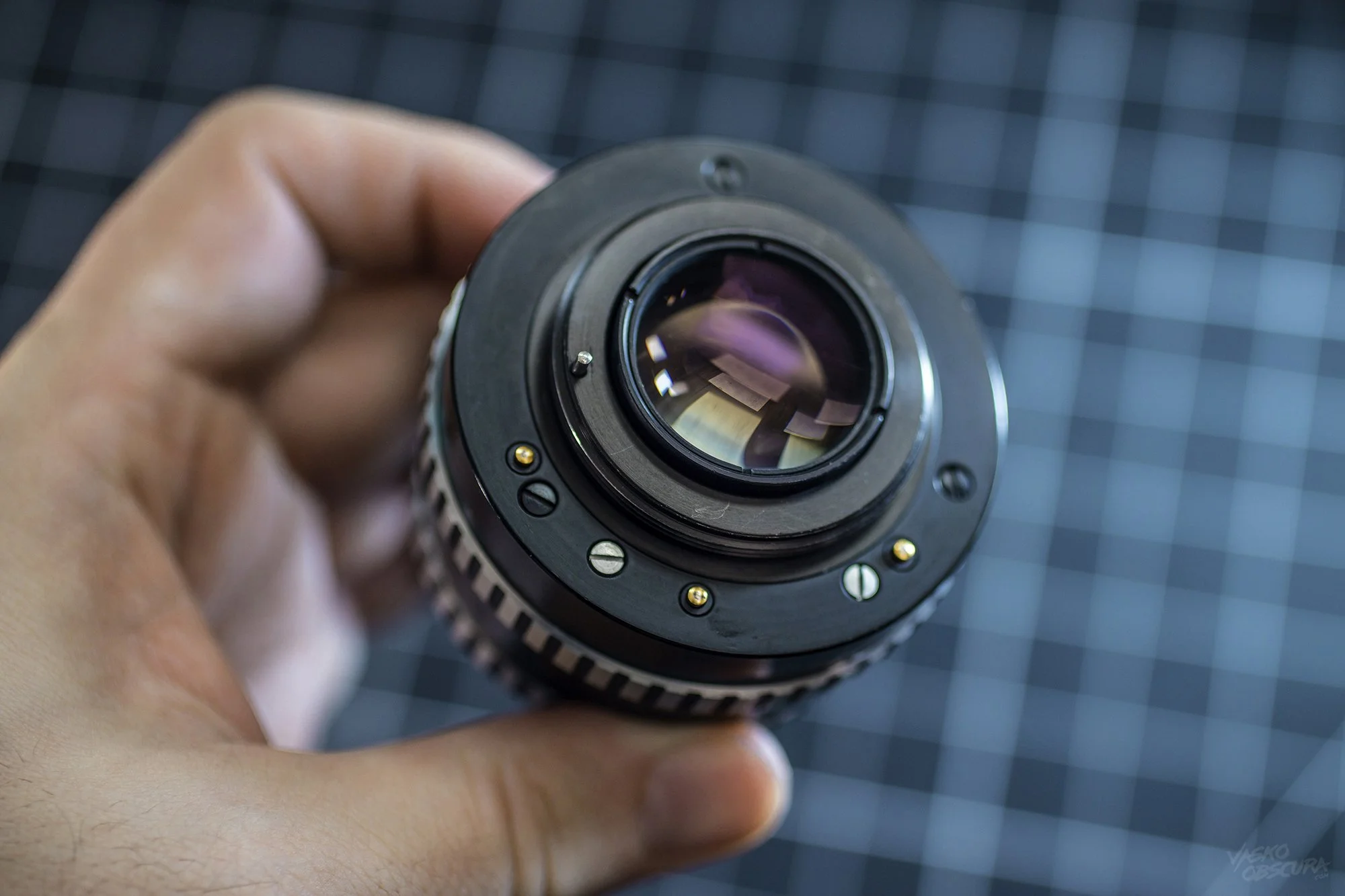

Optical Design & Coatings
Both versions of this lens share a 6-element, 4-group optical design, which is a classic and well-proven formula for standard primes. Where this later version really improves is in the coatings. Earlier Pancolars often used single coatings, but this version benefits from improved multi-coating, which helps:
Reduce flare
Improve contrast
Maintain better color accuracy
While it’s still a vintage lens and can flare in strong backlight, it’s far more controlled than many lenses from the same era. The interesting thing about Carl Zeiss lenses is that the actual hotspot the sun comes out white with the coatings.
Mount & Adaptability
This lens uses the M42 screw mount, one of the most adaptable mounts ever made.
I’ve personally used it with:
M42 to Sony E-mount adapters
M42 to Canon RF adapters
Adapters are inexpensive and widely available, and since the lens is fully mechanical, there are no compatibility issues. This makes it a very accessible entry point into vintage lenses, especially if you’re shooting mirrorless. If you want more info about adapting vintage lenses check out my adapters blog posts.
Real-World Usability on Modern Cameras
Using this lens on a modern mirrorless body is incredibly straightforward. Once mounted with an adapter, it becomes a fully manual experience. There’s no electronic communication, which means:
No autofocus
No EXIF lens data
Manual aperture control
But in exchange, you get full creative control. Focus peaking and magnified view make a huge difference here. I found it surprisingly easy to nail focus, even at f/1.8. It just takes some practice to develop the muscle memory and you’ll become a focusing machine.
Menu Settings for Mirrorless Cameras
To use this lens properly, you’ll need to adjust one key setting on your camera:
Enable “Release shutter without lens”
Since the camera doesn’t detect any electronic connection, it assumes there’s no lens attached unless you override this setting. Most camera won’t actuate the shutter if they don’t think there is a lens mounted which is why you have to enable the settings. I’ve found that new Sony cameras have this setting enabled by default. If you need a deeper dive into menu settings for vintage lens shooting check out this post: How to Set Up Your Camera to Shoot With Vintage + Manual Lenses
You’ll also need:
An M42 adapter for your camera mount
Once that’s done, you’re good to go.
Final Thoughts
The Carl Zeiss Jena Pancolar 50mm f/1.8 Zebra is one of those lenses that quietly exceeds expectations. It doesn’t lean heavily into “quirky vintage flaws,” nor does it try to mimic modern perfection. Instead, it sits in a really interesting middle ground, technically strong, beautifully built, and still full of character. If you’re looking for a vintage 50mm lens that delivers both usability and heritage, this is an easy recommendation. Especially for buyers, it’s a lens that offers real value not just as a collector’s item, but as a practical tool you’ll actually want to shoot with. So far I’ve really been enjoying this lens. I look forward to taking it out for some more shoots and getting to know it better.
FAQ
Is the Pancolar 50mm f/1.8 Zebra radioactive?
Only the earlier 8-blade version contains thorium glass, which can be mildly radioactive and often has a yellow tint. The 6-blade version I’m using does not contain thorium.
Is this lens sharp?
Yes, especially stopped down. Around f/5.6, it becomes impressively sharp and can rival modern lenses in many situations.
What mount is the Pancolar 50mm f/1.8?
It uses the M42 screw mount, which is highly adaptable to modern mirrorless systems.
Is it good for video?
Absolutely. The smooth focus ring and manual control make it a great option for cinematic shooting, especially if you enjoy a more hands-on approach.
Should I get the 6-blade or 8-blade version?
6-blade: Better coatings, more neutral color, hexagonal bokeh
8-blade: Rounder bokeh, warmer rendering, more “vintage” look
It really comes down to your personal preference.
Is it worth buying today?
Yes, especially if you’re interested in vintage lenses that are still highly usable. It offers a great balance between character and technical performance, making it a strong addition to almost any kit.