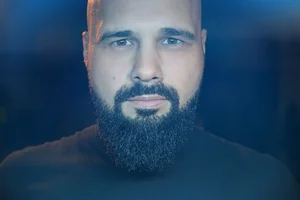
The Mistake That Started It All
Have you ever made a total bonehead mistake that accidentally leveled up your photography? This is one of mine and honestly, it’s one of the best things that’s ever happened to my work. I was in the studio shooting Stefania Cima an incredibly talented hip-hop artist who also happens to be ridiculously photogenic (which definitely doesn’t hurt). I had a very specific lighting concept in mind, so I did what I always do: dialed in my usual studio settings, ISO 200, f/9, and 1/125s. Those are great settings to start with for most of my studio lighting setups.
But when I took my first test shot and looked down at the back of my camera, I froze for a second. The image was… dark. Not just underexposed but beautifully dark. Rich shadows, deep contrast, moody tones. It looked intentional. Cinematic, even. And I had no idea why. I double-checked everything, my lights, my camera settings, my triggers. Nothing made sense. For a moment, I genuinely thought my camera was malfunctioning.
So I put it down. And that’s when I saw it. A dark neutral density ND4 filter… still mounted on the front of my lens. Oops. 🤦♂️ But also, jackpot.
What Is “Dark Light” Photography?
“Dark light” portraits aren’t just underexposed photos, they’re controlled, intentional uses of shadow, filters and reduced light to create mood, depth, and drama. Instead of brightly lighting your subject, you’re cutting light in a way that lets shadows take over parts of the frame. The result feels more cinematic, more emotional, and often more artistic. It’s an atmosphere.
The Settings I Used (Accidentally)
Here’s the exact setup that created the look:
ISO: 200
Aperture: f/9
Shutter Speed: 1/125
Lighting: Standard studio lighting setup 600w Lights. Key light set to ¼ power
The “Mistake”: A dark ND4 filter still on the lens
That ND filter cut down a significant amount of light, effectively forcing my exposure into a darker range without changing my lighting ratios. That’s the key.
🛸 More content with Stefania Cima| Instagram
🎬 Behind the scenes video from this shoot
Why It Worked So Well
What made this look special wasn’t just that it was darker it was how the darkness interacted with the light.
Highlights stayed controlled and clean but dim
Shadows became rich and dominant
Skin tones took on a more cinematic feel
The image gained instant mood and depth
Because the lighting itself didn’t change just the exposure the contrast stayed natural and pleasing.
How to Recreate the Look Intentionally
Now that I actually know what I’m doing (kind of lol), here are a few ways you can recreate this look on purpose:
Use a Neutral Density Filter
This is the easiest way to replicate what I did.
Throw on an ND filter (start with something like ND4 or ND8)
Keep your lighting setup the same
Shoot with your normal settings
You’ll immediately see your exposure drop while maintaining your lighting structure.
Lighting Tips for Dark Portraits
If you really want to push this style, lighting becomes everything.
Use directional light: Side lighting or Rembrandt-style setups work beautifully
Control spill: Flags, grids, and barn doors help keep light where you want it
Embrace shadows: Don’t try to “fix” them—lean into them
Watch your highlights: Skin highlights should still have detail
The goal isn’t to eliminate light it’s to sculpt it.
Final Thoughts
What started as a complete accident turned into one of my favorite portrait techniques. That’s the thing about photography sometimes your best ideas don’t come from planning. They come from mistakes you’re curious enough not to ignore. That’s why I love doing creative shoots with models. I have the flexibility to play. With client shoot on the other hand I would have corrected the lighting a moved on quick. That ND filter had no business being on my lens that day… but I’m glad it was. Because now, shooting dark light portraits isn’t an accident anymore it’s a creative choice.
And honestly? Yeah… #winning.