
Canon FD 28mm f/3.5 S.C. Chrome Nose Mini Review: Build, History & Vintage Design
Canon FD 28mm f3.5 S.C. Chrome Nose
There’s something special about picking up a lens that feels like a piece of history and the Canon FD 28mm f/3.5 S.C. Chrome Nose is exactly that. This is one of those lenses that instantly reminds me why I enjoy shooting vintage glass. It’s not just about the images it’s about the experience. I picked this lens up out of curiosity more than anything. I’ve spent a lot of time with Canon’s later nFD lenses and their Super Spectra Coating, but I wanted to see how these earlier S.C. (Spectra Coating) lenses compare, especially when it comes to flare and overall rendering. If you’ve been following my vintage lens journey, you already know I tend to embrace imperfections rather than avoid them. This mini review is going to focus more on the physical attributes of this lens. If you want a review that focuses more on image quality check out this post after you read this one.

Canon FD 28mm f/3.5 S.C.
LENS SPECS
Release Date: 1971
Format: 35mm
Mount: FD
Filter: 55mm
Aperture Blades: 6
Aperture Range: 3.5 - 16
Min Focus Distance: 0.40m
Weight 292g
Optical Design: 6 elements in 6 groups
APS-C Conversion Approx.: 45mm
A Brief History of the Canon FD “Chrome Nose” Lenses
The Canon FD 28mm f/3.5 S.C. Chrome Nose was introduced in 1971 during the early days of Canon’s FD mount system. Interestingly, this version had a relatively short production run, ending around 1973, which makes it a bit harder to find today compared to later FD and nFD lenses. Check out the history of all Canon mounts from M39 to RF in this post.
At the time this lens was released, Canon was the new kid on the block and making a strong push into the professional SLR market, and the early FD lineup reflected that ambition. The “chrome nose” series launched with a solid range of wide-angle lenses, including:
Canon FD 17mm f/4
Canon FD 24mm f/2.8
Canon FD 28mm f/3.5
Canon FD 35mm f/2
Canon FD 35mm f/3.5
By 1973, Canon began transitioning these lenses into updated versions with improved coatings and mounting systems. This is when we started seeing the shift toward the later FD designs and eventually the nFD lineup in the 1980s, which introduced Super Spectra Coating (S.S.C.) for improved contrast and flare resistance.
Why Is It Called the “Chrome Nose”?
Canon FD 50mm f/1.8 Chrome Nose and the FD 28mm f/3.5 Chrome Nose side by side
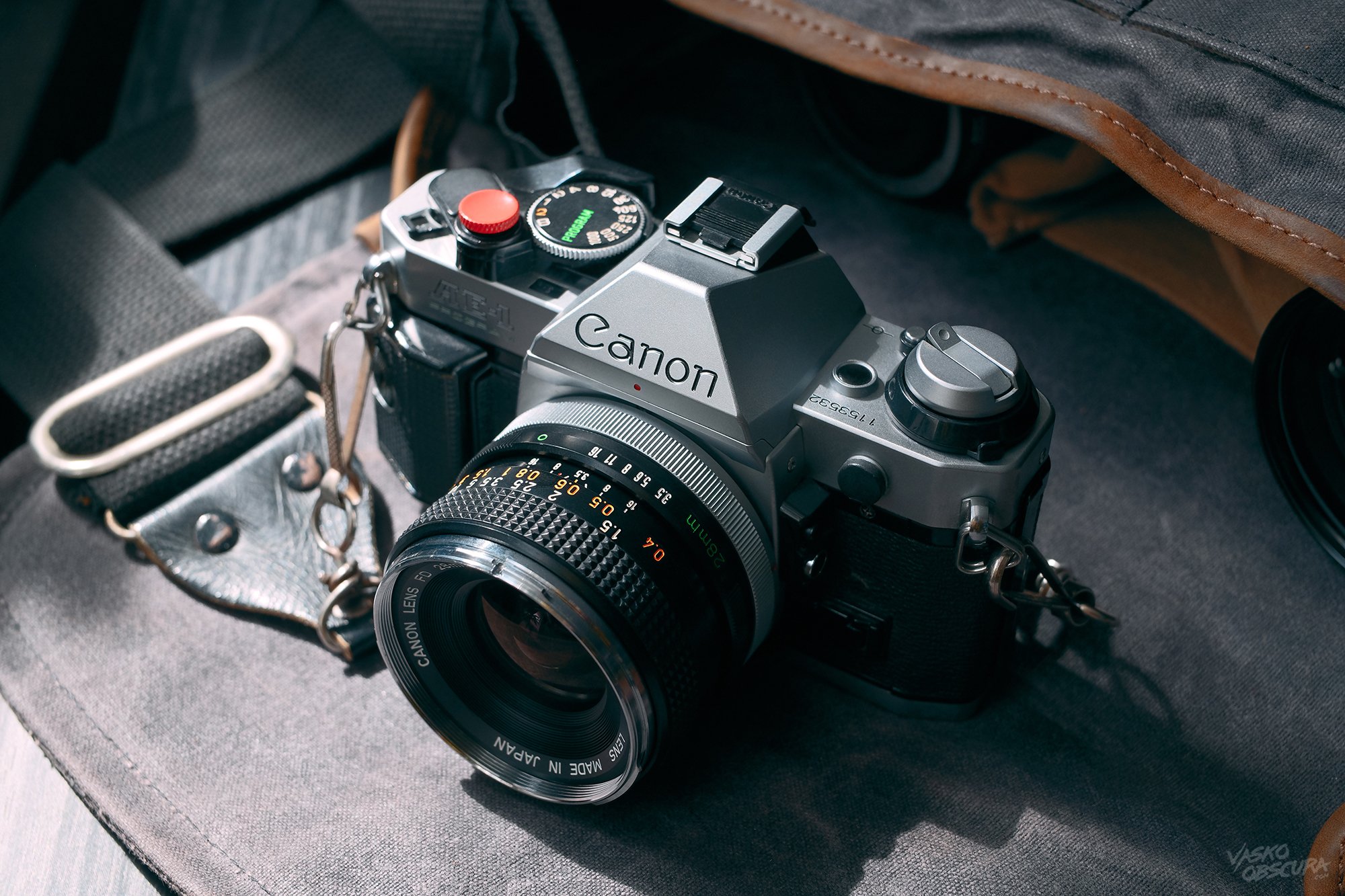
The nickname “chrome nose” comes from one very distinctive design feature, the front of the lens barrel. Unlike later FD lenses that use a fully blacked-out design, these early versions feature a polished silver metal ring at the front. It’s a small detail, but it gives the lens a completely different visual identity. The moment you see it, you know you’re dealing with an early 1970s Canon FD lens. The chrome front aesthetic reflected the design language of the time, where exposed metal elements were common in camera gear. The “Shiny Metal” look extends all the way back to the Space Race of the 1960’s. You can really see this unique design style in the all silver Helios-40. As lens design evolved, manufacturers moved toward more subdued, all-black finishes to reduce reflections and create a more modern look.
Build Quality and Physical Design
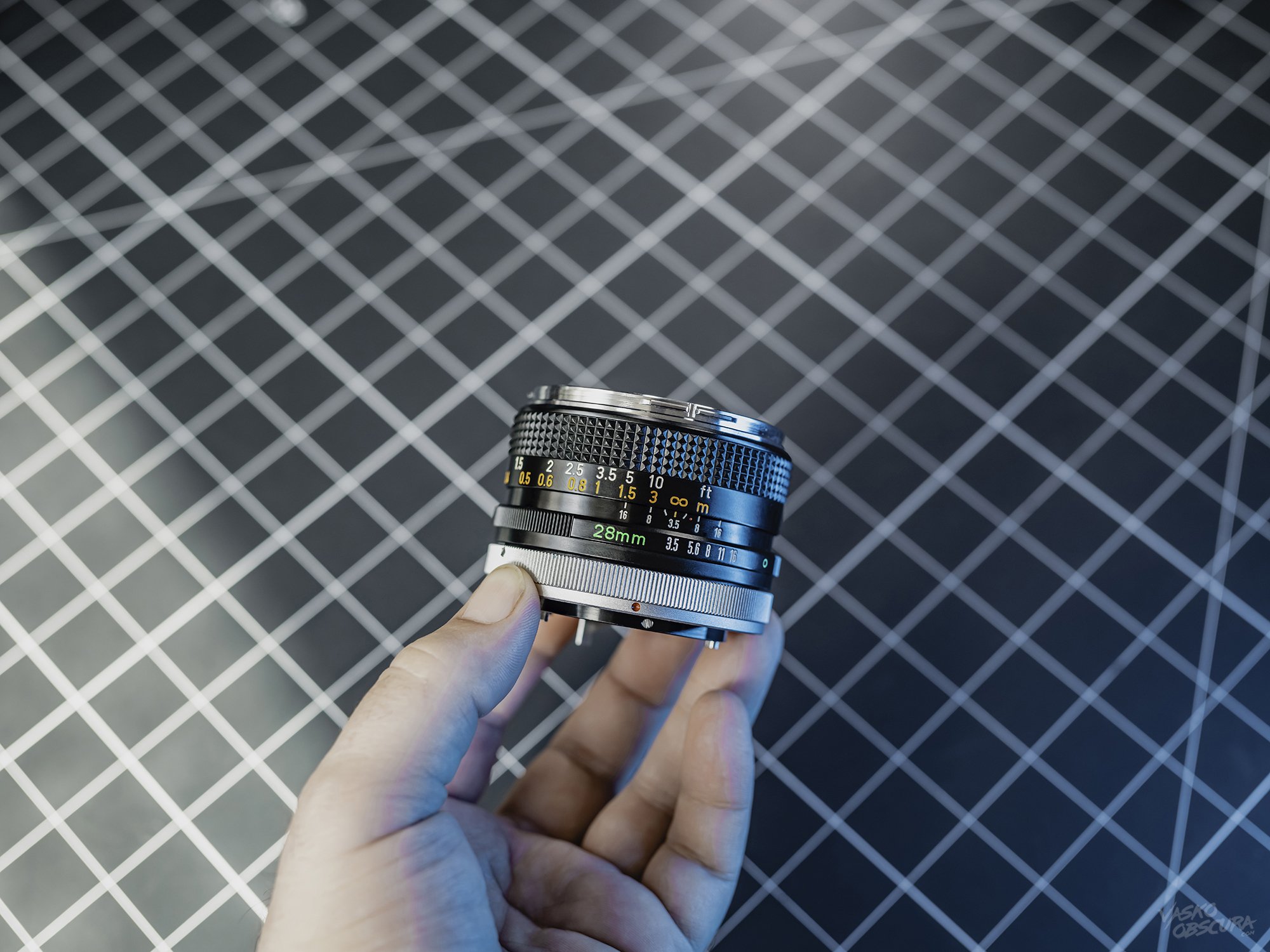
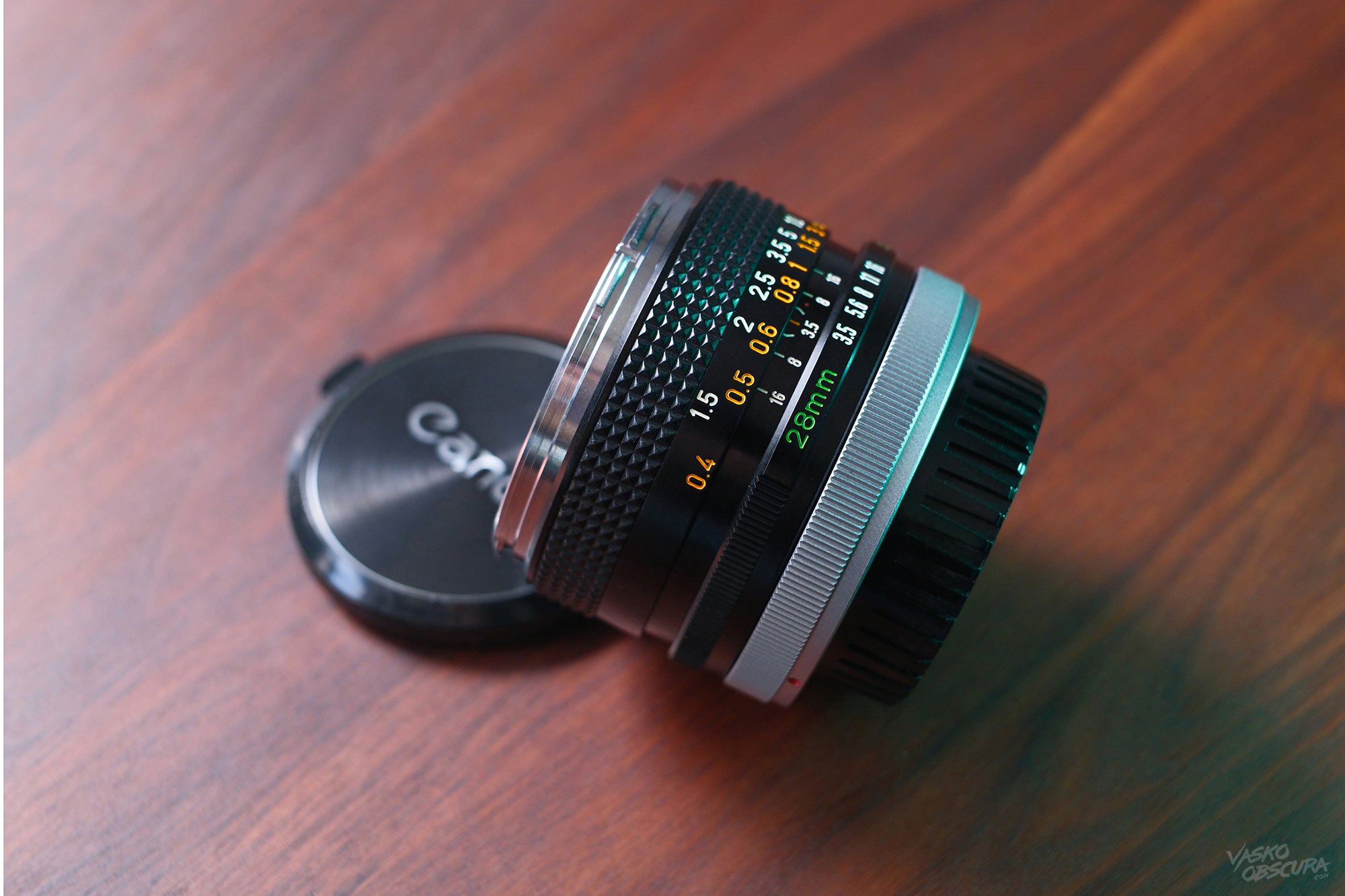
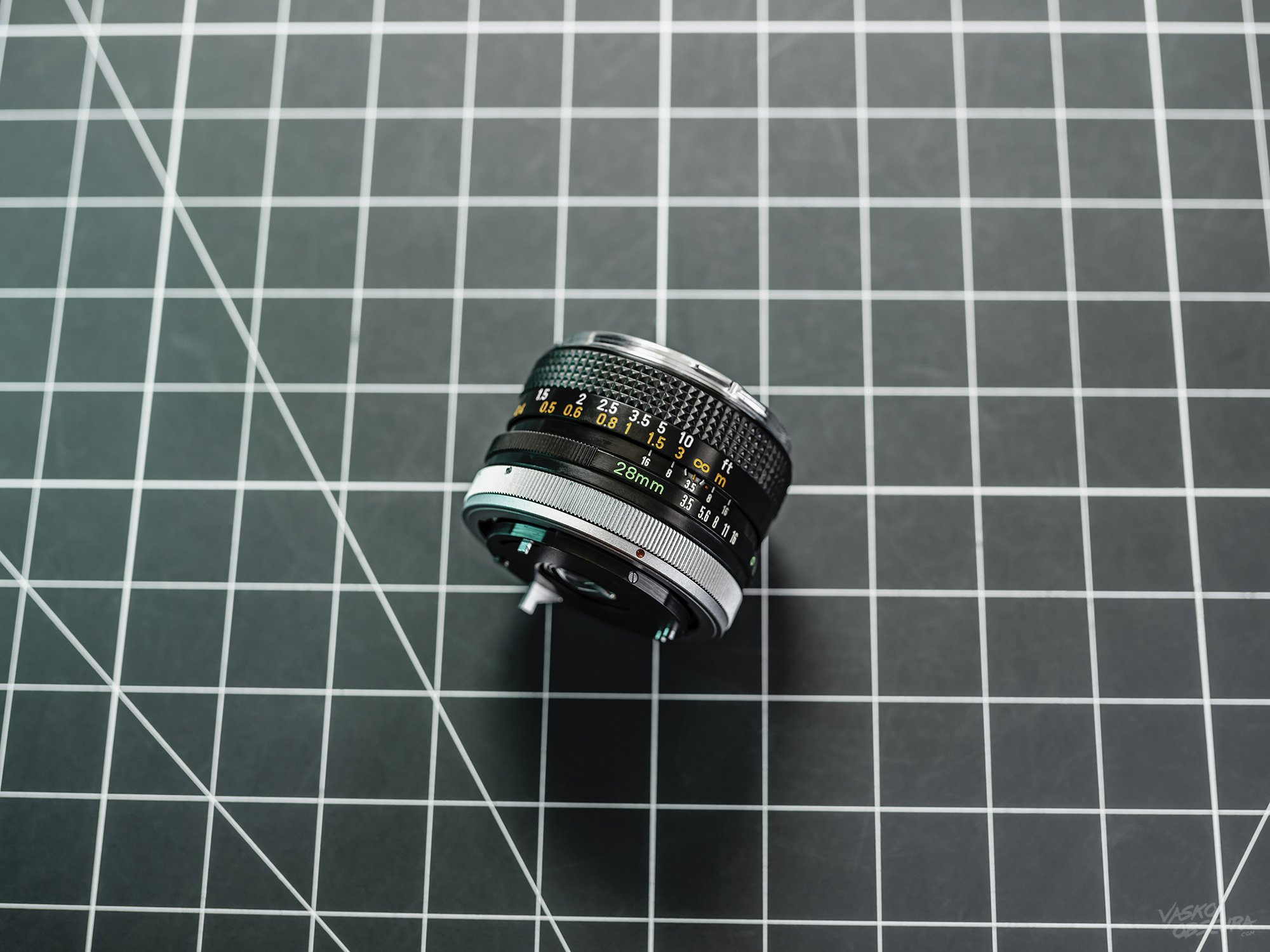
One of the first things I noticed when picking up this lens is just how solid it feels. The Canon FD 28mm f/3.5 Chrome Nose features a full metal and glass construction, giving it a reassuring weight of around 292 grams. It’s dense in the hand in a way that modern lenses rarely are and honestly, I kind of miss that. The focus ring is smooth and well-damped, making manual focusing feel precise and enjoyable. The aperture ring clicks nicely through its range from f/3.5 to f/16, with six aperture blades controlling the diaphragm.
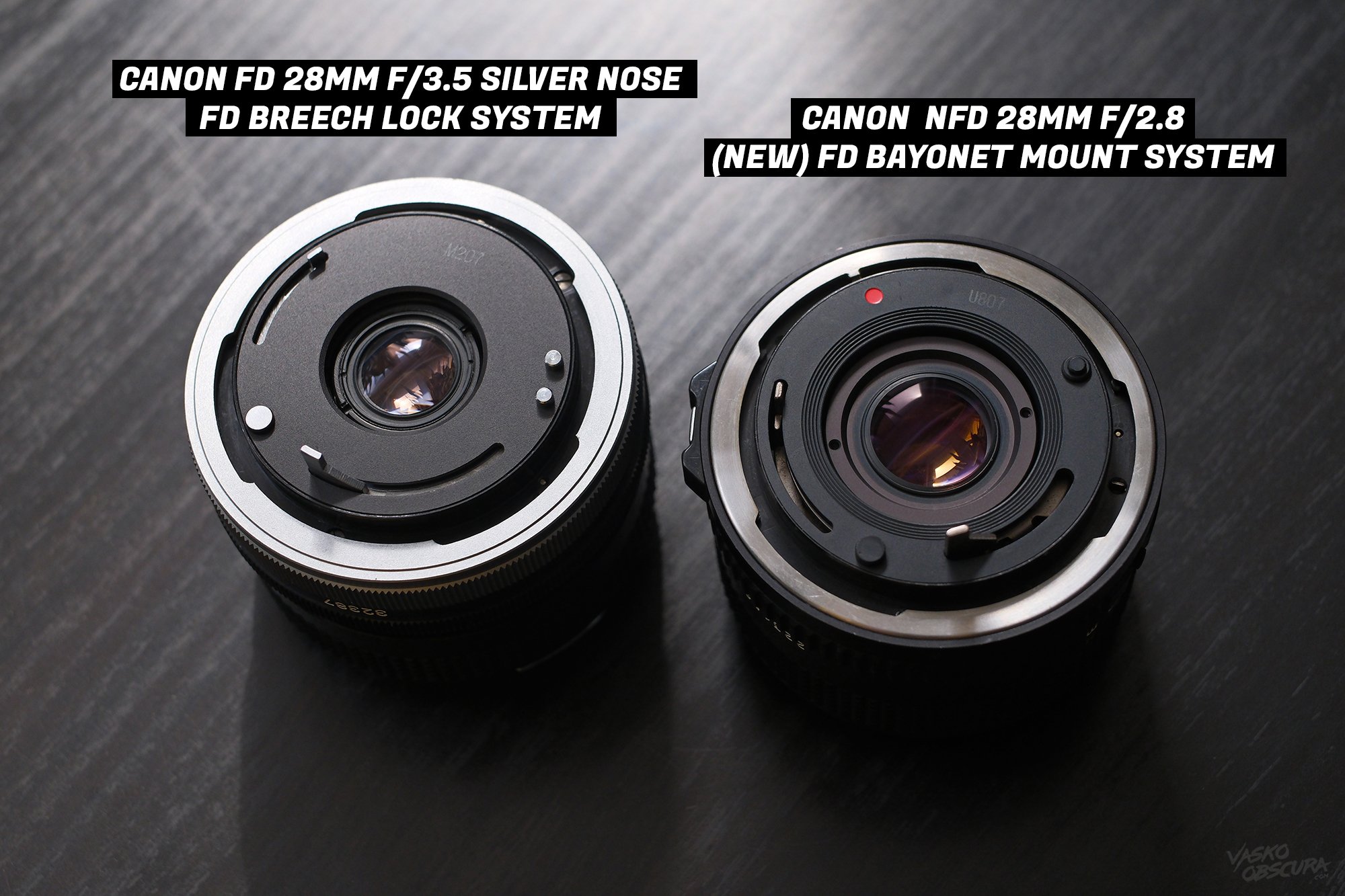
This lens uses Canon’s breech-lock FD mount, which means mounting it is a bit different from modern lenses. Instead of twisting the entire lens, you rotate a locking ring to secure it in place. It takes a moment to get used to, but once you do, it feels solid and secure.
Minimum focusing distance is around 0.4 meters, which isn’t macro territory but still allows for some creative close-up compositions, especially when working with foreground elements.
Optical Design and Coatings
From a technical standpoint, the Canon FD 28mm f/3.5 Chrome Nose keeps things simple and that’s part of its charm. It uses a 6-element, 6-group optical design, which was fairly typical for wide-angle lenses of that era. There’s no aspherical glass or complex modern engineering here, just a straightforward design that gets the job done.
What really sets this lens apart from later FD lenses is its S.C. (Spectra Coating). This was Canon’s earlier coating technology, predating the more advanced Super Spectra Coating (S.S.C.) found in later models. In practice, this means the lens is more prone to flare and ghosting when shooting into strong light sources. But for me, that’s not necessarily a downside. The flare has a softer, more organic look that can add a lot of atmosphere to an image when used intentionally.
Gear Shots






Menu Settings
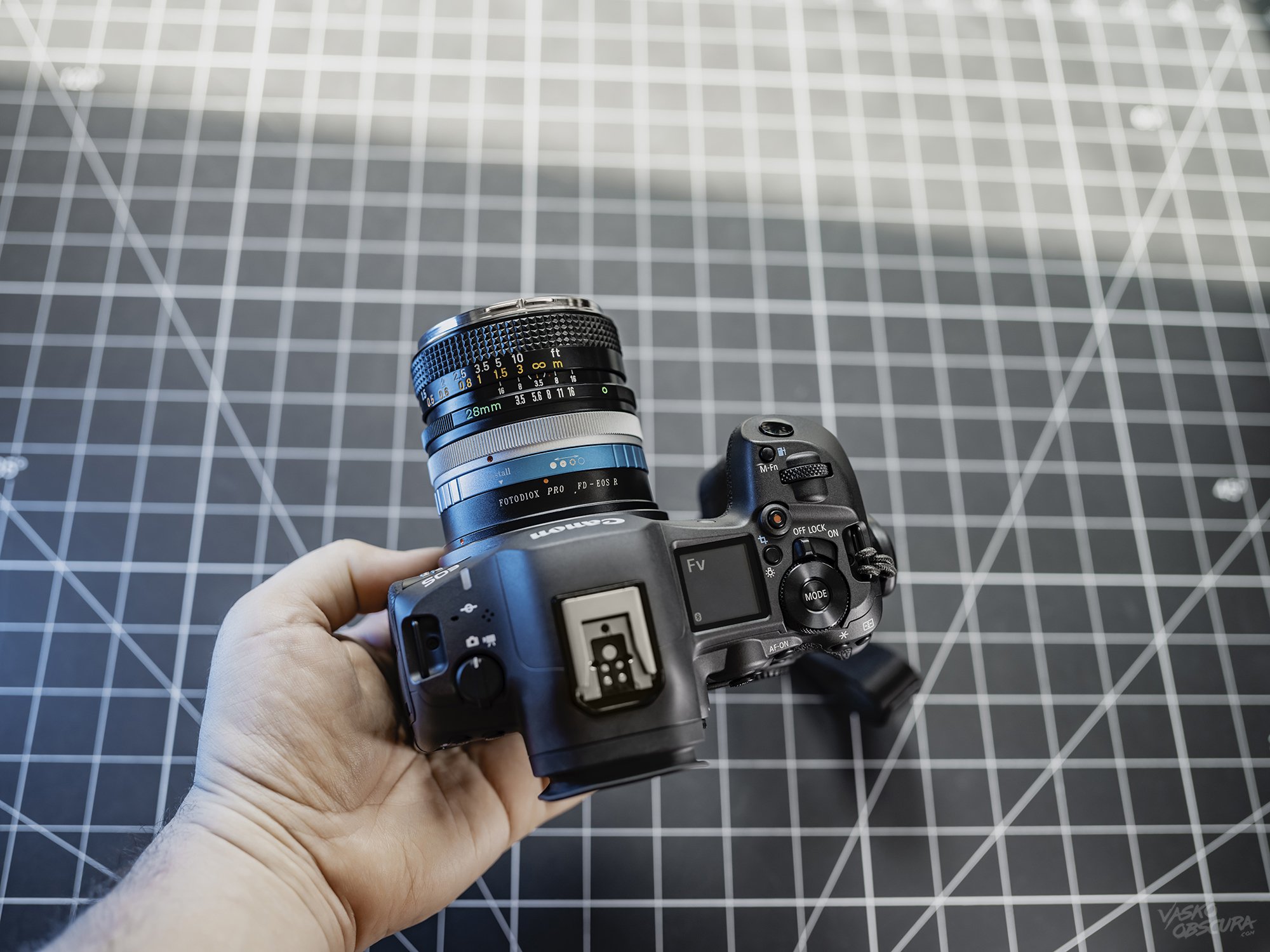
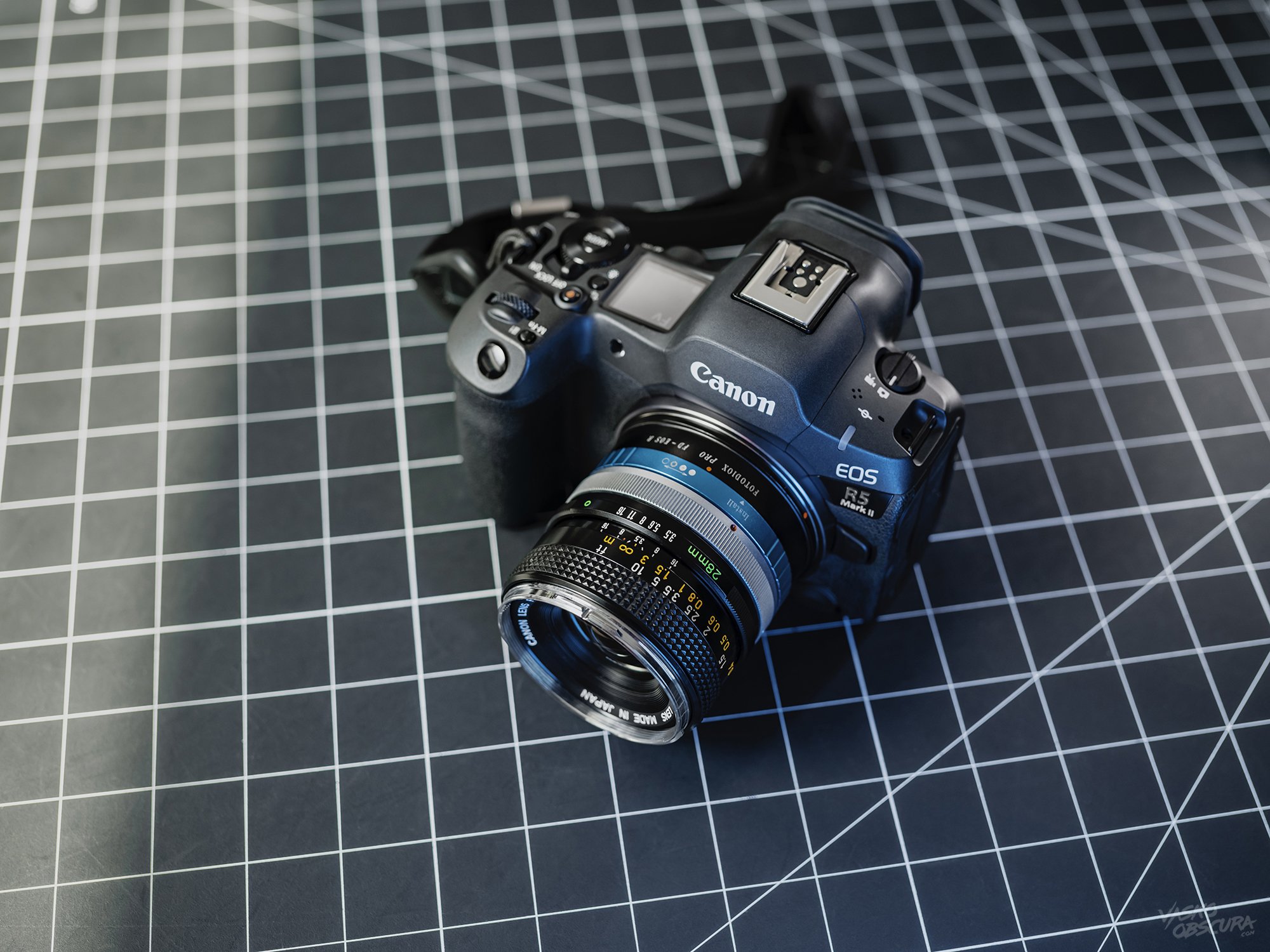
In order to use this lens on your modern mirrorless camera you’re going to need to do two things. First you’ll need an FD to (your mount adapter) The second thing you’ll need to do is change your camera menu settings so that it will release the shutter without a lens on the front. Vintage lenses don’t have any electronics that communicate with the camera so the camera sees them as a body cap. You can get more info about it on this blog post: Canon Menu Settings for Shooting With Vintage Lenses
Handling and Shooting Experience
Using this lens feels like stepping back into a different era of photography. Everything about it is tactile, from the smooth focus throw to the satisfying clicks of the aperture ring to the metal ring you have to twist to mount it onto your camera. It slows you down in a good way and makes the photography process feel more deliberate. On full-frame, 28mm gives you that classic wide-angle perspective that’s great for street photography, landscapes, and environmental shots. On APS-C, it behaves more like a 45mm equivalent, which actually makes it a fantastic everyday walkaround focal length. It’s not the fastest lens at f/3.5, but it’s versatile enough for most situations, especially when paired with modern camera bodies that handle higher ISO well.
How It Compares to Later FD and nFD Versions
The biggest differences between this Chrome Nose version and later FD or nFD lenses come down to coatings, weight, and usability. Later lenses introduced Super Spectra Coating, which improved contrast and reduced flare significantly. They also shifted toward lighter materials and more modern mounting systems. But in doing so, something was lost. Maybe it’s just me but this earlier version feels more mechanical, more tactile, and arguably more “alive.” It may not be as technically refined, but it offers a shooting experience that feels more connected and intentional.
Final Thoughts
The Canon FD 28mm f/3.5 S.C. Chrome Nose isn’t about chasing perfection it’s about embracing character. It’s a lens that reminds me why I fell in love with vintage glass in the first place. The build quality, the simplicity of the optical design, and even the quirks of the coating all come together to create something that feels unique. If you come across one of these, I’d definitely recommend picking it up. Mount it, shoot with it, and take the time to understand how it behaves. It’s a lens with history, and it still has plenty to offer today.
FAQ
What is the Canon FD 28mm f/3.5 Chrome Nose?
It’s an early version of Canon’s FD 28mm wide-angle lens, released in 1971, known for its silver front ring and Spectra Coating.
Why is it called “Chrome Nose”?
The name comes from the silver metal ring at the front of the lens, which distinguishes it from later all-black FD lenses.
Is the Chrome Nose version rare?
Yes, it had a relatively short production run (1971–1973), making it less common than later FD versions.
What is Spectra Coating (S.C.)?
Spectra Coating is Canon’s early lens coating technology, used before Super Spectra Coating (S.S.C.), and is more prone to flare and ghosting.
Is it compatible with modern cameras?
Yes, with an FD adapter, it can be used on most modern mirrorless cameras like Sony, Canon RF, and Micro Four Thirds.
Is it a good lens today?
Yes, especially if you enjoy vintage rendering, manual focus shooting, and lenses with character. If you want a sharp clean image this lens might not be the right choice for you.
🤓 Read Next:
Canon FD 28mm f/3.5 S.C. Chrome Nose Image Quality Review: Vintage Rendering & Optical Character
More Vintage Lens Reviews on my Vintage Lens Hub