
MIR-20M 20mm f/3.5 Sample Images & Shooting Experience
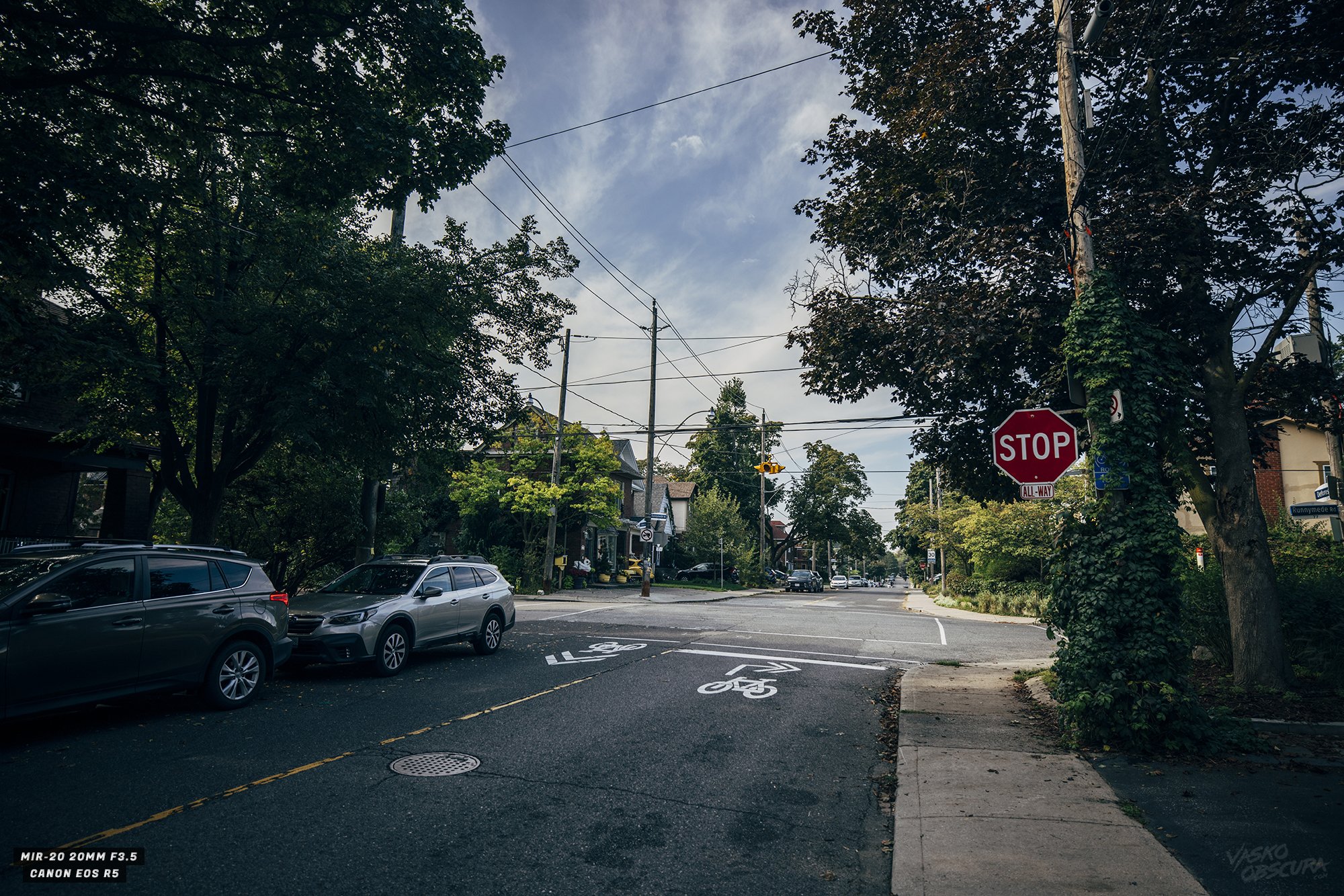
MIR-20M 20MM F3.5
Shooting at 20mm has a way of completely reshaping how you experience a scene, and the Mir-20M 20mm f/3.5 leans into that perspective with a distinctly vintage signature. The ultra-wide field of view naturally exaggerates foreground elements while stretching the background, but what makes this Soviet-era lens unique is how it renders that distortion. Lines aren’t clinically corrected, and there’s a gentle barrel distortion toward the edges that introduces a sense of motion and atmosphere rather than rigid precision. This gives images a more immersive, almost cinematic feel, especially when strong compositional elements are placed near the frame edges. It’s not just wide, it’s expressive, and that expression becomes part of the storytelling. This mini review is going to focus more on the optical performance of the lens. If you want a review that highlights the physical attributes of this lens read this blog next.
Optical Performance Overview
The Mir-20M 20mm f/3.5 vintage lens delivers an optical performance profile that delivers character over clinical perfection. Built around a 9-element, 8-group retrofocus design, this lens embraces many of the traits associated with classic wide-angle optics. Rather than eliminating distortion, flare, and edge softness, it incorporates them into its visual identity. The result is a rendering style that feels organic, immersive, and highly expressive, especially when compared to modern ultra-corrected wide-angle lenses.
Sharpness & Detail Rendering
At f/3.5, the Mir-20M 20mm f/3.5 produces decent center sharpness with a noticeable falloff toward the edges. This transition isn’t abrupt, instead, it gradually softens as you move outward, creating a natural depth gradient that enhances subject separation. The edges take on a slightly stretched and diffused look, which contributes to the lens’s signature 3D pop.
Stopping down to f/5.6 and f/8 significantly improves sharpness across the frame, making the lens more suitable for landscapes and architectural photography. Even at these apertures, however, the MIR-20M retains a subtle softness that prevents images from feeling overly digital or sterile.
Contrast, Color & Tonal Response
One of the defining characteristics of the Mir-20M 20mm f/3.5 lens is its subdued contrast and unique color rendering. Unlike modern lenses that emphasize punchy contrast and saturated colors, the MIR-20M produces a more muted, film-like palette. Colors appear slightly desaturated, and tonal transitions are smoother, giving images a softer and more cinematic feel. But does that even really matter? Today we all adjust our images so thake that with a grain of salt.
Microcontrast is also lower compared to modern optics, which contributes to a more forgiving rendering of highlights and shadows. This makes the lens particularly appealing for video shooters and photographers looking to achieve a timeless, analog-inspired aesthetic.
Sample Photos






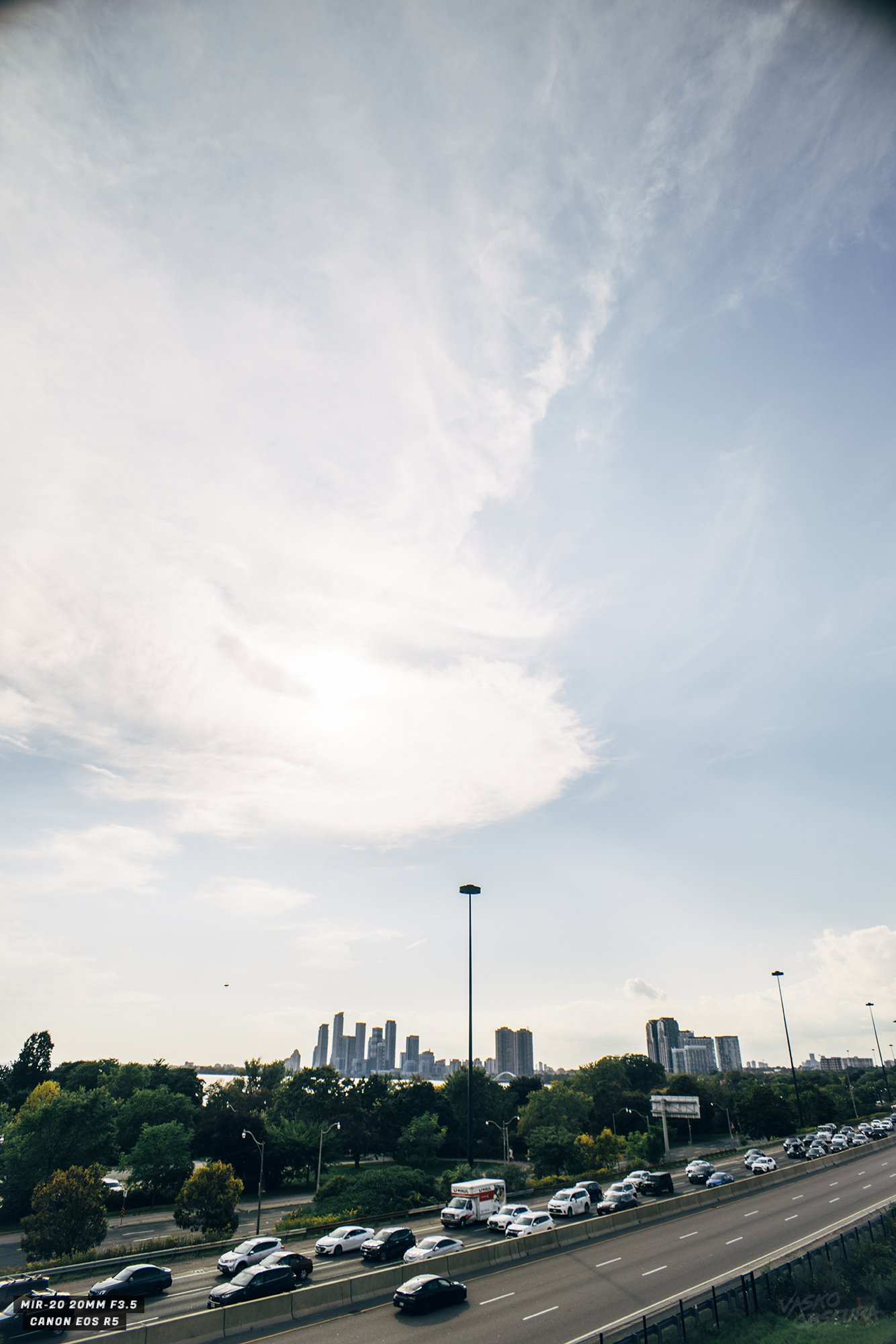
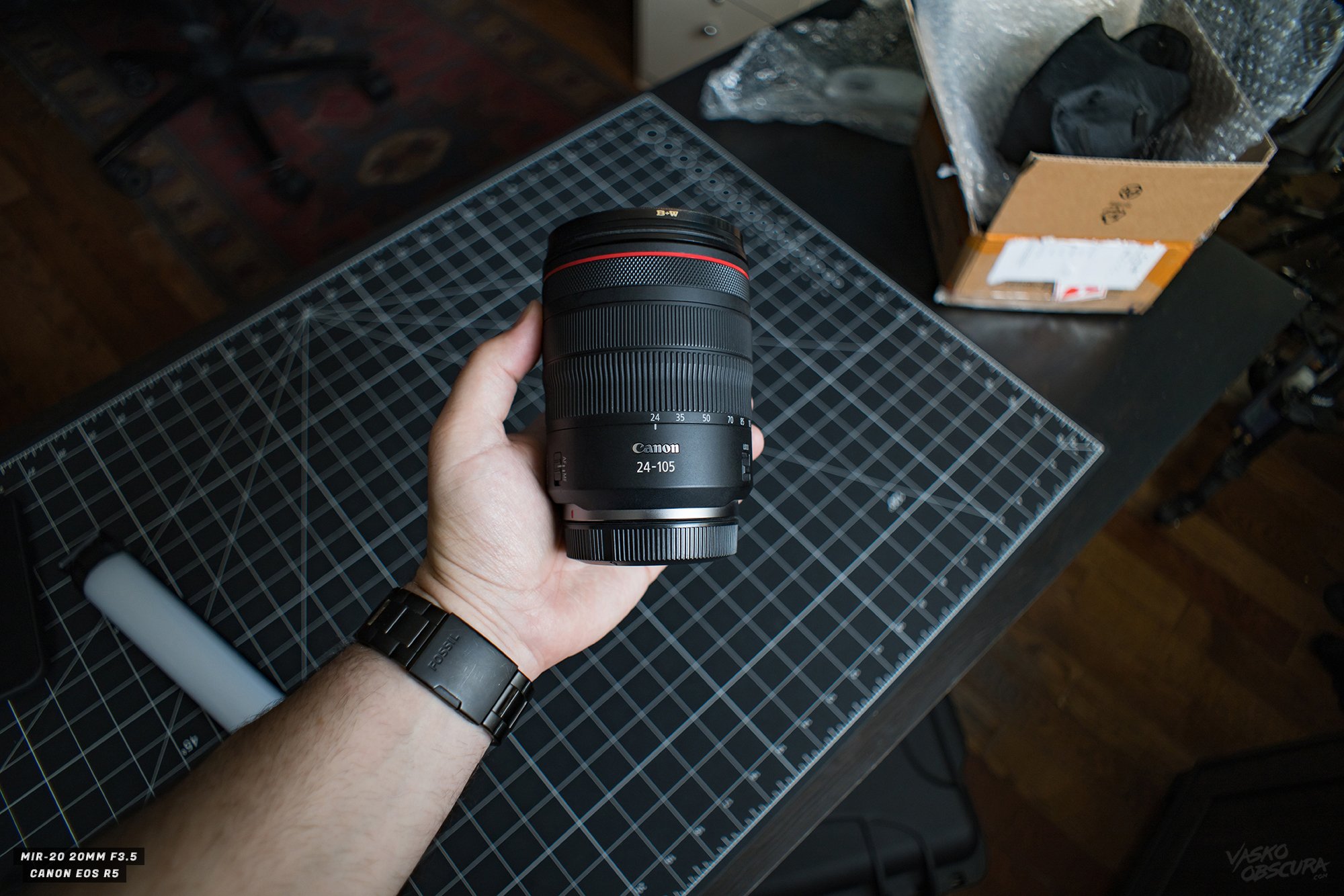
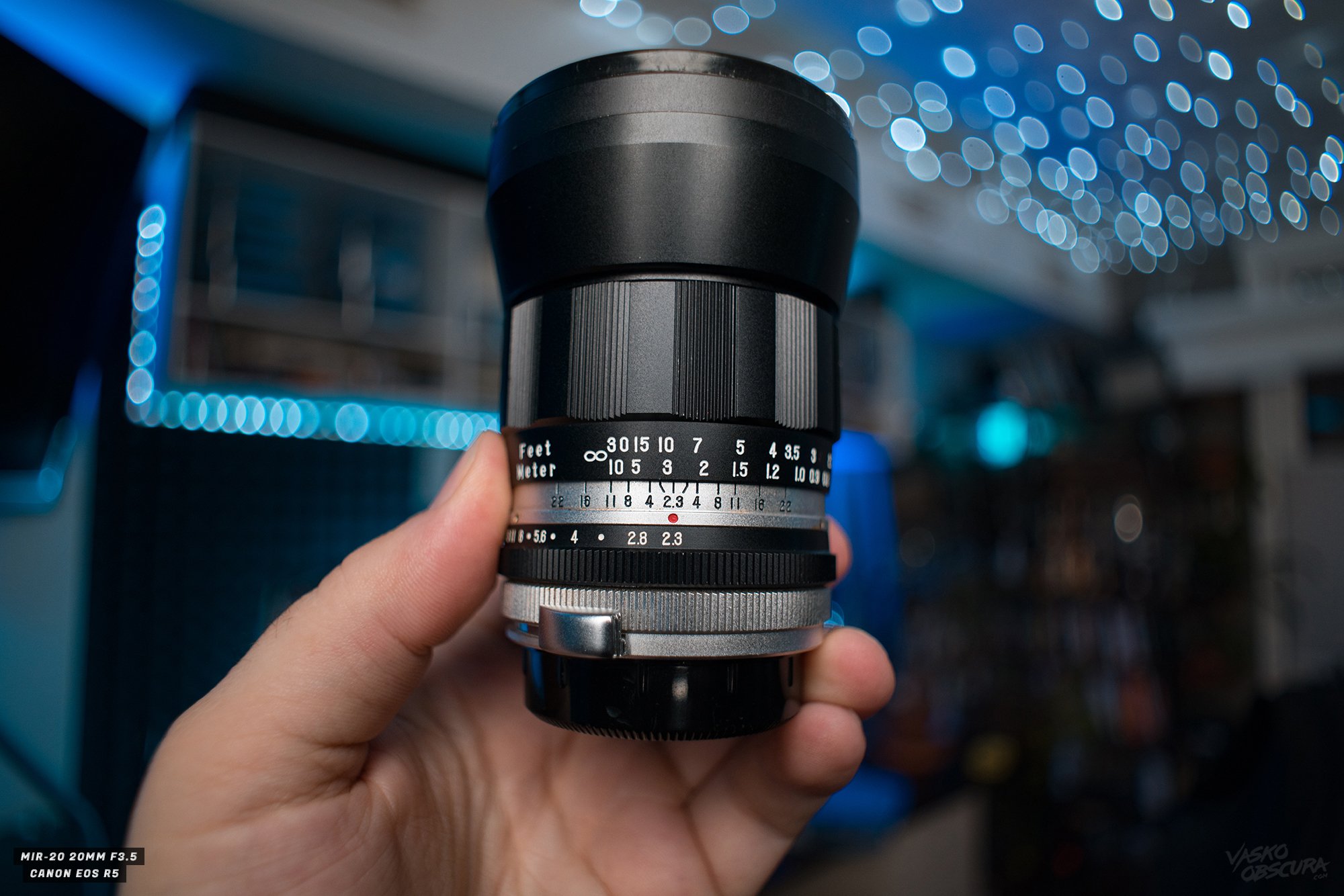

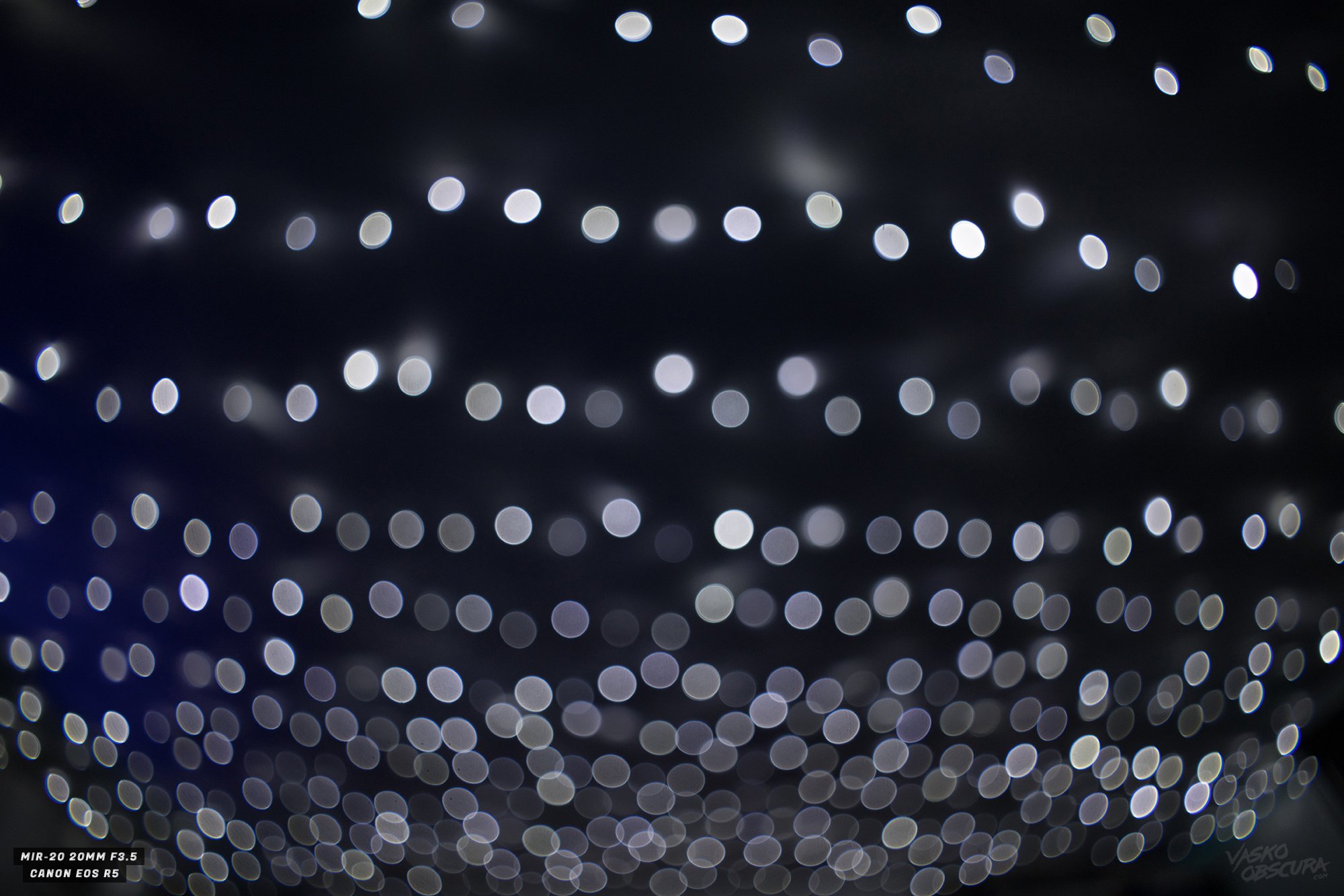
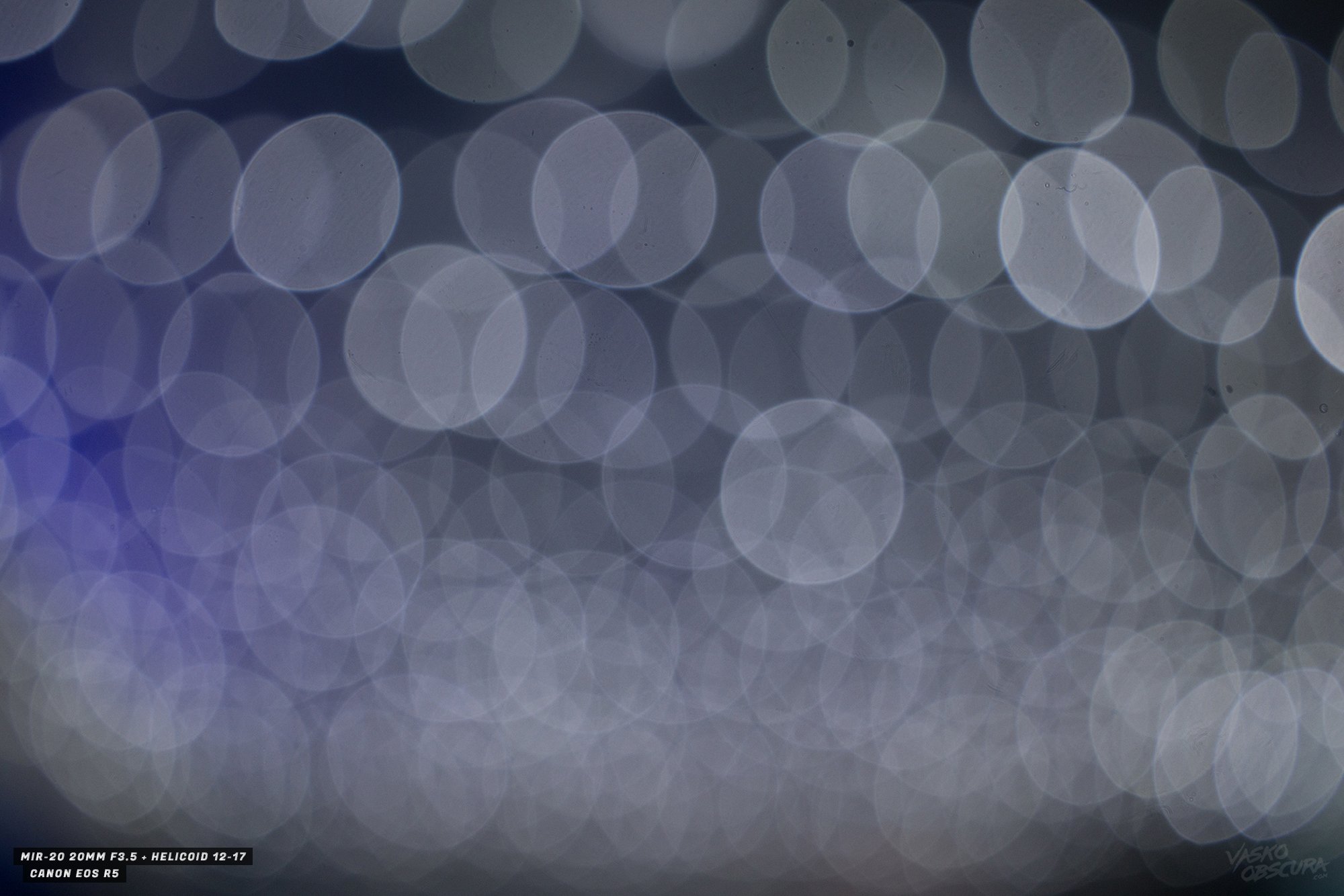
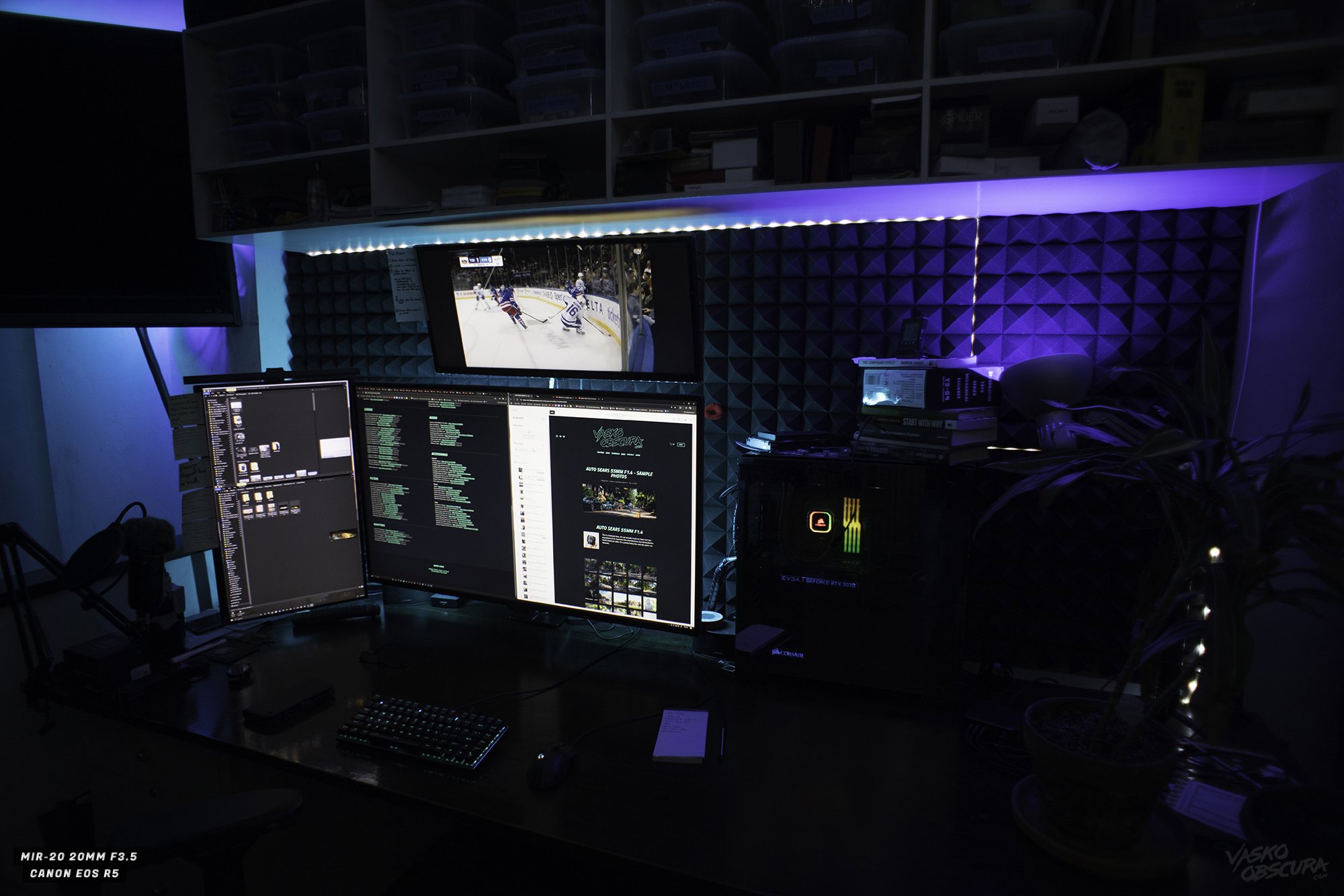
Distortion & Edge Characteristics
As expected from a vintage ultra-wide lens, the Mir-20M 20mm f/3.5 exhibits noticeable barrel distortion. Straight lines near the edges of the frame begin to curve, especially when shooting architecture or geometric subjects. However, this distortion often enhances rather than detracts from the image, adding a sense of movement and depth.
Edge performance is equally distinctive. Instead of being sharply corrected, the corners stretch and soften slightly, reinforcing the immersive, wide-angle perspective. This makes the lens particularly effective for creative compositions where perfection is less important than mood and visual impact.
Flare, Highlights & Light Behavior
My research into this lens says flare is a prominent part of the Mir-20M’s optical character. When shooting into bright light sources, flare can bloom across the frame, reducing contrast and introducing a soft haze. Highlights may glow slightly, giving images a dreamlike quality that feels intentional rather than flawed. So far I haven’t noticed this. I will update this post with more photos soon.
The multi-coating (MC) does help control flare compared to earlier versions, but it doesn’t eliminate it entirely, which is part of the appeal. Combined with subtle natural vignetting, the lens creates a built-in framing effect that gently pulls the viewer’s attention toward the center.
Close Focus & Depth Rendering
With a minimum focus distance of just 18cm, the Mir-20M 20mm f/3.5 opens up a wide range of creative possibilities. Shooting close to a subject while maintaining an ultra-wide field of view exaggerates perspective and enhances depth, making compositions feel more dynamic and immersive. This close focusing capability works hand-in-hand with the lens’s edge rendering, creating images where the subject stands out against a stretched and slightly abstract background. It’s a powerful combination for environmental portraits, street photography, and experimental compositions.
Real-World Image Characteristics
In real-world use, the Mir-20M 20mm f/3.5 vintage lens consistently produces images that feel organic and full of personality. The slight softness, the way contrast rolls off and the imperfect edges all contribute to a look that’s difficult to replicate with modern lenses.
On high-resolution mirrorless cameras, these characteristics become even more pronounced. Rather than exposing weaknesses, modern sensors highlight what makes this lens special, its ability to render scenes in a way that feels less digital and more interpretive.
Final Thoughts
Mir-20M 20mm f/3.5 moed on the Canon EOS R5 Mark II
The Mir-20M 20mm f/3.5 is not a lens designed for technical perfection, it’s built for character. Its optical performance is defined by its imperfections, and those imperfections are exactly what make it so compelling. For photographers and videographers searching for a vintage wide-angle lens with a distinctive rendering style, the MIR-20M offers an experience that goes beyond sharpness charts and lab tests. It’s a lens that encourages experimentation, rewards creativity, and delivers images with a unique visual identity. And in a world filled with clinically perfect optics, that kind of character is becoming increasingly rare.
🤓 Read Next:
MIR-20M 20MM F3.5 - Mini Review
Read More Vintage Lens Reviews on my Vintage Lens Hub