
MIR-20M 20MM F3.5 - Mini Review

MC MIR-20M 20MM F3.5
There’s something undeniably captivating about vintage Soviet glass, and the KMZ MC MIR-20M 20mm f/3.5 is one of those lenses that instantly reignites that passion for shooting. This isn’t just another old wide-angle lens, it’s a piece of optical history with a rendering style that feels alive. It delivers a sharp central image that gradually transitions into stretched, defocused edges, creating a subtle but powerful 3D pop that modern lenses often lack. My own journey with this lens hasn’t been straightforward. Years ago, I owned an earlier version The Mir-20 20mm f3.5 (pre M version) that had been poorly modified to EF mount, resulting in visible barrel intrusion in my images. I let it go, and regretted it almost immediately. Since then, I’ve been searching for a proper copy. With prices for the MIR-20 line climbing significantly since 2021, finding this MC MIR-20M below market value felt like a win. The moment I picked it up and felt the smooth focus and aperture rings, I knew this lens still had plenty of life left in it. This post will focus on the physical attributes of this lens but if you want a review that is more focused on optical performance check this post out after reading this one.
LENS SPECS
Release Date: 1984
Format: 35mm Full Frame
Mount: M42
Filter: No Filter Threads
Aperture Blades: 5
Aperture Range: f/3.5 – f/16
Min Focus Distance: 0.18m
Weight 470g
Weather Sealing: No
Optical Design: 9 elements in 8 groups
APS-C Conversion Approx.: 32mm
Build Quality & Physical Design
The first thing that stands out about the MIR-20M 20mm f/3.5 is its tank-like construction. This lens feels like it was carved from a single block of metal, dense, cold, and incredibly solid. It’s a true product of Soviet-era manufacturing philosophy. Overbuilt, mechanical, and designed to last decades. Despite being around 30 years old (based on a 1995 serial number 953073), this particular copy still performs beautifully. The focus ring is smooth and well damped, offering precise manual control, while the aperture ring clicks confidently through each stop. There’s a tactile satisfaction here that modern focus by wire systems simply can’t replicate. The lack of filter threads is both a limitation and a defining design trait. The bulbous front element contributes to the ultra-wide field of view but makes using filters impractical without custom solutions.
Handling & User Experience
Using the MIR-20M is a fully manual experience, and that’s exactly the point. Mounted via an M42 adapter on modern mirrorless bodies like the Canon EOS R5 Mark II, it becomes a deliberate, thoughtful shooting tool. Here is a link to my Adapters blog posts were you can find more info on how to mount M42 lenses onto modern mirrorless cameras. The focus throw is long enough for precision but not so long that it slows you down. Combined with focus peaking, this lens becomes surprisingly easy to use in both photography and video workflows. What stands out most is how engaging it feels. Every adjustment is physical, intentional, and connected, something many modern lenses have lost in pursuit of speed and automation.
Optical Design & Engineering
The MIR-20M’s optical design consists of 9 elements in 8 groups, built around a retrofocus (reverse telephoto) design. This design was heavily influenced by early wide-angle innovations like the Angénieux retrofocus concept, allowing engineers to achieve a 20mm field of view while maintaining enough rear clearance for SLR mirror systems. This was a critical engineering challenge at the time. Without retrofocus designs, ultra-wide lenses would interfere with the mirror mechanism of SLR cameras. The MIR-20M solves this elegantly, making it one of the more advanced Soviet wide-angle designs of its era. The addition of multi-coating (MC) improves contrast and reduces flare compared to earlier versions, although it still retains a distinctly vintage rendering.
Gear Shots
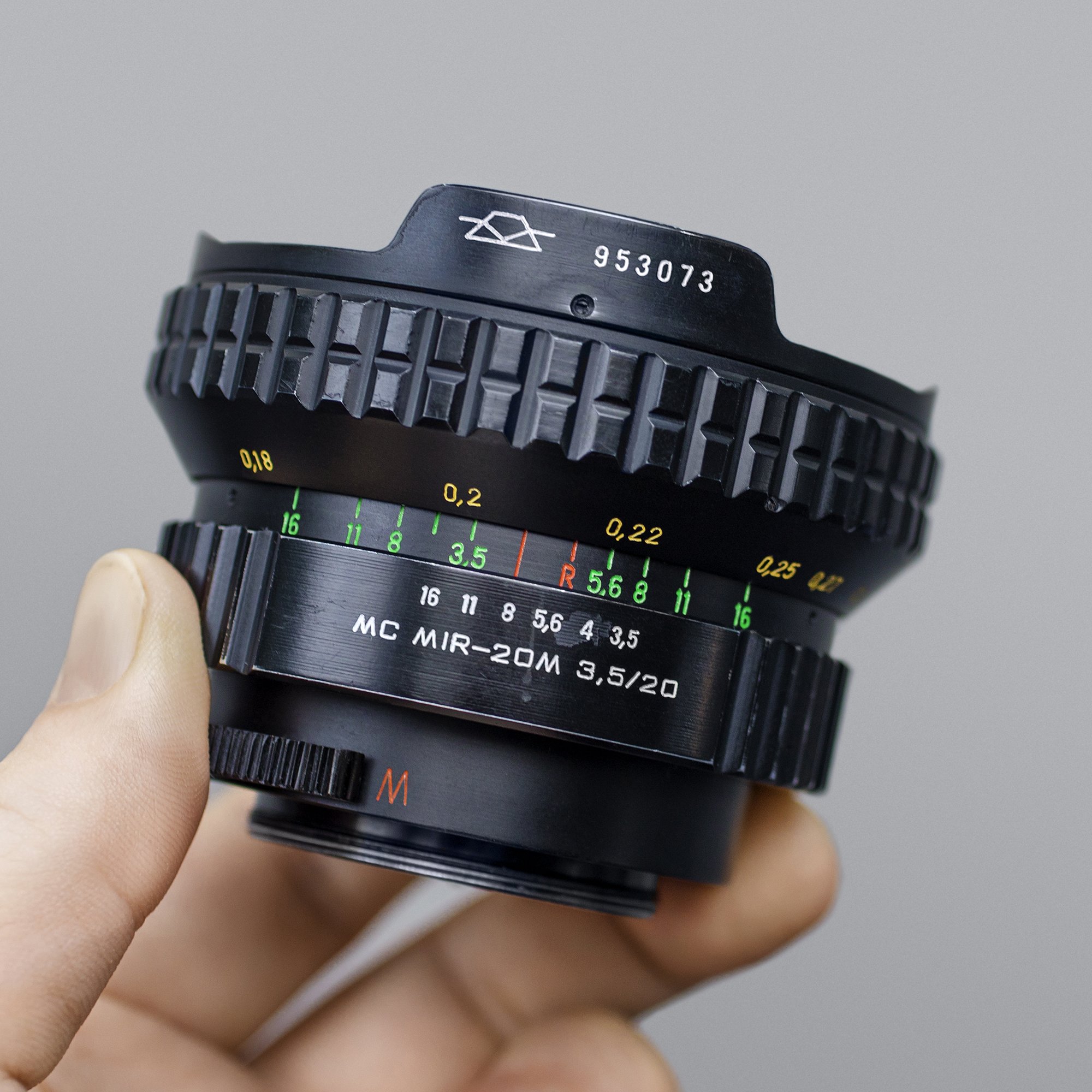


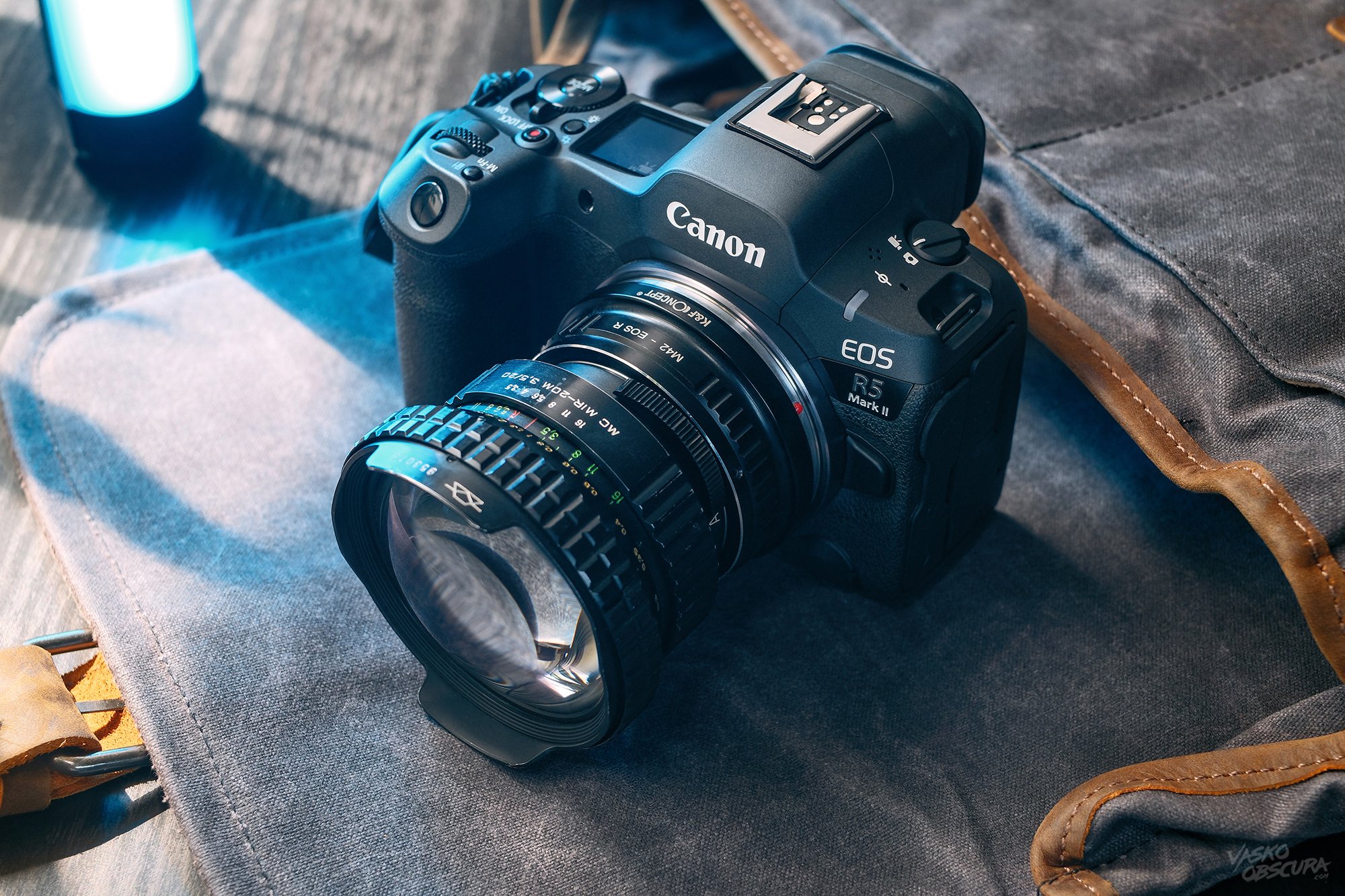


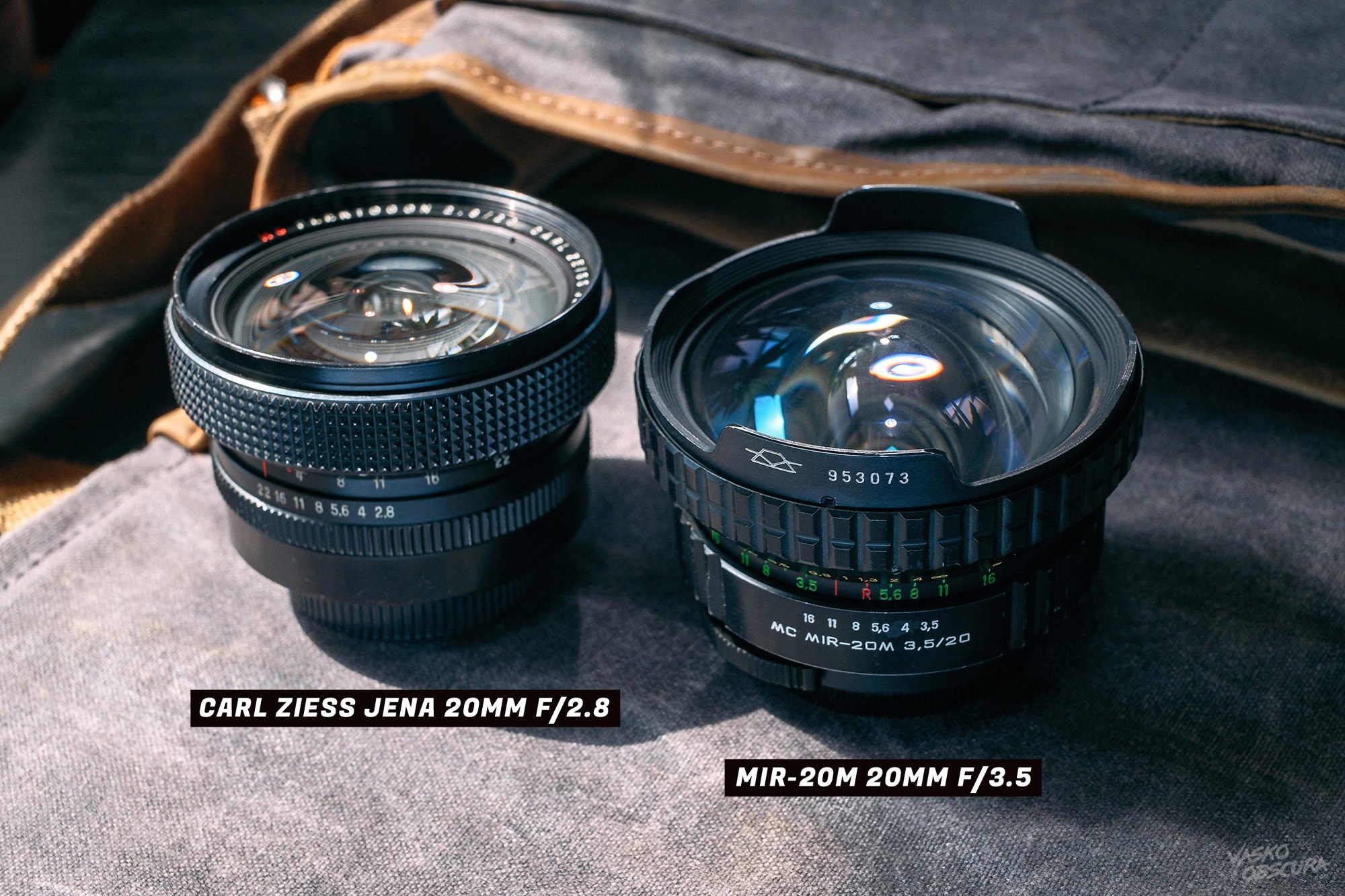
Close Focus & Creative Potential
One of the most surprising features of the MIR-20M is its 18cm (7 inches) minimum focusing distance. This allows for dramatic, exaggerated perspectives when shooting close to a subject. You can place your subject inches from the lens while maintaining a wide, stretched background. This opens up creative opportunities for environmental portraits, abstract compositions, and cinematic foreground emphasis. It’s a lens that encourages experimentation, and rewards it.
Flare, Distortion & Imperfections
Like most vintage ultra-wide lenses, the MIR-20M isn’t optically perfect, and that’s part of its appeal.
Barrel distortion is noticeable but manageable
Flare can appear when shooting into strong light sources
Contrast drops slightly in challenging lighting
These characteristics contribute to its personality. Rather than fighting them, leaning into these imperfections often produces more interesting and unique images.
MIR-20 vs MIR-20M (Non-MC vs MC Versions)
A key distinction in the MIR-20 lineup is the difference between the original version and the later MC MIR-20M.
Non-MC MIR-20: Lower contrast, more flare, stronger vintage look
MC MIR-20M: Improved coatings, better contrast, slightly more controlled rendering
Some photographers (myself included) actually prefer the older non-MC version for its raw, unfiltered character. That said, the MC version strikes a great balance between usability and vintage charm.
Who This Lens Is For
The KMZ MC MIR-20M 20mm f/3.5 is not for photographers chasing clinical perfection. Instead, it’s for creators who value character, texture, and emotion in their images. It’s ideal for:
Vintage lens enthusiasts who love that nostalgic look
Cinematic videographers
Creative portrait shooters
Experimental photographers
Anyone tired of overly sharp, sterile modern glass
Final Thoughts
The KMZ MC MIR-20M 20mm f/3.5 isn’t just a lens, it’s an experience. From its solid metal construction to its unique rendering style, it offers something that modern lenses often lack, personality. Yes, it has flaws. But those flaws are exactly what make it special. In a world dominated by technically perfect optics, the MIR-20M reminds us that photography isn’t just about sharpness, it’s about feeling. And sometimes, a little imperfection is what makes an image unforgettable. If you’re thinking about buying this lens and adding it to your kit than go for it. I really enjoy this lens and recommend it to anybody who is interested in ta vintage wide angle with character.
🤓 Read Next:
MIR-20M 20mm f/3.5 Sample Images & Shooting Experience
Read More Vintage Lens Reviews on my Vintage Lens Hub